


Advanced Battery Power in 2025: The Engine of a Smarter, More Resilient Grid
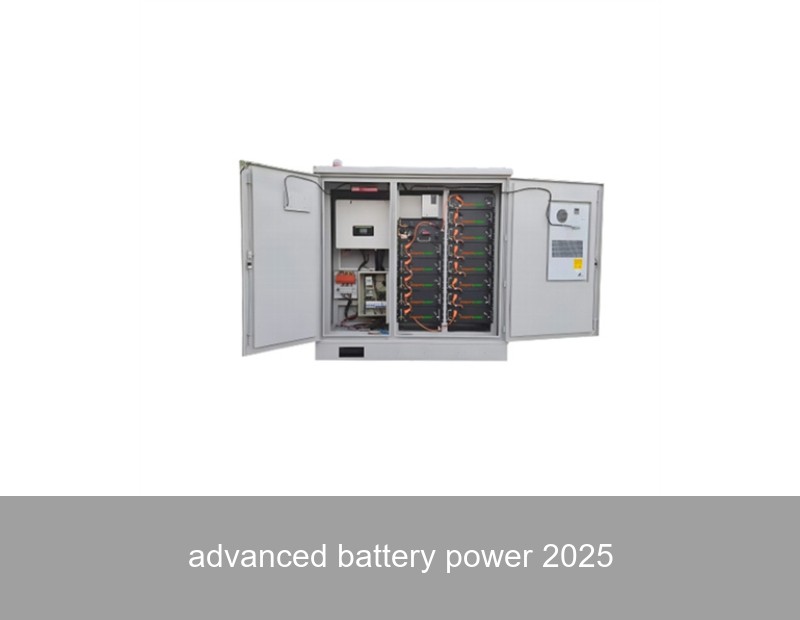
Have you ever wondered what happens when the sun sets on a vast solar farm, or the wind suddenly stops blowing? Just a few years ago, the answer was a scramble for fossil-fuel backup. Today, the landscape is fundamentally different. We are witnessing a paradigm shift, driven by advanced battery power in 2025. This isn't just about storing electrons; it's about intelligent energy management, grid stability, and unlocking the full potential of renewables. For businesses, communities, and homeowners, understanding this technology is key to energy independence and sustainability. At Highjoule, a global leader in advanced energy storage since 2005, we are at the forefront of designing the systems that make this resilient future possible.
Table of Contents
The Phenomenon: From Backup to Brain of the Grid
The narrative around battery storage has evolved dramatically. Once seen as a niche, expensive backup solution, it is now recognized as the critical enabler for a decarbonized grid. The phenomenon is clear: as renewable penetration soars in markets like Europe and the U.S., the inherent intermittency of solar and wind creates new challenges for grid operators. Advanced battery power in 2025 addresses this not by merely storing and discharging, but by providing a suite of "grid services." Think of it as the central nervous system for local energy networks—constantly monitoring, forecasting, and reacting in milliseconds to maintain balance, reduce peak demand charges, and even sell power back to the grid when it's most valuable.

This shift from passive storage to active grid participant is what separates basic systems from the advanced battery power solutions defining the current market. It's about software intelligence, seamless integration, and robust hardware working in concert.
The Data: Quantifying the 2025 Storage Surge
The numbers behind this transition are staggering and underscore the momentum. According to the U.S. Energy Information Administration (EIA), battery storage capacity in the United States is projected to nearly double in 2024 alone. Meanwhile, Europe's energy storage market is on a similar trajectory, driven by ambitious EU climate targets and the need for energy security. Analysts at BloombergNEF consistently revise their global storage forecasts upward, with expectations that the global energy storage market will reach terawatt-hour scale by 2030.
This explosive growth isn't happening in a vacuum. Key drivers include:
- Plummeting Costs: Lithium-ion battery pack prices have fallen over 90% since 2010, making large-scale projects economically viable.
- Supportive Policy: Incentives like the U.S. Investment Tax Credit (ITC) for standalone storage and the EU's Green Deal are accelerating deployment.
- Utility & Commercial Demand: Businesses are actively seeking to mitigate price volatility and ensure operational continuity, while utilities need storage for frequency regulation and deferring costly grid upgrades.
Case Study: A California Microgrid's Resilience Story
Let's move from macro trends to a concrete example. Consider a mid-sized winery in California's Napa Valley. This region is not only ideal for grapes but is also prone to Public Safety Power Shutoffs (PSPS)—where utilities preemptively cut power during high wildfire risk days. For the winery, a single day without power during fermentation could mean millions in lost product.
The Challenge: Ensure 100% uptime for critical cooling and processing loads, reduce steep time-of-use electricity charges, and contribute to local grid stability.
The 2025 Solution: The winery deployed a 2 MWh advanced battery power system integrated with its existing rooftop solar. This wasn't a simple "off-the-shelf" battery. The system features:
- AI-Powered Energy Management: Software predicts solar generation, energy consumption, and grid electricity prices 24-48 hours in advance.
- Multi-Mode Operation: It automatically switches between maximizing self-consumption of solar, providing backup power during outages, and participating in a Virtual Power Plant (VPP) to sell capacity back to the grid during peak demand events.
- Thermal Runaway Prevention: Advanced liquid cooling and cell-level monitoring ensure safety—a non-negotiable for any industrial facility.
The Results (Real Data): In its first year, the system provided 12 seamless backup transitions during PSPS events, saving an estimated $450,000 in potential spoilage. Through strategic energy arbitrage and VPP participation, it generated $185,000 in annual revenue and demand charge savings. The project's payback period was under 5 years, a compelling financial and resilience case.
Expert Insights: What Truly Defines "Advanced" in 2025?
As a product technology expert at Highjoule, I'm often asked, "What makes a battery system 'advanced' today?" Beyond the core chemistry, it's the integration of four key pillars:
| Pillar | Description | Highjoule's Approach |
|---|---|---|
| Intelligence & Software | The brain of the system. It must do more than just react; it must forecast, optimize for multiple value streams, and integrate with building management and grid signals. | Our Highjoule Neuron™ Platform uses machine learning to optimize for cost, carbon, and resilience simultaneously. |
| Safety & Longevity | Non-negotiable. Advanced systems employ sophisticated Battery Management Systems (BMS), thermal management (like liquid cooling), and robust enclosure design to ensure safety over a 15+ year lifespan. | All Highjoule commercial systems feature cell-level monitoring, active liquid cooling, and are UL 9540A certified. |
| Grid Interaction | The ability to provide services like frequency response, voltage support, and peak shaving, often automatically. This turns a cost center into a potential revenue generator. | Our systems are designed with grid-forming inverters, enabling them to support microgrids and provide grid services seamlessly. |
| Scalability & Integration | Solutions must be modular to grow with a customer's needs and must integrate seamlessly with solar PV, wind, and existing generators. | Our modular architecture allows projects to scale from 100 kWh to multi-MWh, with unified control across all assets. |
Highjoule's Role: Tailoring Advanced Battery Solutions
Since 2005, Highjoule has been engineering solutions that embody these pillars. We don't believe in a one-size-fits-all approach. For a large industrial facility in Germany facing high grid congestion costs, we might deploy a multi-megawatt containerized system focused on peak shaving and frequency regulation. For a hospital in Texas prioritizing resilience, we design an integrated solar-plus-storage microgrid with black-start capability. For residential communities in California, we offer scalable systems that allow homeowners to maximize their rooftop solar investment.

Our advanced battery power systems are built on a foundation of safety, efficiency, and intelligence. The Highjoule Neuron™ platform is the cornerstone, providing a clear window into energy flows, savings, and system health. We handle everything from initial feasibility and financial modeling to installation, commissioning, and long-term performance monitoring, ensuring our clients realize the full value of their investment.
Looking Ahead: Your Energy Future
The journey toward advanced battery power in 2025 is more than a technological trend; it's a fundamental rethinking of how we generate, distribute, and consume energy. The technology is here, proven, and economically compelling. The question is no longer "if" battery storage will play a central role, but "how" and "when" it will be integrated into your energy strategy.
Whether you're a facility manager looking to slash energy bills, a developer building the sustainable communities of tomorrow, or a municipality aiming for energy independence, the next step is a conversation. What single energy challenge—be it cost, reliability, or sustainability—if solved, would have the greatest impact on your operations in the next two years?
 Inquiry
 Online Chat