


The Rise of Solar Manufacturing Companies in the USA: Powering a Sustainable Future
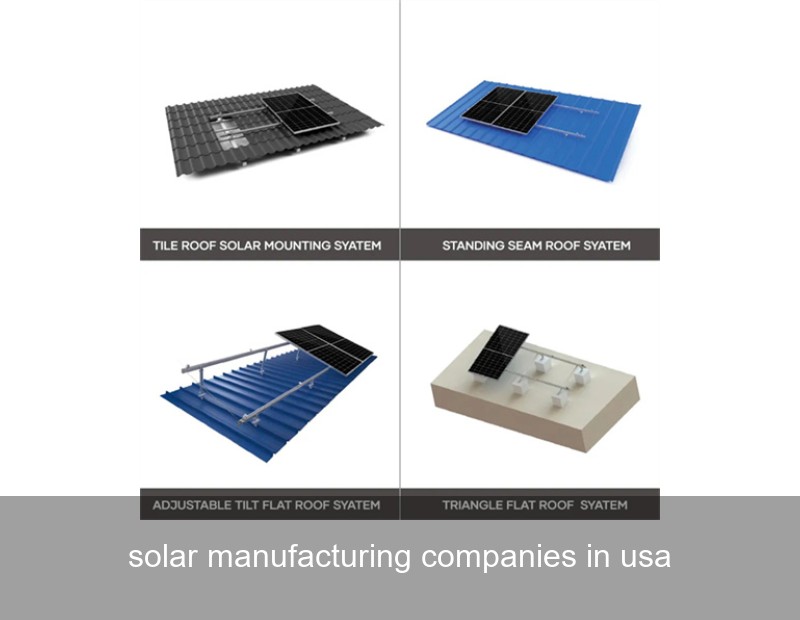
Have you noticed more solar panels glinting on rooftops and sprawling across fields in recent years? This visual shift is backed by a powerful resurgence. Solar manufacturing companies in the USA are experiencing a remarkable renaissance, driven by policy, demand, and a national push for energy security. For businesses and communities, this isn't just industrial news; it's the foundation of a more resilient and cost-effective energy future. In this article, we'll explore this growth, its implications, and how pairing American-made solar with advanced energy storage unlocks the full potential of your renewable investment.
Table of Contents
- The Phenomenon: A U.S. Solar Manufacturing Rebirth
- The Data: Policy, Scale, and Economic Impact
- Case Study: From Factory to Farm – A Midwest Success Story
- The Key Insight: Generation is Only Half the Battle
- Highjoule's Role: The Intelligent Link in the U.S. Solar Chain
- The Future Outlook for U.S. Solar and Storage
The Phenomenon: A U.S. Solar Manufacturing Rebirth
For years, the story of solar was one of overseas production. However, a significant recalibration is underway. A combination of federal legislation like the Inflation Reduction Act (IRA), supply chain concerns, and a strong desire for domestic job creation has catalyzed a wave of new investments. We're not just talking about final panel assembly; this revival encompasses the entire supply chain, from polysilicon and wafers to cells and modules. This means a more secure, transparent, and potentially higher-quality product pipeline for American consumers and businesses.

Image Source: Unsplash - A glimpse into advanced, automated solar manufacturing.
The Data: Policy, Scale, and Economic Impact
The numbers tell a compelling story. Since the passage of the IRA in 2022, over $100 billion in private-sector investments have been announced across the U.S. solar supply chain. The Solar Energy Industries Association (SEIA) reports that domestic module manufacturing capacity is projected to increase nearly 800% from 2022 levels, reaching an estimated 200 GW by 2026. This isn't just about meeting domestic demand; it's about reclaiming a position in the global clean energy economy. For a commercial entity in Ohio or a municipality in Texas, this translates to shorter lead times, potential Buy American compliance benefits, and a reduced carbon footprint for the equipment itself.
| Manufacturing Segment | 2022 Capacity (GW) | 2026 Projection (GW) | Growth Factor |
|---|---|---|---|
| Polysilicon | 20 | 80 | 4x |
| Solar Cells | 2.5 | 45 | 18x |
| Solar Modules | ~25 | ~200 | 8x |
Case Study: From Factory to Farm – A Midwest Success Story
Let's make this concrete. Consider a large-scale agricultural cooperative in Iowa. Facing volatile energy costs and a commitment to sustainability, they partnered with a U.S.-based solar developer who sourced panels from a new solar manufacturing company in Georgia. The 5 MW solar farm, built on underutilized land, now offsets 85% of the energy needed for their grain drying and storage facilities.
However, the cooperative's managers noticed a challenge: the solar panels produced the most power in the middle of the day, but their highest energy demand often came in the early evening during peak harvest season. Without a way to store the midday surplus, they were still drawing expensive power from the grid at peak rates. This is a classic dilemma where generation alone isn't enough. The solution? They integrated a Highjoule HI Series Battery Energy Storage System (BESS). This 2 MWh system now captures the excess solar generation, stores it, and dispatches it precisely when needed, smoothing demand charges and providing backup power during grid outages. The result: a 35% further reduction in their net energy costs and complete energy autonomy during critical operations.
The Key Insight: Generation is Only Half the Battle
The Iowa case study highlights a fundamental truth that every business investing in solar must understand: energy generation and energy consumption are rarely in perfect sync. Solar manufacturing companies in the USA provide the vital hardware to capture free energy from the sun. But to maximize its value—to ensure not a single kilowatt-hour is wasted—you need intelligent storage and energy management.
- Economic Efficiency: Store cheap, self-produced solar energy to avoid buying expensive grid power during peak hours.
- Resilience: Maintain operations during grid outages, a critical factor for data centers, manufacturers, and cold storage facilities.
- Grid Support: Advanced storage can provide services to the local utility, potentially creating a new revenue stream.
Highjoule's Role: The Intelligent Link in the U.S. Solar Chain
This is where Highjoule completes the picture. As a global leader in advanced energy storage since 2005, we don't manufacture solar panels. Instead, we empower them. Our mission is to ensure the clean energy produced by American solar manufacturing companies delivers maximum financial and operational value. Think of us as the high-performance battery and the intelligent brain for your solar investment.
For commercial and industrial clients, our HI Series BESS is a cornerstone solution. Its modular design allows for scalable power and energy capacity, making it a perfect fit for everything from a mid-sized warehouse to a large manufacturing plant. It features:
- Industry-leading cycle life and safety, built on lithium iron phosphate (LFP) chemistry.
- An integrated Energy Management System (EMS) that uses AI-driven forecasting to optimize when to charge from solar, when to discharge, and when to participate in grid programs.
- Seamless compatibility with inverters from all major solar providers.
For larger-scale applications like microgrids or utility-side projects, our GridMAX portfolio provides utility-grade storage solutions that stabilize grids with high renewable penetration, ensuring the growth of U.S. solar manufacturing translates into a more reliable grid for everyone.

Image Source: Unsplash - Representative image of a modern BESS installation at an industrial facility.
The Future Outlook for U.S. Solar and Storage
The synergy is undeniable. As solar manufacturing companies in the USA drive down costs and innovate with higher-efficiency panels, the economics for solar-plus-storage projects become irresistible. The U.S. Department of Energy's Solar Futures Study envisions solar providing up to 45% of the nation's electricity by 2050. Achieving this requires not just panels, but a vast fleet of storage systems to balance the intermittent nature of solar power, turning it into a firm, dispatchable resource.
The question for forward-thinking business leaders, energy managers, and community planners is no longer "Should we go solar?" but rather "How do we architect our solar investment to be as resilient and profitable as possible from day one?"
As you evaluate proposals from developers featuring American-made solar panels, what specific plan do they have for integrating storage to ensure you capture the full value of every sunbeam?
 Inquiry
 Online Chat