


Solar On-Grid BESS: Powering Poland's Energy Independence and Savings
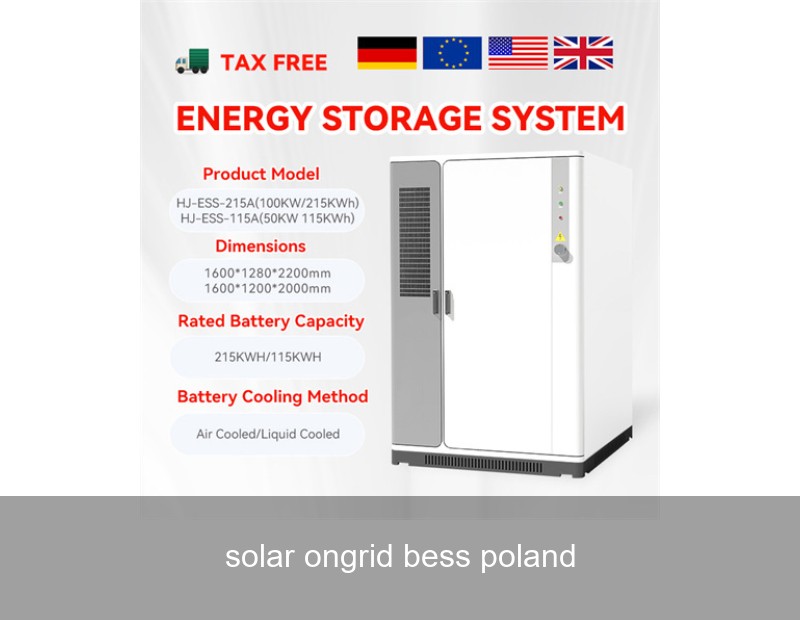
Have you ever watched your solar panels produce a surplus of clean energy on a bright, sunny day, only to see it flow back to the grid for a modest feed-in tariff? For homeowners and businesses across Poland, this is a common scene. The country's solar boom is undeniable, but maximizing its potential requires a key upgrade: a solar on-grid Battery Energy Storage System (BESS). This technology is transforming how Poles consume solar energy, turning photovoltaic (PV) installations from simple money-savers into intelligent, resilient power hubs. For a nation keen on energy security and cost control, integrating a battery with an existing or new grid-tied solar system is the logical next step.
Table of Contents
- The Polish Solar Phenomenon and Its Natural Limit
- What is a Solar On-Grid BESS? Beyond Basic Net-Metering
- A Real Case in Poland: The Mikołajczyk Family Farm
- Choosing the Right System: What to Look For
- The Highjoule Solution: Intelligent Storage for the Polish Market
- The Future Outlook for Energy in Poland
The Polish Solar Phenomenon and Its Natural Limit
Poland has emerged as a European solar champion. Driven by supportive schemes like "Mój Prąd" (My Electricity) and rising electricity prices, the country surpassed 12 GW of installed PV capacity by the end of 2023, with prosumers (energy-producing consumers) leading the charge. This rapid adoption highlights a strong desire for self-sufficiency and stable energy costs. However, the dominant net-metering or discount system, while effective initially, has an inherent limitation. It treats the grid as a "virtual battery," crediting you for surplus energy. But this model doesn't always align with real-time economics or consumption patterns. You export power at noon when prices are lower and import it in the evening peak when prices are high, essentially losing value.

Image source: Unsplash (Representative image of residential solar in Europe)
According to the International Renewable Energy Agency (IRENA), the global trend is moving towards maximizing self-consumption, with storage being the key enabler. As Polish grid regulations evolve and feed-in tariffs become less lucrative, the economic argument for adding batteries strengthens significantly.
What is a Solar On-Grid BESS? Beyond Basic Net-Metering
A solar on-grid BESS is an integrated system that combines your photovoltaic panels with a battery bank and a sophisticated inverter/energy manager. Unlike off-grid systems, it remains connected to the public electricity network. Its intelligence lies in its ability to decide, in real-time, the optimal flow of energy: power your home directly from solar, charge the battery with excess solar, discharge the battery to cover your needs, or draw from the grid only when absolutely necessary.
- DC-Coupled Systems: The battery is connected on the DC side of the solar inverter, often leading to higher efficiency in charging directly from the panels.
- AC-Coupled Systems: The battery has its own hybrid inverter and connects to the AC side of your electrical panel. This is an excellent retrofit solution for existing solar installations.
Think of it as having a personal energy reservoir in your basement or garage. You fill it with free solar energy and use it precisely when you need it most, not when the sun dictates.
Key Benefits for Polish Homeowners and Businesses
Why is this so crucial for the Polish market? The benefits are tangible and multi-layered:
- Dramatically Increased Self-Consumption: Boost the share of your own solar energy you use from 30-40% to 70% or more, slashing your electricity bills further.
- Peak Shaving: Avoid drawing expensive power from the grid during high-tariff evening hours by using stored battery energy.
- Enhanced Backup Power: While a pure on-grid system shuts down during a blackout, many modern BESS solutions, like those from Highjoule, offer seamless backup power. When the grid fails, the system automatically isolates your home (or critical circuits) and powers them from the battery and solar, keeping lights on and fridges running.
- Grid Support and Stability: On a larger scale, distributed storage helps stabilize the local grid by reducing peak demand, which is vital as Poland continues its renewable integration.
A Real Case in Poland: The Mikołajczyk Family Farm
Let's look at a concrete example from the Greater Poland region. The Mikołajczyk family runs a medium-sized dairy farm with a 40 kWp rooftop solar installation. Their challenge was high nighttime consumption (cooling, milking machines) and a significant load during cloudy mornings.
In early 2023, they retrofitted their system with an AC-coupled Highjoule HES-30 battery system with 30 kWh of usable storage capacity. The results after one year were compelling:
| Metric | Before BESS | After BESS Installation |
|---|---|---|
| Solar Self-Consumption Rate | 41% | 89% |
| Monthly Grid Electricity Import | ~1,800 kWh | ~320 kWh |
| Estimated Annual Savings (vs. pre-solar) | PLN 28,000 | PLN 42,500 |
| Grid Independence During 4-hour Outage | Full Production Halt | Critical Operations Maintained |
"The system doesn't just save us money," says Mr. Mikołajczyk. "It gives us peace of mind. We know our critical farm operations are protected from blackouts, and we are truly maximizing the investment we made in our solar panels." This case illustrates the dual financial and resilience payoff of a well-sized BESS for Polish agriculture and business.
Choosing the Right System: What to Look For
Not all storage systems are created equal. For Polish consumers, selecting a BESS requires careful consideration:
- Scalability: Can you easily add more battery modules later if your needs grow?
- Battery Chemistry & Warranty: Lithium Iron Phosphate (LFP) batteries are now the standard for safety, longevity (often 6,000+ cycles), and performance in a wide temperature range. Look for a strong warranty (e.g., 10 years).
- Software Intelligence: The brain of the system. Can it learn your consumption patterns? Can you set charging/discharging schedules based on time-of-use tariffs? Is it remotely monitorable via an app?
- Backup Capability: If resilience is important, ensure the system offers a pure sine wave backup output and automatic transfer switching.
- Local Support: Choose a provider with certified local installers and service partners in Poland.
The Highjoule Solution: Intelligent Storage for the Polish Market
At Highjoule, we've designed our HES (Home Energy Stack) and CES (Commercial Energy Stack) series with the specific challenges of the European and Polish markets in mind. Our systems are built on LFP battery technology, renowned for its safety and cycle life. What sets Highjoule apart is our Adaptive Energy OS software.
This intelligent platform does more than just react; it predicts. By analyzing local weather forecasts, your historical energy usage, and real-time grid conditions, it optimizes your energy flow to maximize savings. For instance, if a sunny afternoon is predicted for tomorrow, it might conserve battery charge today to soak up more free solar energy later. For our commercial clients in Poland, this software can be configured for sophisticated peak shaving, significantly reducing demand charges—a major portion of industrial electricity bills.

Image source: Unsplash (Representative image of a modern BESS unit)
Furthermore, our AC-coupled design makes the HES series a perfect, non-invasive upgrade for the hundreds of thousands of existing solar installations in Poland. Installation is straightforward, and our network of certified Polish partners ensures expert setup and ongoing support.
The Future Outlook for Energy in Poland
The integration of renewable energy is a cornerstone of the European Union's energy policy, as outlined in directives like the European Green Deal. Poland is on this journey. The next phase isn't just about generating more green megawatts; it's about managing that energy intelligently at the point of consumption. Solar on-grid BESS represents a democratization of energy control. It empowers communities, businesses, and families to be active participants in a stable and sustainable grid.
As electricity tariffs continue to reflect the true cost of grid infrastructure and peak generation, the value of every stored kilowatt-hour will only rise. The question is no longer if battery storage will become a standard part of a Polish solar installation, but when.
Is your solar system working as hard as it could for you? What would it mean for your home or business to be powered by your own sun, even after it sets?
 Inquiry
 Online Chat