


Finding the Right Solar Panel Supplier: Your Guide to a Brighter Energy Future
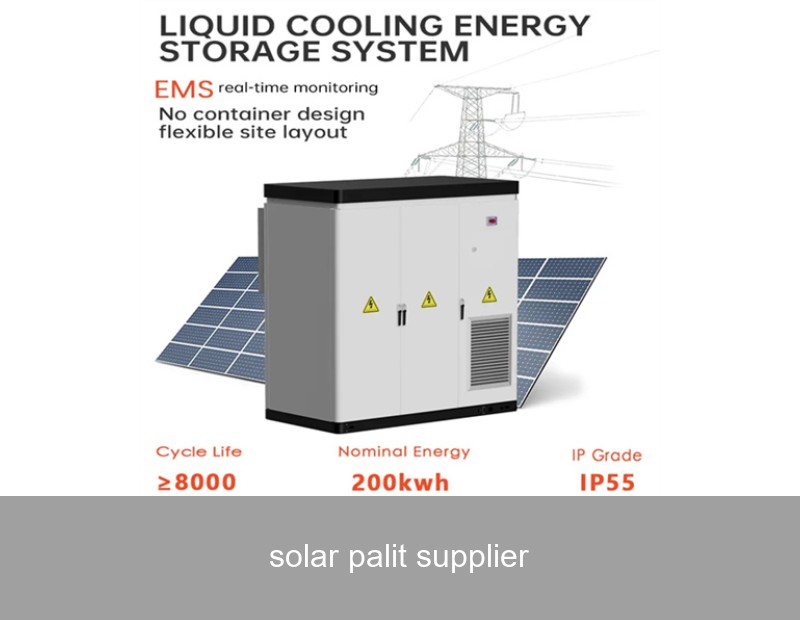
So, you've decided to harness the power of the sun. It’s a smart move, promising energy independence and lower bills. But the journey from decision to a fully operational solar system hinges on one critical choice: selecting the right solar panel supplier. This isn't just about buying panels; it's about partnering with a company that ensures your investment delivers maximum value, reliability, and performance for decades. In today's dynamic market, a true supplier is a solutions provider, offering not just hardware but the expertise and integrated technology to make your solar investment truly intelligent.
Table of Contents
- The Phenomenon: More Than Just a Panel on a Roof
- The Data: Why Your Supplier Choice Matters More Than Ever
- A Case Study in Integrated Success: Freiburg Logistics Hub
- The Expert View: Key Criteria for Your Solar Partner
- Beyond the Panel: The Role of Smart Energy Management
- Your Next Step: Questions to Power Your Decision
The Phenomenon: More Than Just a Panel on a Roof
Gone are the days when solar was a simple, one-way street from panel to plug. Modern energy consumers, whether homeowners or factory managers, face a complex landscape. You have solar production that peaks at midday, but your highest energy consumption might be in the early evening. You hear about grid instability and fluctuating energy prices. The phenomenon you're navigating is the shift from solar installation to holistic energy management. Your solar panel supplier should be your guide in this shift, helping you capture, store, and intelligently use every kilowatt-hour you generate.

Image source: Unsplash. A modern commercial solar installation, where choosing the right supplier ensures the system integrates seamlessly with the building's operations.
The Data: Why Your Supplier Choice Matters More Than Ever
Let's talk numbers. According to the International Energy Agency (IEA), global solar PV manufacturing capacity is increasingly diversified. While this offers choice, it also underscores the importance of supply chain transparency and quality control. A 2023 industry report highlighted that system performance can vary by over 20% based on the quality of components and the design expertise of the provider. Furthermore, with the integration of storage becoming standard, the compatibility between your solar panels, inverter, and battery system—often orchestrated by your supplier—is paramount for efficiency. Simply put, the wrong supplier can leave significant energy and financial savings on the table.
What a Top-Tier Solar Panel Supplier Provides
- End-to-End System Design: Engineering that matches panel orientation, inverter sizing, and potential storage to your specific consumption profile.
- Technology Agnostic Advice: Recommending the best panel and inverter technology (monocrystalline, PERC, microinverters, etc.) for your local climate and goals, not just from a single brand.
- Future-Proofing: Planning for easy addition of battery storage or electric vehicle charging down the line.
- Performance Guarantees: Backing their work with robust warranties and performance guarantees.
A Case Study in Integrated Success: Freiburg Logistics Hub
Let's look at a real-world example from Europe. A large logistics hub in Freiburg, Germany, faced high daytime energy costs and wanted to stabilize its operations against grid volatility. They partnered with Highjoule, not just as a solar panel supplier, but as an advanced energy solutions provider.
Highjoule's approach was integrated from the start:
- Phase 1: A 500 kW rooftop solar array was installed using high-efficiency bifacial panels.
- Phase 2: This was seamlessly coupled with a 750 kWh Highjoule Titan BESS (Battery Energy Storage System).
- Phase 3: The entire system was managed by Highjoule's proprietary Apex energy management software, which autonomously decides when to store solar energy, when to use it, and when to draw from the grid based on real-time pricing.
| Metric | Result |
|---|---|
| Annual Solar Generation | 525,000 kWh |
| Grid Energy Independence | Increased to 85% during peak hours |
| Energy Cost Savings | €68,000 in the first year |
| Payback Period | Estimated under 6 years |
This case demonstrates that the value of your supplier multiplies when they can deliver and integrate the complete ecosystem: generation, storage, and intelligence.
The Expert View: Key Criteria for Your Solar Partner
As a technology expert in this field, I advise you to look beyond the price-per-watt. Interview your potential solar panel supplier as you would a key employee. Here’s your checklist:
1. Proven Track Record & Financial Stability
How long have they been in business? Can they provide references for projects similar to yours? A company like Highjoule, with a history dating back to 2005, has navigated multiple industry cycles, ensuring they'll be around to honor their 25-year performance warranties.
2. In-House Engineering & Software Capability
Do they simply resell boxes, or do they have the engineering prowess to customize a solution? Highjoule, for instance, designs and manufactures its own battery storage systems and Apex software platform. This vertical integration means tighter compatibility, better performance, and a single point of accountability.
3. Comprehensive Service & Monitoring
What happens after the installation? Top suppliers offer 24/7 system monitoring, proactive maintenance alerts, and clear channels for support. Your energy system is a critical asset; it requires continuous care.

Image source: Unsplash. Continuous monitoring and data analytics, like those provided by Highjoule's Apex platform, are essential for maximizing ROI.
Beyond the Panel: The Role of Smart Energy Management
This is where the industry is heading. The most forward-thinking solar panel suppliers now emphasize the "brain" of the system. Solar panels are the source, batteries are the bank, but the energy management system (EMS) is the chief financial officer. It makes millions of decisions to optimize your energy economics.
For example, Highjoule's Apex EMS can be configured for various goals:
- Cost Savings: Automatically using stored solar energy during peak tariff periods.
- Resilience: Keeping critical loads powered during a grid outage.
- Sustainability: Maximizing self-consumption of renewable energy to reduce your carbon footprint.
Your Next Step: Questions to Power Your Decision
Your journey to energy independence is exciting. To ensure you choose a partner who can guide you all the way, start your next conversation with a potential solar panel supplier with these questions:
- "Can you show me a detailed simulation of my project's energy production and financial return, including the impact of adding storage now or in the future?"
- "How does your proposed system specifically address my peak energy usage patterns and local utility rate structure?"
- "What is your process for ensuring the long-term health and performance of my system, and what does your monitoring service include?"
- "As my energy needs evolve—perhaps with EV charging or expanded operations—how easily can this system scale?"
The right supplier will welcome these questions and have detailed, confident answers. They will see themselves not as a vendor, but as your long-term energy partner. What specific energy challenge are you hoping to solve with solar, and how can the right partner turn that challenge into your greatest advantage?
 Inquiry
 Online Chat