


Unlocking Commercial Solar Potential: The Power of a Solar Panel 3 Phase Energy Storage Cabinet
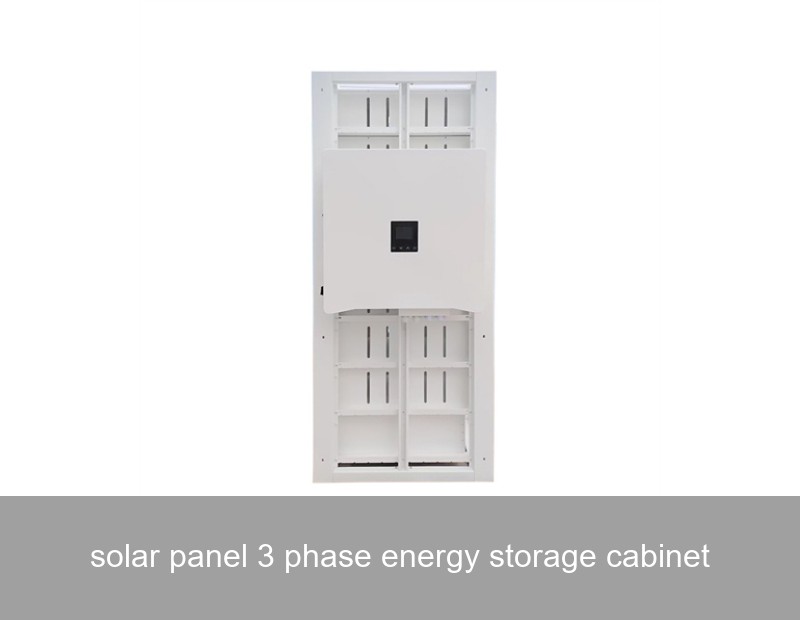
For commercial and industrial (C&I) businesses across Europe and the U.S., the solar panels on the roof are a badge of sustainability and a smart financial move. But if you're operating with heavy machinery, data centers, or large facilities, you've likely encountered a hidden limitation: most on-site solar systems are designed for single-phase power, while your operation runs on robust three-phase electricity. This mismatch can lead to inefficiencies, grid dependency, and missed opportunities. The solution? Integrating your solar array with a specialized solar panel 3 phase energy storage cabinet. This isn't just a battery; it's an intelligent energy management hub that bridges the gap between your renewable generation and your high-power demands, transforming how you consume, store, and control electricity.
Table of Contents
The Three-Phase Problem for Commercial Solar
Let's break down the issue. Single-phase power, common in homes, uses one alternating current (AC) waveform. Three-phase power uses three, delivering a constant, smooth, and powerful flow of energy—essential for running industrial motors, compressors, and manufacturing lines efficiently. Now, imagine your solar panels produce DC electricity, which an inverter converts to AC. A standard single-phase inverter feeds power into just one of your facility's three phases. This can create a dangerous and costly situation called phase imbalance.
- Grid Strain and Fees: Your other two phases draw heavily from the grid, while one might even be exporting excess solar. Utilities often penalize this imbalance with higher demand charges.
- Inefficient Self-Consumption: You can't fully use your solar energy across all your equipment, leading to lower savings.
- Limited Power Quality: Sensitive machinery can suffer from voltage fluctuations, potentially increasing maintenance costs.
According to a 2023 NREL report on commercial solar, maximizing on-site consumption is critical for C&I profitability, yet phase mismatch remains a significant, often overlooked barrier. This is the precise challenge a dedicated three-phase storage system is built to solve.
What Exactly is a 3-Phase Energy Storage Cabinet?
Think of it as the central brain and muscle for your commercial energy ecosystem. A solar panel 3 phase energy storage cabinet is a pre-engineered, all-in-one system that typically houses:
- High-Voltage Battery Modules: Lithium-ion batteries (often LFP chemistry for safety and longevity) configured for high power and capacity.
- 3-Phase Hybrid Inverter: The core component that intelligently converts DC from both solar panels and batteries into perfectly balanced three-phase AC for your facility.
- Advanced Energy Management System (EMS): Software that continuously monitors grid conditions, energy prices, and your consumption patterns to autonomously optimize energy flow.
- Safety & Thermal Management: Integrated cooling, fire suppression, and safety disconnects within a robust, cabinet enclosure suitable for industrial settings.

Image: A modern industrial energy storage system cabinet. (Source: Unsplash, representative image)
Key Benefits: Beyond Basic Backup
Deploying this technology moves you from passive consumer to active energy manager. The benefits are tangible and impactful:
| Benefit | How It Works | Business Impact |
|---|---|---|
| Phase Balancing & Load Management | The EMS actively directs stored solar energy to the phases with the highest demand, neutralizing imbalance. | Reduces utility demand charges, improves power quality, protects equipment. |
| Peak Shaving | The system discharges battery power during short periods of highest grid consumption (e.g., startup of all machines). | Dramatically cuts peak demand tariffs, which can constitute up to 70% of a commercial electricity bill. |
| Enhanced Self-Consumption | Stores midday solar excess for use in the evening when operations are still running but the sun is down. | Increases solar utilization from ~30-50% to over 80%, accelerating ROI on solar assets. |
| Revenue & Resilience | In some markets, systems can provide grid services (frequency response). Also ensures critical operations continue during outages. | Creates potential new revenue streams; prevents costly downtime from blackouts. |
A Real-World Case Study: Precision Manufacturing in Germany
Let's look at concrete data. A medium-sized automotive parts manufacturer in Bavaria, Germany, faced steep energy costs and grid imbalance penalties despite a 250 kW rooftop solar array. Their CNC machines and welding lines created severe phase imbalance, limiting solar self-consumption to just 35%.
The Solution: In 2023, they installed a 3-phase energy storage cabinet with a 280 kWh capacity and a 150 kW inverter. The system was specifically programmed for peak shaving and dynamic phase balancing.
The Results (12-month period):
- Self-Consumption Rate: Increased from 35% to 89%.
- Peak Demand from Grid: Reduced by 40%, slashing demand charges.
- Overall Energy Costs: Decreased by €62,000 annually.
- ROI Period: Projected at under 5 years, factoring in EU funding initiatives for industrial decarbonization.
This case highlights the transformative financial and operational impact of targeted, intelligent storage.
The Highjoule Solution: Engineered for C&I Performance
At Highjoule, with nearly two decades of experience since 2005, we understand that commercial energy storage isn't a one-size-fits-all proposition. Our H-IQ Commercial Series of 3-phase energy storage cabinets is designed from the ground up for the rigors and demands of businesses like yours.
What sets our solution apart?
- True 3-Phase Core: Our proprietary hybrid inverter technology manages each phase independently, ensuring perfect balance and optimal power flow, not just basic storage.
- Scalable & Modular Architecture: Start with a 100 kWh cabinet and scale up to multi-megawatt-hour systems seamlessly as your needs grow. Our modular design minimizes downtime and future-proofs your investment.
- AI-Powered Highjoule EMS Platform: This is where intelligence shines. Our platform doesn't just react; it predicts. By integrating weather forecasts, real-time utility pricing data (crucial for markets with dynamic Time-of-Use rates), and your production schedule, it makes autonomous, cost-optimizing decisions 24/7.
- Unmatched Safety & Service: We use lithium iron phosphate (LFP) battery cells for superior thermal and chemical stability. Every system includes remote monitoring and comes with our global service and performance guarantee, ensuring peace of mind.

Image: Advanced monitoring and control of industrial energy systems. (Source: Unsplash, representative image)
Our systems are deployed in supermarkets, data centers, manufacturing plants, and microgrids across Europe and North America, helping businesses turn their energy infrastructure into a strategic asset.
The Future Outlook for C&I Energy
The energy landscape is shifting from a centralized, one-way flow to a decentralized, interactive network. With policies like the U.S. Inflation Reduction Act (IRA) and the EU's Green Deal incentivizing storage, C&I players are poised to become key nodes in a more resilient grid. The solar panel 3 phase energy storage cabinet is the enabling technology for this transition, allowing businesses to participate in demand response programs and virtual power plants (VPPs).
The question is no longer if storage is valuable, but how to implement it for maximum strategic and financial return. It requires moving beyond viewing solar as a simple supplement to seeing your entire energy footprint as a system that can be optimized.
Is Your Business Maximizing Every Kilowatt-Hour Your Solar Panels Produce?
We invite you to consider: What could a 40% reduction in your peak demand charges do for your bottom line? How would 80%+ energy independence from the grid impact your operational resilience and sustainability goals? Highjoule's team of experts is ready to analyze your facility's unique load profile and solar production to model the precise impact a tailored 3-phase energy storage solution could deliver. The first step towards mastering your energy costs is understanding your current imbalance.
 Inquiry
 Online Chat