


Understanding Solar Panel 40 Watt Price and Value for Small-Scale Power Needs
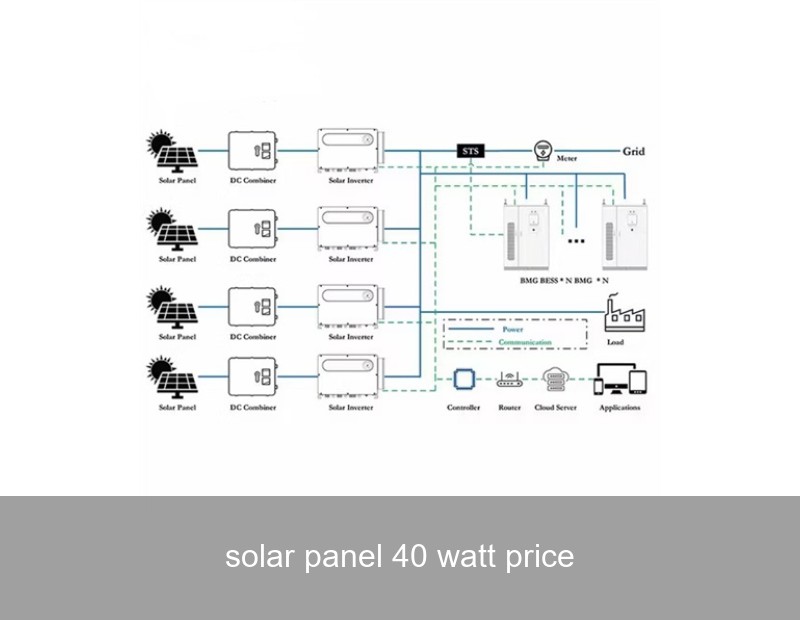
So, you're looking into a 40-watt solar panel? That's a smart move. Whether it's for a shed, a boat, an RV, or to dip your toes into the world of solar energy, a 40W panel represents an accessible entry point. But when you search for "solar panel 40 watt price," you quickly find a wide range. Why does cost vary so much, and what truly defines value in this compact power segment? More importantly, how does this small component fit into a larger, reliable energy system? As a global leader in advanced energy storage, Highjoule understands that true energy independence isn't just about the panel on your roof—it's about intelligent, efficient, and sustainable power management. Let's demystify the price factors and explore how even small solar solutions can be part of a bigger, smarter picture.
Table of Contents
- The Real Breakdown of a 40-Watt Solar Panel Price
- Looking Beyond the Sticker Price: Efficiency & Long-Term Value
- A Real-World Case Study: The Off-Grid Garden Office
- The Critical Role of Smart Storage: From Panel to Reliable Power
- The Highjoule Solution: Integrating Small-Scale Solar with Professional-Grade Storage
- Making Your Informed Choice
The Real Breakdown of a 40-Watt Solar Panel Price
You can find a basic 40W monocrystalline or polycrystalline panel priced anywhere from $40 to $120 or more. This variance isn't random; it's a direct reflection of component quality and performance engineering. Let's break it down:
- Cell Quality & Efficiency: Premium panels use high-grade silicon cells with higher conversion rates (often 21%+). This means a physically smaller panel can still produce a robust 40 watts, a crucial factor for space-constrained installations.
- Durability Features: Price includes the cost of robust tempered glass, weatherproof encapsulation (like EVA), and sturdy aluminum framing. A cheaper panel might use thinner glass or lower-quality seals, risking degradation or damage from hail or high winds.
- Brand & Certification: Reputable brands invest in rigorous testing (UL, IEC certifications) and offer strong warranties (often 25 years on power output). This peace of mind is factored into the price.
- Accessories Included: Does the price include mounting brackets, cables, or a charge controller? A standalone panel price is misleading; the total system cost matters.
Think of it this way: the panel's price tag is just the initial ticket. The real cost is measured over its 25+ year lifespan in reliable energy production.
Looking Beyond the Sticker Price: Efficiency & Long-Term Value
Focusing solely on the lowest "solar panel 40 watt price" can be a false economy. Two key concepts define long-term value: energy density and degradation rate.
A high-efficiency 40W panel from a top-tier manufacturer might cost $100, while a less efficient one costs $60. The cheaper panel will likely be larger and produce less power in real-world, sub-optimal conditions (clouds, partial shade, high heat). Over 25 years, the more efficient panel will generate significantly more total kilowatt-hours (kWh).
Furthermore, quality panels degrade slower. Industry average is about 0.5% power loss per year. A premium panel guarantees a lower degradation rate, ensuring your 40W panel is still producing close to 34W in year 25, while a poorer-quality panel might dip below 28W. That difference in sustained output is where your initial investment truly pays off.
A Real-World Case Study: The Off-Grid Garden Office in Bavaria, Germany
Let's look at a practical application. A freelance graphic designer in Bavaria converted a garden shed into a quiet office. The need was to power a laptop (60W), an LED lamp (10W), a small Wi-Fi router (5W), and occasionally a monitor (25W) for a few hours daily. Total estimated daily consumption: ~300 Watt-hours.
The Initial (Flawed) Setup: They purchased two low-cost 40W panels (€55 each) and a simple lead-acid battery. The theory was sound: 80W of solar should cover the needs. However, the panels' real-world output, especially during Bavaria's frequent overcast days and in winter's low light, averaged only about 50% of their rated capacity. The battery, lacking proper management, would often be undercharged and quickly deteriorated.
The Data-Driven Solution: After a season of frustration, they upgraded. They replaced one 40W panel with a single high-efficiency 100W panel (€180) and, crucially, integrated a Highjoule HomePower 1.5 lithium-ion storage system with a smart inverter. The Highjoule system's Maximum Power Point Tracking (MPPT) charge controller optimized energy harvest from the mixed panel setup, squeezing up to 30% more power than the old PWM controller. The lithium battery provided reliable, deep-cycle storage regardless of partial charging.
The Outcome: Energy reliability soared. The system now met 95% of the office's annual energy needs autonomously. The designer learned that the true "price" wasn't for the panels alone, but for a guaranteed, reliable power outcome.

Image: A modern garden office, similar to our case study, where reliable solar power is key. Credit: Sidekix Media / Unsplash.
The Critical Role of Smart Storage: From Panel to Reliable Power
This case highlights a universal truth: a solar panel without intelligent storage and conversion is like a spring without a faucet—you can't control the flow. The 40W panel generates DC power only when the sun shines. To power AC devices or have electricity at night, you need a battery and an inverter.
This is where the core expertise of companies like Highjoule becomes indispensable. Since 2005, we've moved beyond just selling components to providing integrated power solutions. For small-scale applications, the right battery system determines success. Lithium-ion (LiFePO4) batteries, like those in Highjoule systems, offer far longer lifespan, greater depth of discharge, and compact size compared to traditional lead-acid. More importantly, the built-in Battery Management System (BMS) is the brain that protects the battery, optimizes charging from your 40W (or any) panel, and ensures safety and longevity.
The Highjoule Solution: Integrating Small-Scale Solar with Professional-Grade Storage
At Highjoule, we design our residential and commercial storage systems to be the perfect partner for solar arrays of all sizes, including setups starting with just a panel or two.
Our Highjoule HomePower Series is modular and scalable. You might start with a single 40W panel and a HomePower 1 unit for a cabin. Later, as your energy needs grow—perhaps adding more panels or an electric vehicle—you can seamlessly expand the storage capacity. Our systems feature:
- Advanced Hybrid Inverters: Efficiently convert DC from your panels to AC for your appliances, and can also manage grid power if needed.
- AI-Driven Energy Management: Our software learns your consumption patterns and automatically optimizes when to store solar energy, use it directly, or draw from the grid, maximizing your savings and self-consumption.
- Unmatched Safety & Warranty: Built with automotive-grade battery cells and multi-layer safety protocols, backed by a 10+ year warranty.
For a small business or a critical micro-grid application, our Industrial Energy Storage (IES) solutions provide utility-scale reliability. This means even a modest solar contribution can be integrated into a robust energy resilience plan, reducing demand charges and providing backup during outages.

Image: A modern, wall-mounted battery storage system, similar to Highjoule's HomePower series, enabling solar energy use day and night. Credit: Kindel Media / Pexels.
Making Your Informed Choice
When evaluating the "solar panel 40 watt price," shift your perspective. You're not just buying a panel; you're investing in an energy outcome. Ask yourself these questions:
| Consideration | Cheap Panel Focus | Value & System Focus |
|---|---|---|
| Primary Goal | Lowest upfront cost per watt. | Lowest cost per kilowatt-hour produced over 25 years. |
| System View | Views the panel as a standalone product. | Plans the panel as part of an integrated system (panel + smart storage + inverter). |
| Reliability | Hopes for the best; warranty may be limited. | Seeks certified equipment with robust warranties and professional support from providers like Highjoule. |
| Scalability | Often a dead-end; difficult to integrate with future upgrades. | Designed for expansion, allowing you to start small and grow your solar capacity and storage seamlessly. |
For authoritative information on solar panel technology and standards, you can refer to resources from the National Renewable Energy Laboratory (NREL) or the International Energy Agency (IEA).
So, as you consider powering your small project or beginning your energy independence journey, what will be the first device you choose to power with your own reliable, sun-harvested electricity?
 Inquiry
 Online Chat