


The Solar Panel Factory in the Philippines: Powering a Sustainable Future with Smart Energy
When you think of the Philippines, pristine beaches and vibrant culture might come to mind. But look closer, and you'll discover a nation rapidly becoming a strategic hub for something equally powerful: solar energy manufacturing. The establishment of a solar panel factory in the Philippines is more than an industrial investment; it's a statement about energy independence, economic growth, and sustainable development. However, the very resource that makes these factories viable—the abundant tropical sun—also presents a unique challenge. How do you ensure a world-class manufacturing process when the local grid can be as unpredictable as a tropical storm? The answer lies not just in generating solar power, but in storing and managing it intelligently.
The Power Paradox: Abundant Sun, Unstable Grid
The logic seems impeccable. The Philippines enjoys an average of 5.0 to 5.5 kWh/m² per day of solar irradiance, making it one of the best solar resources in Southeast Asia. This natural advantage is a primary driver for locating a solar panel factory in the Philippines. Yet, the country's energy grid faces significant challenges, including high electricity costs, frequent voltage fluctuations, and occasional outages. For a manufacturing facility operating precision machinery like tabber-stringers, laser scribers, and laminators, a momentary dip or surge in power can lead to costly production defects, equipment damage, and halted production lines.
This creates a critical business risk. A factory's competitiveness hinges on consistent quality and output. Relying solely on the grid or even on-site solar panels without backup is like building a state-of-the-art ship without a reliable bilge pump. You're vulnerable the moment you hit rough waters.

Image Source: Unsplash - Illustrative of the Philippines' strong solar potential.
The Game Changer: Battery Energy Storage for Solar Factories
This is where advanced Battery Energy Storage Systems (BESS) transform the equation. Think of BESS as the "energy shock absorber" and "power bank" for an industrial facility. For a solar panel factory in the Philippines, a tailored BESS provides multiple layers of value that go far beyond simple backup:
- Production Stability: Provides instantaneous backup power (in milliseconds) to ride through grid sags or short outages, keeping sensitive production lines running smoothly.
- Energy Cost Optimization: Stores excess solar energy generated during peak sun hours and discharges it during expensive peak grid demand periods (a strategy known as peak shaving).
- Maximized Solar Self-Consumption: Captures every kilowatt-hour of solar power produced, even if the factory can't use it immediately, drastically reducing reliance on the grid.
- Grid Support & Revenue Potential: Advanced systems can participate in grid services, providing frequency regulation and potentially creating a new revenue stream for the factory.
The technology at the heart of this is lithium-ion phosphate (LFP) battery chemistry, renowned for its long life, safety, and stability—perfect for the demanding 24/7 environment of a factory.
Highjoule's Role: Powering Industrial Solar Ambitions
At Highjoule, with nearly two decades of experience since 2005, we specialize in designing and deploying precisely these kinds of industrial-grade energy solutions. We understand that a solar panel factory in the Philippines isn't just a building; it's the beating heart of a clean energy supply chain.
Our approach involves integrating our HJ-Industrial ESS seamlessly with the factory's existing or new solar PV array. This system is built around our proprietary, modular LFP battery racks and intelligent energy management system (EMS). The EMS is the brain, constantly analyzing energy production, consumption, grid conditions, and tariff schedules to make real-time decisions on when to charge, discharge, or hold. For a factory manager, this translates to a dashboard showing tangible results: reduced peak demand charges, a higher percentage of solar self-consumption, and guaranteed uptime for critical manufacturing zones.
| Challenge for Solar Factory | Traditional Solution | Highjoule BESS-Integrated Solution |
|---|---|---|
| Grid Instability | Diesel Generators (noisy, polluting, slow response) | Instantaneous backup power, seamless transition |
| High Energy Costs | Pay high peak tariffs | Peak shaving using stored solar, lowering demand charges |
| Solar Curtailment (wasting excess solar) | Export to grid at low feed-in tariffs | Store 100% of on-site generation for later use |
| Carbon Footprint Goals | Limited reduction with solar only | Maximizes clean energy use, minimizes diesel/grid reliance |
Case in Point: A Leading Solar Panel Factory's Success Story
Let's move from theory to practice. Consider the case of a major solar manufacturer with a facility in Central Luzon, Philippines. This solar panel factory in the Philippines had a 2.5 MW rooftop solar installation but was still experiencing production interruptions due to grid instability and facing crippling monthly demand charges from the utility.
Their goal was threefold: ensure 99.9% uptime for their cell testing and lamination lines, reduce overall energy costs, and make their manufacturing process as green as their products.
The Solution & Data-Driven Results:
Highjoule engineered a 1.5 MW / 3 MWh containerized BESS, integrated with the factory's solar PV and main distribution panel. The system was configured for primary frequency response and peak load shifting. Here’s what happened within the first year of operation:
- Production Reliability: The system successfully mitigated 17 grid voltage events that would have caused line stoppages, saving an estimated 120 hours of potential production downtime.
- Cost Savings: By strategically discharging the battery during the utility's peak window (2 PM - 10 PM), the factory reduced its peak demand by 22%. This translated to an annual reduction of over ₱18 million (approx. $320,000 USD) in electricity costs.
- Sustainability Impact: The factory increased its solar self-consumption rate from 68% to 94%, effectively making its daytime operations almost entirely powered by the sun. As the IEA notes, greening the manufacturing of solar PV is crucial for the overall sustainability of the energy transition.

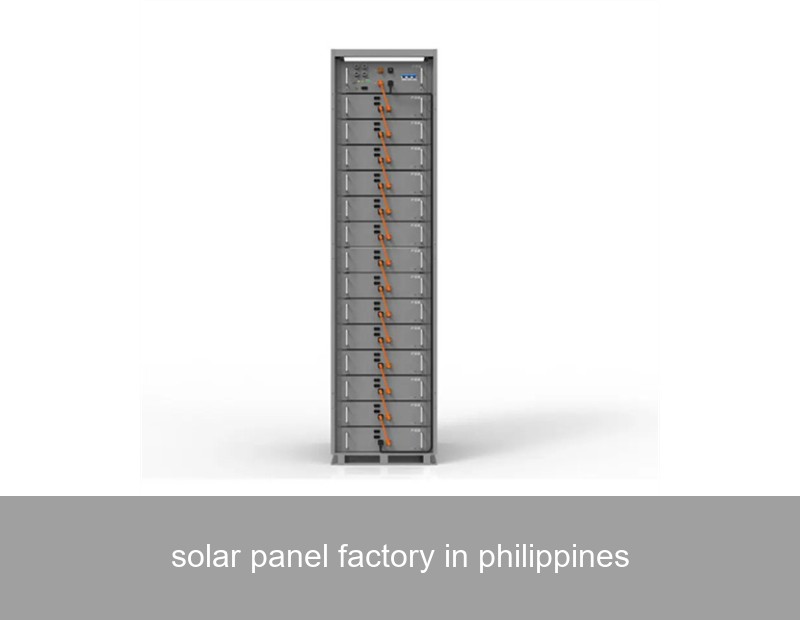
Image Source: Unsplash - Representative of a modern industrial battery storage installation.
The Future Outlook for Solar Manufacturing in the Philippines
The trajectory is clear. With global demand for solar panels soaring and supply chain diversification being a priority, the Philippines is poised to attract more manufacturing investments. IRENA's reports consistently highlight the rapid growth of solar capacity worldwide, which in turn fuels the need for more production facilities.
The next-generation solar panel factory in the Philippines won't just produce clean energy technology; it will be a model of it. It will be a "prosumer" hub—generating, storing, and managing its own energy with precision. This level of energy resilience makes the Philippines an even more attractive and competitive location for high-tech manufacturing, insulating businesses from energy market volatility and contributing to national grid stability.
Beyond the Factory Gates: Highjoule's Broader Mission
While industrial applications are a strength, Highjoule's vision for a sustainable energy future extends to commercial buildings, residential communities, and microgrids across the Philippines and beyond. The same core technology that stabilizes a factory can empower a hospital, a university campus, or an entire off-grid village. Our expertise lies in creating intelligent, efficient, and scalable systems that turn renewable energy from an intermittent source into a dependable foundation for progress.
As the world leans into renewables, the question for businesses isn't just "How can we use solar power?" but rather, "How can we build an unbreakable energy foundation that turns our sustainability goals into a competitive advantage?" What would the first step look like for your operation?
 Inquiry
 Online Chat