


Solar Panel Installation in California: Powering the Golden State's Sustainable Future
California's sunshine is more than just a tourist attraction; it's a powerhouse. With over 284 sunny days a year on average, the state is uniquely positioned to lead America's clean energy transition. This abundant resource has fueled a massive surge in solar panel installation in California, turning rooftops, farms, and commercial spaces into personal power plants. But as more homeowners and businesses make the switch, a critical question emerges: how do we ensure this clean energy doesn't go to waste when the sun sets? The answer lies not just in generation, but in intelligent storage and management.
Table of Contents
- The Phenomenon: California's Solar Surge
- The Data Reality: Beyond Peak Production
- Case Study: A San Jose Manufacturing Facility
- The Solution Evolution: From Solar-Only to Solar-Plus-Storage
- Highjoule's Role: Intelligent Energy Management for Californians
- The Future Horizon: What's Next for California's Grid?
The Phenomenon: California's Solar Surge
Drive through neighborhoods in Sacramento, San Diego, or the Bay Area, and you'll see a sea of glinting panels. California is home to nearly 40% of the nation's solar capacity, with over 1.8 million solar installations powering homes and businesses. This isn't by accident. Supportive policies like the California Solar Initiative and Net Energy Metering (NEM), combined with falling equipment costs, have made solar an attractive investment. The goal is clear: achieve 100% clean electricity by 2045. However, this rapid adoption creates a unique challenge known as the "duck curve" – a daily dip in net electricity demand when solar production is at its peak, followed by a steep evening ramp-up as the sun goes down and people return home.

Image Source: California Independent System Operator (CAISO) - Illustrating the deepening "duck curve" as solar penetration increases.
The Data Reality: Beyond Peak Production
The data paints a compelling picture of both success and strain. On a typical spring day, solar can now meet over 100% of daytime demand for parts of the California grid. Yet, this abundance can lead to curtailment—where excess solar energy is literally thrown away because the grid can't absorb it. In 2022, the state curtailed over 2.4 million megawatt-hours of primarily solar and wind energy. For the homeowner with a standard solar panel installation in California, this translates to exporting power to the grid at low rates during the day only to buy it back at much higher rates in the evening. The financial and grid benefits of solar are maximized only when paired with a solution that captures that midday surplus.
Case Study: A San Jose Manufacturing Facility
Consider the experience of "Precision Machining Co." in San Jose. In 2021, they installed a 250 kW rooftop solar array, aiming to cut high operational costs and meet sustainability targets. Initially, they saw a 40% reduction in their daytime energy bills. However, their facility operated three shifts, and their energy consumption spiked in the early evening, coinciding with peak utility rates (often between 4 PM and 9 PM). Their solar system was idle at night, forcing them to purchase expensive grid power.
In 2023, they integrated a 500 kWh battery energy storage system (BESS) with their existing solar. The results were transformative:
| Metric | Solar-Only (2022) | Solar + BESS (2023) |
|---|---|---|
| Monthly Energy Cost Savings | ~40% | ~78% |
| Grid Energy Purchased During Peak Hours | 85% of evening need | 15% of evening need |
| Self-Consumption of Solar Generation | 35% | Over 90% |
The BESS stores excess solar generated at noon and dispatches it during the expensive peak period. This not only slashed their bills but also provided backup power during a brief grid outage, preventing costly production halts. This case exemplifies the modern standard: solar panel installation in California is now most effective as a "solar-plus-storage" system.
The Solution Evolution: From Solar-Only to Solar-Plus-Storage
The industry has rapidly evolved. The new imperative is to think of solar and storage as a single, integrated system. This shift is driven by:
- Changing Net Metering Policies: Transitions like California's NEM 3.0 make storing your own solar energy more valuable than exporting it.
- Grid Resilience Needs: With increasing wildfire-related Public Safety Power Shutoffs (PSPS), backup power is no longer a luxury but a necessity for many.
- Maximizing ROI: Storage allows you to avoid time-of-use (TOU) rates, essentially allowing you to use the sun's energy 24/7.
This is where partnering with an experienced system provider becomes crucial. It's not just about the panels and batteries; it's about the intelligence that governs them.
Highjoule's Role: Intelligent Energy Management for Californians
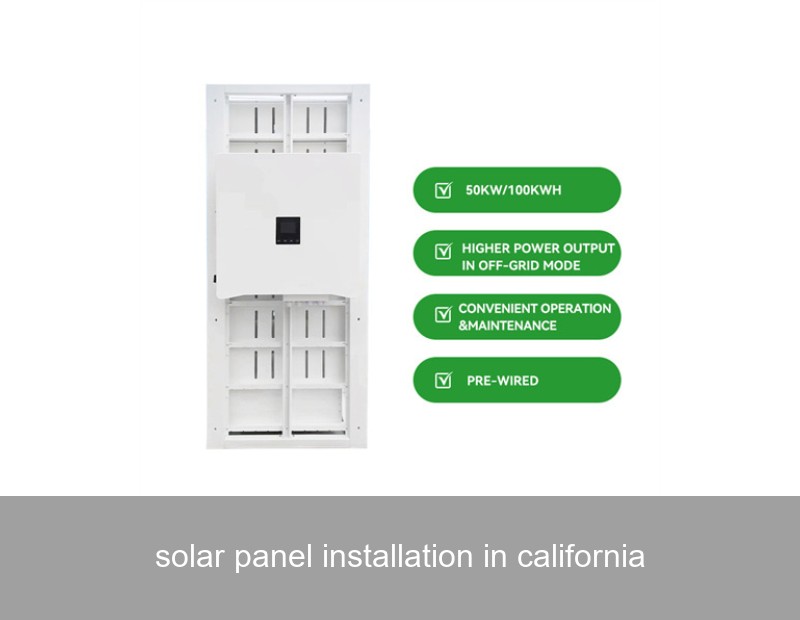
At Highjoule, with nearly two decades of global experience in advanced energy storage, we see the California market as a prime example of where smart technology meets real-world need. Our solutions are designed to address the very challenges outlined here. For a new or existing solar panel installation in California, our HPS (Highjoule PowerStack) commercial & industrial and HRS (Highjoule Residential Solution) systems provide the missing link.
Our systems go beyond simple storage. They feature:
- AI-Powered Energy Management: Our software predicts solar production, consumption patterns, and utility rates to autonomously optimize charge/discharge cycles, ensuring every kilowatt-hour is used at the most economically advantageous time.
- Seamless Integration: We design our BESS to be agnostic, meaning they can be seamlessly integrated with virtually any existing or new solar array, protecting your initial investment.
- Scalability and Safety: From a single residential unit to a multi-megawatt industrial installation, our modular systems are built with UL-certified, lithium iron phosphate (LFP) battery chemistry for enhanced safety and longevity, a critical consideration for any homeowner or business.
For a commercial client like the one in our case study, a Highjoule system would have provided the same benefits with the added advantage of our global monitoring platform, offering insights and control to further optimize performance over the system's 20+ year lifespan.
Image Source: Unsplash - Example of a modern solar-plus-storage residential installation.
The Future Horizon: What's Next for California's Grid?
As California marches toward its 2045 goal, the role of distributed energy resources (DERs) like rooftop solar and storage will only grow. We're moving towards a more decentralized grid where homes and businesses become active participants—a concept known as the "energy internet" or virtual power plants (VPPs). In this future, thousands of individual systems like those powered by Highjoule intelligence could be aggregated to provide grid services, enhance community resilience, and stabilize energy costs for everyone.
The journey for a homeowner or business owner begins with a single step: a high-quality solar panel installation in California. But the true potential is unlocked when that installation is conceived from the start as a comprehensive, intelligent energy asset. It's about generating power, yes, but more importantly, it's about mastering its use.
 Inquiry
 Online Chat