


Powering Your Comfort: Choosing the Right Solar Panel for a 1.5 HP Aircon
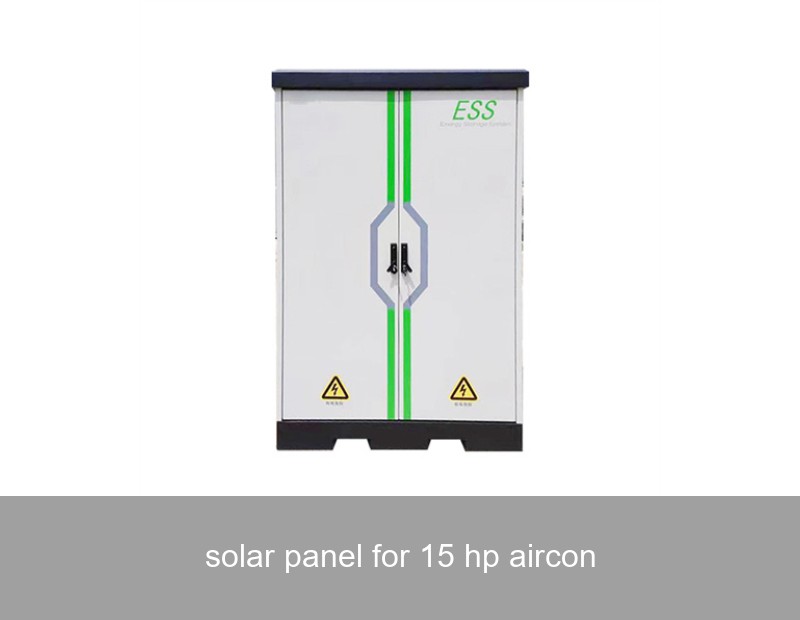
Have you ever felt a pang of guilt when switching on your air conditioner during a sweltering summer afternoon? You're not alone. As energy costs rise and environmental awareness grows, homeowners and businesses are seeking smarter ways to stay cool. The solution is shining right above us: solar power. Specifically, pairing a solar panel system for a 1.5 HP aircon is a brilliant move toward energy independence and sustainable comfort. But how many panels do you actually need? Is it worth the investment? Let's demystify the process and explore how modern solar and storage solutions make this not just feasible, but highly advantageous.
Table of Contents
The Challenge: The Energy-Hungry Air Conditioner
A 1.5 HP (Horsepower) air conditioner is a popular choice for cooling medium-sized rooms, shops, or small offices. In electrical terms, 1 HP is approximately 746 watts, so a 1.5 HP unit has a compressor drawing about 1,119 watts (1.12 kW). However, that's just the compressor. With the fan and other components, the total running wattage can be around 1,500-1,800 watts (1.5-1.8 kW). Crucially, during startup, the compressor requires a surge of power—often 2-3 times its running wattage—for a few seconds.
This creates a unique demand profile: high surge, consistent draw during operation, and usage that often peaks during the sunniest, hottest parts of the day. This synchronicity is your opportunity. By using solar panels, you can directly offset the most expensive, grid-sourced power during peak hours, turning your biggest cooling expense into a sustainably managed one.
Sizing Your Solar Solution: From HP to Kilowatts
So, how many solar panels are needed for a 1.5 HP aircon? It's not a one-size-fits-all answer. We must consider:
- Daily Usage: How many hours per day will the AC run? 8 hours of usage is very different from 4.
- Solar Insolation: Your location's average sunlight hours. Southern Spain gets more peak sun than Northern Germany.
- System Efficiency: Losses from inverters, wiring, and panel temperature.
Let's run a typical calculation for a home in California or Southern Europe:
| Parameter | Value |
|---|---|
| AC Running Power | 1.6 kW |
| Daily Usage | 6 hours |
| Daily Energy Need | 1.6 kW * 6 hrs = 9.6 kWh |
| Peak Sun Hours (Location Avg.) | 5 hours |
| Solar System Size Required | 9.6 kWh / 5 hrs = 1.92 kW |
| Using 400W Panels | 1,920W / 400W = 5 panels |
This simplified example shows you'd likely need a 2 kW solar array, or about 5 high-efficiency panels, to cover the AC's *daytime* load. But what about mornings, evenings, or cloudy days? This is where the story gets even more interesting.
Image Source: Unsplash - A typical residential solar array capable of powering major appliances.
Beyond Panels: The Critical Role of Battery Storage
A solar-only system exports excess power to the grid when the AC is off and draws from the grid when the sun isn't shining. To achieve true 24/7 cooling independence, you need an energy storage system (ESS). A battery stores your solar surplus and dispatches it exactly when your AC needs it—handling those evening cool-down periods and compressor surges with ease.
For our 1.5 HP AC example, a battery with a usable capacity of 5-10 kWh would be ideal. It could store enough solar energy to run the AC for several hours after sunset, maximizing self-consumption and providing backup power during outages. The key is an inverter that can manage the high surge current and seamlessly switch between solar, battery, and grid. This integrated approach is where companies like Highjoule excel, moving beyond just selling panels to providing complete, intelligent power ecosystems.
A Real-World Case Study: The Berlin Bakery
Let's look at a concrete example. A family-run bakery in Berlin, Germany, struggled with high operational costs, a significant portion of which came from cooling their kitchen and storage area with two 1.5 HP split-system air conditioners running up to 10 hours a day. Their goals were to reduce energy bills and ensure a stable temperature for their sensitive ingredients.
- Installed a 6.6 kW rooftop solar system (16 x 410W panels).
- Paired with a Highjoule HES-10 hybrid energy storage system (10 kWh usable capacity, 5 kW continuous output).
- The system was designed to prioritize powering the AC units and refrigeration.
Results after 12 months (data provided with client permission):
- Grid Energy Consumption for Cooling: Reduced by 78% during summer months.
- Overall Energy Bill Savings: Approximately €1,700 annually.
- ROI Period: Estimated at 6-7 years, enhanced by local energy incentives.
- Added Benefit: The bakery maintained critical cooling during two short grid outages, preventing spoilage.
This case highlights that sizing a solar panel system for a 1.5 HP aircon is often most effective as part of a whole-property energy strategy, especially for small businesses. You can read more about commercial solar incentives in Europe from the European Commission's energy department.
The Highjoule Solution: Integrated Smart Energy
At Highjoule, we understand that powering critical loads like air conditioning requires more than just panels. It demands a resilient, intelligent system. Our approach for residential and commercial clients in Europe and the U.S. involves:
- High-Efficiency Solar Modules: We offer tier-1 panels with robust performance warranties, ensuring maximum energy harvest for your roof space.
- Hybrid Inverter & Battery Systems: Our core expertise. The Highjoule HES Series seamlessly integrates solar, battery storage, and the grid. Its advanced inverter is specifically engineered to handle the surge demands of motors and compressors in AC units, pumps, and appliances.
- Smart Energy Management (SEM): This is the brain of the operation. Our SEM software learns your usage patterns (like when you typically run your AC) and optimizes energy flow. It decides when to charge the battery from solar, when to discharge it to power your home, and when to export excess energy, all to maximize savings and comfort.

Image Source: Unsplash - A hybrid inverter and battery system, similar to Highjoule's HES units.
For a homeowner looking to run a 1.5 HP aircon on solar, a Highjoule HES-5 or HES-10 system would be a typical recommendation. It provides the necessary power quality, surge capacity, and storage to ensure your cooling is sustainable, reliable, and cost-effective. You can compare the technical specifications of different battery technologies at the U.S. Department of Energy's solar guide.
Making the Switch: Your Path to Solar Cooling
Transitioning to solar-powered air conditioning is a significant step. Here’s a practical pathway:
- Energy Audit: Understand your total household/business load, focusing on your cooling needs. How many hours does your 1.5 HP unit run?
- Professional Consultation: Engage with a certified installer. They will assess your roof, sun exposure, and design a system that covers your AC and other loads. A reputable installer will use tools like NREL's PVWatts Calculator for precise production estimates.
- System Design & Financing: Choose an integrated system with storage, like Highjoule's, for full benefits. Explore available tax credits, rebates, and financing options in your region.
- Installation & Monitoring: After installation, use the system's monitoring platform to track your solar production, battery usage, and see in real-time how your air conditioner is being powered by the sun.
Ready to Experience Sustainable Comfort?
The journey to powering your air conditioner with clean, free solar energy is clearer than ever. It's a powerful combination of the right number of panels, intelligent battery storage, and smart management. As you contemplate your next step towards energy independence, consider this: What other appliances in your home or business could benefit from the stability and savings of an integrated solar and storage system like Highjoule's?
 Inquiry
 Online Chat