


Solar Panel for 400 Units: Scaling Clean Energy for Large Communities
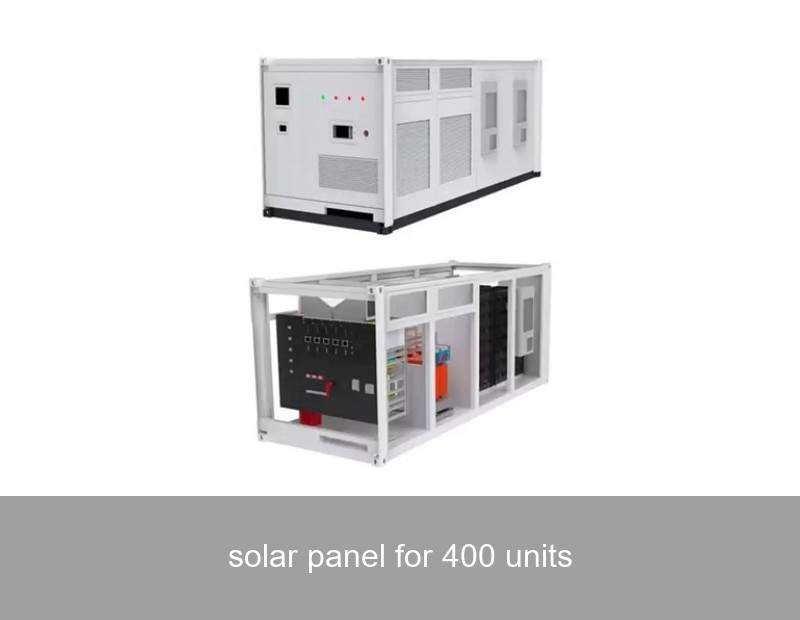
Imagine a neighborhood of 400 homes, a sprawling apartment complex, or a sizable commercial district. The energy demand is immense and constant. Now, imagine powering it all with the sun. The concept of deploying a solar panel for 400 units is no longer a futuristic dream but a pressing economic and environmental imperative. As grid instability and energy costs rise, large-scale solar projects are becoming the cornerstone of resilient, sustainable power for communities and businesses across Europe and the US. But scaling from a single rooftop to hundreds presents unique challenges in design, storage, and intelligent management. Let's explore how this is not just possible, but highly advantageous.
Table of Contents
- The Challenge: Beyond a Single Rooftop
- The Data Speaks: Why Scale Makes Economic Sense
- A Real-World Case: The Berlin Residential Block Project
- The Non-Negotiable Partner: Advanced Battery Storage Systems
- Highjoule's Role: Intelligent Systems for Mega-Scale Solar
- Looking Ahead: The Future of Community-Scale Solar
The Challenge: Beyond a Single Rooftop
Installing a solar panel for 400 units is fundamentally different from a residential retrofit. It's a complex energy infrastructure project. Key hurdles include:
- Intermittency & Grid Strain: 400 units generating solar power simultaneously can flood local grids, causing instability without proper management.
- Demand Mismatch: Solar production peaks midday, but energy demand often spikes in the early morning and evening.
- Space Optimization: Maximizing yield from available roof spaces, carports, or land requires sophisticated layout planning.
- Fair Allocation & Billing: How is the generated power fairly distributed, measured, and billed among hundreds of individual users or tenants?
Overcoming these isn't just about more panels; it's about a smarter, integrated system.
The Data Speaks: Why Scale Makes Economic Sense
The economics of solar improve dramatically with scale. According to the National Renewable Energy Laboratory (NREL), utility-scale solar costs have dropped by nearly 90% since 2010. While community-scale isn't utility-level, it captures similar benefits:
- Lower Cost Per Watt: Bulk procurement of panels and equipment reduces capital expenditure.
- Higher System Efficiency: Large, centrally managed systems operate at higher average efficiencies than scattered individual installations.
- Reduced Grid Dependency: A collective system can significantly offset peak demand charges, a major cost for multi-tenant buildings.
| System Scale | Estimated Total Capacity | Key Advantage |
|---|---|---|
| Single-Family Home | 5-10 kW | Individual Savings |
| 400-Unit Community | 1.5 - 3 MW | Grid Resilience, Collective Bargaining Power, Major Carbon Footprint Reduction |
A Real-World Case: The Berlin Residential Block Project
Let's look at a concrete example. A 2019 retrofit of a post-war residential block in Berlin, comprising 398 apartments and commercial spaces, aimed for energy autonomy.
- Solution: A 1.8 MW solar array was installed across all suitable rooftops and facades, paired with a 2.4 MWh centralized battery storage system.
- Outcome: The system now meets 65% of the block's annual electricity needs. During a regional grid outage in 2022, the complex maintained power for 28 hours for all essential services and communal areas.
- Data Point: Residents reported an average 30% reduction in electricity costs, while the building's CO2 emissions were cut by an estimated 740 tons annually. The IEA has highlighted similar models as critical for urban decarbonization.

Image Source: Unsplash (Representative image of large-scale residential solar)
The Non-Negotiable Partner: Advanced Battery Storage Systems
For a solar panel for 400 units project, storage isn't an add-on; it's the linchpin. It solves the intermittency problem, stores midday surplus for evening use, and provides critical backup. This is where expertise matters most. Not all battery systems are built for such demanding, 24/7 community-scale cycling.
Highjoule specializes in precisely this challenge. Our GridSynergy™ Commercial & Industrial (C&I) energy storage systems are engineered for high-throughput, long-duration applications. With robust lithium-iron-phosphate (LFP) chemistry for safety and longevity, and an intelligent energy management system (EMS), they turn a large solar array into a reliable, dispatchable power plant. For microgrid applications across communities, our MicroGrid Commander™ platform allows seamless integration of solar, storage, and existing generators, ensuring lights stay on regardless of external grid conditions.
Highjoule's Role: Intelligent Systems for Mega-Scale Solar
At Highjoule, we don't just supply components; we deliver turnkey, intelligent power solutions. For a developer or municipality planning a solar panel for 400 units project, our value proposition is end-to-end integration:
- Highjoule HEMS (Home Energy Management System) for Communities: Scalable software that manages energy flow between solar production, battery storage, and individual unit consumption. It enables dynamic load balancing and fair virtual allocation of solar power to each tenant.
- Performance Guarantee: Our systems come with performance monitoring and guarantees, ensuring the projected financial and energy savings are realized over the system's 20+ year lifespan.
- Regulatory Navigation: We have extensive experience helping clients in Europe and the US navigate feed-in tariffs, net metering for large systems, and incentive programs like the EU Renewable Energy Directive or the US Investment Tax Credit (ITC).

Image Source: Unsplash (Representative image of energy management software)
Key Steps for Implementing a 400-Unit Solar Solution
- Feasibility & Design: Conduct a detailed site audit, shadow analysis, and load profiling for the entire community.
- Technology Selection: Choose high-efficiency, durable panels and a Highjoule C&I battery system sized for both daily cycling and backup needs.
- Financial & Legal Structuring: Decide on ownership model (developer-owned, co-op, third-party). Highjoule's partnerships can help structure competitive financing.
- Installation & Integration: Professional deployment of hardware and the crucial HEMS software to unify the system.
- Monitoring & Optimization: Ongoing remote monitoring and maintenance to ensure peak performance and ROI.
Looking Ahead: The Future of Community-Scale Solar
The trajectory is clear. As virtual power plant (VPP) technology matures, a solar panel for 400 units project, coupled with large-scale storage, won't just power itself—it will become a node that supports the wider grid, providing stability services and creating new revenue streams. The question is no longer "if" but "how soon."
Is your next large-scale development or community retrofit positioned to be an energy producer, not just a consumer? What would the energy independence and fixed low-cost electricity mean for the long-term value and appeal of your 400-unit property?
 Inquiry
 Online Chat