


Solar Panels for Commercial Buildings: Powering Business with Smart Energy
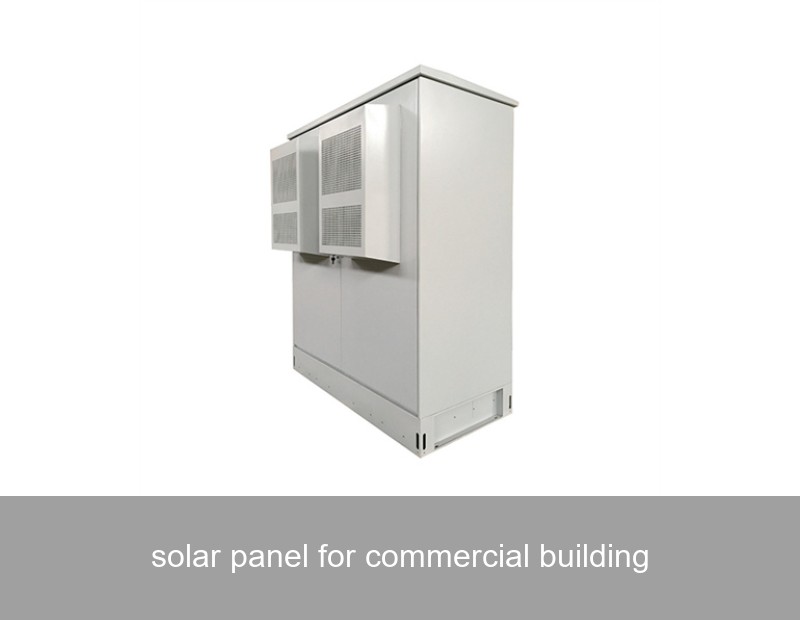
As energy costs climb and sustainability becomes a boardroom priority, commercial building owners and facility managers across Europe and the US are looking to the sky for a solution. Installing solar panels for commercial buildings is no longer just a green statement—it's a strategic financial decision. But the journey from sunlight to savings and resilience is more nuanced than simply covering a roof with photovoltaic modules. The real power lies in integrating generation with intelligent storage and management. This is where modern solar transitions from a simple cost-saver to a transformative energy asset.
Table of Contents
- The Phenomenon: Rising Demand for Commercial Solar
- The Data: Why Solar Makes Business Sense
- The Critical Challenge: Intermittency and Self-Consumption
- The Integrated Solution: Solar + Intelligent Storage
- Highjoule's Role: Beyond the Solar Panel
- Case Study: A European Logistics Hub
- The Future of Commercial Solar Energy
The Phenomenon: Rising Demand for Commercial Solar
Walk through any industrial park or look at the rooftops of big-box retailers today, and you'll see a growing landscape of glistening solar arrays. This shift is driven by a powerful convergence: volatile grid electricity prices, corporate ESG (Environmental, Social, and Governance) mandates, and impressive advancements in solar technology efficiency and affordability. Businesses are recognizing that their large, flat rooftops and parking canopies are not just operational spaces but valuable real estate for energy generation. The goal is clear: reduce operational expenditure (OpEx), lock in long-term energy costs, and demonstrate tangible environmental commitment to stakeholders.
The Data: Why Solar Makes Business Sense
Let's talk numbers. According to the Solar Energy Industries Association (SEIA), the US commercial solar sector has seen an average annual growth of 12% over the past decade. In Europe, driven by the REPowerEU plan, solar capacity is accelerating rapidly. The financial argument is compelling:
- Cost Reduction: Commercial entities can typically offset 20-80% of their grid electricity consumption, leading to direct savings on utility bills.
- Incentives: Programs like the Investment Tax Credit (ITC) in the US and various feed-in tariffs or grants in European countries significantly improve ROI.
- Asset Value: Studies indicate that commercial properties with solar installations often have higher market value and lower vacancy rates.
- Hedging: Solar provides a hedge against future electricity price inflation, offering predictable energy costs for 25+ years.
However, these headline figures only tell part of the story. To truly unlock this value, we must address the inherent nature of solar power.
The Critical Challenge: Intermittency and Self-Consumption
Here's the catch: the sun doesn't shine on a 9-to-5 schedule matching most commercial operations. Peak solar generation often occurs midday, while energy demand for many businesses—especially those with evening operations, lighting loads, or HVAC systems—peaks in the morning and late afternoon. This mismatch leads to a crucial concept: self-consumption rate. Without a way to store excess solar energy produced at noon, it's often exported to the grid at lower rates, only for the business to buy back expensive grid power later. This drastically reduces the financial and operational benefits of your solar investment.

Image Source: Unsplash (Typical commercial solar installation)
The Integrated Solution: Solar + Intelligent Storage
This is where the conversation evolves from solar panels to a comprehensive energy system. The key is pairing your solar array with a commercial-grade Battery Energy Storage System (BESS). Think of it this way: the solar panels are your power plant, and the battery is your corporate energy treasury and risk manager.
- Maximize Self-Consumption: Store midday excess solar energy and discharge it during peak evening hours, slashing demand charges.
- Demand Charge Management: Utilities often charge commercial customers based on their highest 15-minute power draw (demand). A BESS can "peak shave," ensuring grid draw stays below a set threshold.
- Backup Power: Provide critical backup for essential loads during grid outages, ensuring business continuity.
- Grid Services: In some markets, aggregated systems can participate in grid-balancing programs for additional revenue.
Highjoule's Role: Beyond the Solar Panel
At Highjoule, with nearly two decades of experience since 2005, we view solar panels for commercial buildings as the vital first component of a smarter energy ecosystem. Our expertise lies in seamlessly integrating high-efficiency solar generation with our advanced, AI-driven storage systems. We don't just sell hardware; we deliver tailored, turnkey power solutions for commercial, industrial, and microgrid applications.
Our flagship H-Series Commercial BESS is engineered specifically for the rigors of business and industrial use. It features:
- Scalable architecture from 100 kWh to multi-MWh configurations.
- Advanced battery management and safety systems for LiFePO4 chemistry.
- Integrated Energy Management System (EMS) that uses predictive algorithms to optimize charge/discharge cycles based on weather forecasts, tariff schedules, and consumption patterns.
- Robust design for both indoor and outdoor installation.
Our service includes comprehensive energy analysis, system design, installation support, and ongoing monitoring via our Highjoule Energy Platform. We ensure your solar and storage investment delivers the maximum possible financial and operational return.
Case Study: A European Logistics Hub
Let's examine a real-world application. A major logistics warehouse in Germany, operating 24/7 with high refrigeration and sorting energy demands, faced high grid costs and sought to meet corporate carbon targets.
The Highjoule Solution: A 850 kWp rooftop solar system coupled with a 500 kWh/1 MWh H-Series BESS.
| Metric | Before Installation | After Installation |
|---|---|---|
| Grid Energy Consumption | 100% | 35% |
| Self-Consumption of Solar | N/A | Increased from ~40% to 92% |
| Peak Demand Charge | €12,000 per month | Reduced by 68% |
| Annual CO2e Reduction | Baseline | Over 720 tonnes |
The system's intelligent EMS prioritizes using stored solar energy during the evening peak and early morning ramp-up. The result was a projected payback period of under 7 years in a market with high electricity prices, not to mention the invaluable resilience against grid instability. This case exemplifies the multiplier effect of integrating storage with solar generation. For more on grid challenges, see the IEA's report on electricity grids.

Image Source: Unsplash (Engineer inspecting industrial battery system)
The Future of Commercial Solar Energy
The next frontier is the truly intelligent, grid-interactive building. With technologies like Highjoule's platform, your solar and storage system can dynamically interact with the grid, responding to price signals or providing stability services. This transforms your commercial property from a passive energy consumer into an active node in a cleaner, more resilient energy network. The integration of electric vehicle (EV) fleet charging into this ecosystem is the logical next step, using on-site solar and storage to power transportation.
So, as you consider solar panels for your commercial building, we leave you with this question: Is your goal simply to install solar panels, or is it to fundamentally transform your energy profile into a predictable, cost-controlled, and sustainable asset for the next quarter-century? The distinction defines the value you will capture.
 Inquiry
 Online Chat