


The Strategic Edge: Why Top Commercial Solar Contractors Are Integrating Advanced Energy Storage
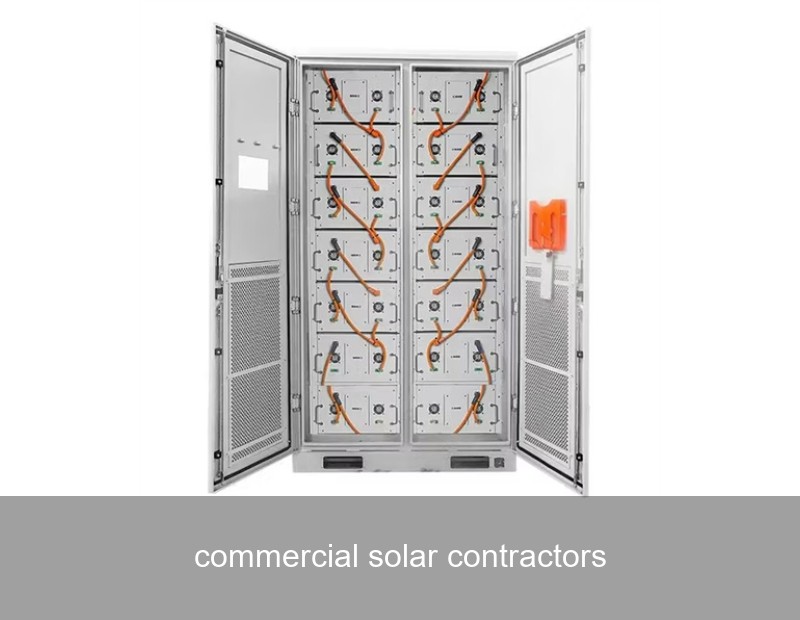
If you're a commercial solar contractor, you've witnessed the industry's evolution firsthand. The conversation is shifting. It's no longer just about the number of panels on the roof or the peak system size. Today, your most forward-thinking clients—factory managers, supermarket chains, data center operators—are asking a more sophisticated question: "How do we maximize every kilowatt-hour we produce, ensure resilience, and truly control our energy costs?" This is where the game changes, and the answer lies in the strategic integration of advanced battery energy storage systems (BESS).
Table of Contents
- The Phenomenon: From Solar-Only to Integrated Energy Hubs
- The Data: Quantifying the Storage Advantage
- The Case Study: A European Logistics Center's Transformation
- The Expert View: Key Considerations for Integration
- Highjoule Solutions: Engineered for Contractor Success
- The Future Is Integrated: What's Your Next Move?
The Phenomenon: From Solar-Only to Integrated Energy Hubs
For years, the commercial solar value proposition was beautifully simple: reduce grid dependency and lock in lower electricity costs. However, a significant challenge remains—solar generation and commercial energy demand are often misaligned. The sun shines brightest in the middle of the day, but many businesses see peak demand (and highest utility rates) in the early evening. Without storage, a substantial portion of that self-generated, cheap solar energy is exported to the grid at low rates, only for the business to buy back expensive power hours later. It's a frustrating inefficiency. Leading commercial solar contractors are now solving this by designing integrated solar-plus-storage systems that act as intelligent, on-site energy hubs.
The Data: Quantifying the Storage Advantage
The financial and operational benefits aren't theoretical; they are driven by concrete market mechanics. Let's break down the key value streams:
- Arbitrage: Store excess solar generation and discharge it during peak rate periods. In markets like California (CAISO) or parts of Europe with high Time-of-Use (TOU) differentials, this daily cycle can significantly impact payback periods.
- Demand Charge Management: For many commercial customers, 30-50% of their electricity bill can come from demand charges—fees based on their highest 15-minute power draw in a billing cycle. A properly sized BESS can "peak shave," capping that draw and slashing these charges.
- Resilience & Backup: Power outages mean lost revenue and operational disruption. Solar alone typically shuts off during a grid outage for safety (anti-islanding). Paired with storage, it can form a resilient microgrid, keeping critical loads online.
- Grid Services: In some regions, aggregated storage can participate in frequency response or capacity markets, creating a new revenue stream. The U.S. Department of Energy highlights the critical role of storage in grid modernization.
| Benefit | Typical Impact for Commercial Client | Key for Contractor |
|---|---|---|
| Energy Bill Reduction | 40-70%+ (solar + storage vs. grid-only) | Primary sales driver, improves ROI calculation |
| Demand Charge Reduction | 20-40% reduction | Addresses a major, often overlooked pain point |
| Increased Self-Consumption | Can increase solar self-use from ~30% to 70%+ | Maximizes value of installed PV |
The Case Study: A European Logistics Center's Transformation
Let's look at a real-world application. A major logistics and distribution center in Germany, operating 24/7, had a 1.2 MW rooftop solar array. Despite this, their demand charges were crippling, and evening operations relied entirely on the grid.
The Challenge: High peak demand from simultaneous charging of electric forklifts, HVAC, and lighting, leading to steep demand charges and underutilized solar.
The Solution: The project's commercial solar contractor partnered with Highjoule to integrate a 500 kWh / 750 kW Highjoule H-Series battery storage system. The system was configured for intelligent, forecast-based operation: it stored midday solar surplus and strategically discharged during the evening load peak and early morning ramp-up.
The Results (12-month period):
- Demand Charges Reduced by 32%: The single largest contributor to cost savings.
- Grid Energy Consumption Cut by 61%: Self-consumption of solar power jumped from 35% to 89%.
- Backup Power: The system provides 4 hours of full backup for critical cold storage and IT infrastructure, a feature that became a major selling point for the client's sustainability and risk management reports.
- ROI: The combined solar+storage system's payback period was calculated at under 7 years, enhanced by favorable German KfW financing for storage systems.

Advanced battery storage systems, like the Highjoule H-Series, are designed for seamless integration into commercial and industrial facilities.
The Expert View: Key Considerations for Integration
As a technical expert, I advise contractors to focus on these pillars when evaluating storage partners and solutions:
1. System Intelligence & Software
The hardware stores energy, but the software creates value. Look for systems with advanced energy management systems (EMS) that can optimize for multiple objectives (cost savings, resilience, grid services) based on weather forecasts, tariff structures, and load patterns. The "brain" is as important as the "brawn."
2. Safety & Certification
Commercial installations demand the highest safety standards. Ensure the BESS has comprehensive certifications (e.g., UL 9540, IEC 62619) and includes integrated safety features like thermal runaway propagation prevention, advanced gas detection, and secure remote monitoring. Resources like the NFPA 855 standard are essential reading.
3. Scalability & Serviceability
Your client's needs may grow. A modular system that allows for capacity expansion without major re-engineering is a future-proof investment. Similarly, consider the service model—can issues be diagnosed remotely? Are replacement parts readily available?
Highjoule Solutions: Engineered for Contractor Success
At Highjoule, we've spent nearly two decades designing energy storage solutions that empower commercial solar contractors to deliver unparalleled value. We understand that your success depends on reliable, high-performing technology and seamless project execution.
Our flagship product for commercial applications, the Highjoule H-Series, is a containerized or skid-mounted, utility-grade BESS built with contractor needs in mind:
- Pre-Engineered & Pre-Assembled: Reduces on-site installation time and complexity, lowering your labor costs and project risk.
- High-Density LFP Chemistry: Offers the optimal balance of safety, longevity (10,000+ cycles), and energy density, backed by a robust 10-year warranty.
- JouleOS Energy Management Platform: Our cloud-based EMS provides intuitive control, real-time analytics, and customizable optimization algorithms. You and your client can monitor performance and savings through a clear dashboard.
- Global Support & Training: We provide dedicated technical support and comprehensive training programs, ensuring your team is confident in designing, installing, and commissioning Highjoule systems.
For contractors, this translates into a trusted, single-source solution that enhances your proposal's competitiveness, simplifies your workflow, and builds long-term client satisfaction through measurable results.

Intelligent energy management software is key to unlocking the full value of solar-plus-storage systems.
The Future Is Integrated: What's Your Next Move?
The trajectory is clear. As grid dynamics become more volatile and the drive for sustainability intensifies, the standalone solar proposal will become the exception, not the rule. Your clients will increasingly view energy as a strategic asset to be managed, not just a cost to be reduced. The commercial solar contractors who lead this transition—who can speak fluently about load profiles, tariff structures, and resilience—will secure the most profitable and impactful projects.
The question is no longer if storage will become standard, but how quickly you can master its integration. Are you ready to design the intelligent, resilient, and highly profitable energy systems that your commercial clients will demand tomorrow?
 Inquiry
 Online Chat