


Powering Progress: The Ultimate Guide to Solar Panels for Condominiums in the Philippines
Imagine a high-rise condominium in Manila, its sleek glass facade not just reflecting the tropical sun, but actively harnessing it. This is no longer a futuristic vision. Across the Philippines, from bustling Metro Manila to emerging urban centers in Cebu and Davao, a quiet revolution is underway. Condominium boards and property developers are increasingly turning to solar panels for condominiums in the Philippines as a strategic solution to rising energy costs, frequent power fluctuations, and a growing commitment to sustainability. This guide delves into why this trend is accelerating, the tangible benefits it offers, and how modern technology makes it not just feasible, but highly advantageous for multi-unit residential buildings.
Table of Contents
- The Rising Demand: Why Condos are Going Solar
- Unique Challenges for Condominium Solar Projects
- Proven Solutions and System Architectures
- Case Study: A Makati High-Rise Success Story
- How Highjoule Powers Smarter Condominium Energy
- Navigating Financial Pathways and ROI
- Your First Steps Towards a Solar-Powered Condo
The Rising Demand: Why Condos are Going Solar
The push for solar in Philippine condominiums is driven by a powerful combination of economic pressure and environmental opportunity. Let's break down the key drivers:
- Soaring Electricity Costs: The Philippines has some of the highest electricity rates in Southeast Asia. For a condominium, common area electricity (lighting, elevators, clubhouse, pumps) constitutes a massive, recurring operational expense paid for by association dues.
- Grid Reliability Concerns: While improving, the grid can be susceptible to outages. Solar, especially when paired with storage, provides a layer of energy security for essential common services.
- Green Building & ESG Goals: Developers and building managers are increasingly evaluated on Environmental, Social, and Governance (ESG) criteria. A solar installation is a visible, impactful commitment to reducing the carbon footprint of the property, enhancing its market value and appeal to environmentally-conscious residents.
- Supportive Policy Environment: The Renewable Energy Act of 2008 provides a framework for net metering, allowing buildings to export excess solar energy to the grid in exchange for credits.
Unique Challenges for Condominium Solar Projects
Installing solar panels for a condominium in the Philippines is fundamentally different from a single-family home. The complexities are multi-layered:
| Challenge | Description |
|---|---|
| Limited Rooftop Space | Rooftops are often shared spaces cluttered with HVAC units, water tanks, and utility structures. Efficient use of every square meter is critical. |
| Structural Load Capacity | High-rise buildings must be assessed by a structural engineer to ensure the roof can support the additional weight of solar arrays, a non-negotiable safety step. |
| Energy Allocation & Billing | How is the solar energy shared? Does it power only common areas, or can it be allocated to individual units? This requires clear policy and advanced metering. |
| Governance & Consensus | The project requires approval from the condominium corporation board and often a majority of homeowners. Clear communication of benefits and costs is vital. |
Proven Solutions and System Architectures
Thankfully, advancements in solar technology and system design provide elegant answers to these challenges. The most effective approach for condos is a centralized solar power system for common areas.
Image: A modern condominium utilizing rooftop space for solar panels. Source: Unsplash

This system involves installing a sizable solar array on the building's roof or facade, connected to a central inverter and, optimally, a battery energy storage system (BESS). The generated power is directly used to offset the electricity consumption of shared facilities: lobby lighting, elevator banks, hallway ventilation, and swimming pool filtration systems. This directly reduces the building's main utility bill, leading to savings that benefit all unit owners through stabilized or reduced association dues.
Case Study: A 30-Storey Makati High-Rise Success Story
Consider a real-world example: a prestigious 30-storey residential condominium in Makati City. Facing monthly common area electricity bills averaging ₱1.2 million, the board embarked on a solar project in 2022.
- System Installed: A 250 kWp rooftop solar PV system with a 100 kWh integrated battery storage system.
- Result: The system now provides over 40% of the daytime common area load. During peak sun hours, it covers nearly 100% of elevator and lobby power needs. The battery provides backup power for critical lighting during brief grid outages.
- Financial Impact: The project delivers average monthly savings of ₱480,000. With a carefully structured financing model, the payback period is projected to be under 5 years. Beyond savings, the building's green certification level was upgraded, increasing its asset value.
How Highjoule Powers Smarter Condominium Energy
This is where a global expert in advanced energy storage can transform a good solar project into a great one. At Highjoule, with nearly two decades of experience, we understand that for condominiums, solar generation is only half the equation. The true intelligence lies in storage and management.
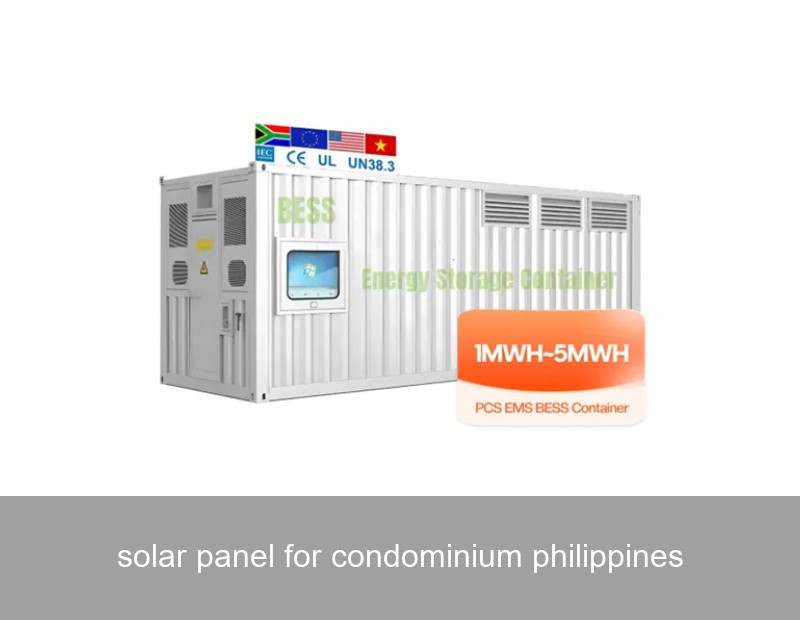
Our solution for large residential complexes centers on the Highjoule BESS Series – scalable, containerized or modular battery storage systems. When integrated with a condo's solar array, this system doesn't just store excess energy; it actively manages it for maximum economic benefit. It allows the building to use cheap, stored solar power during expensive evening peak rate periods, a strategy known as peak shaving. Furthermore, it provides seamless uninterrupted power for essential services during outages, a significant value-add for residents.
Image: Advanced battery storage systems are key for managing solar energy in commercial settings. Source: Unsplash

Highjoule's AI-powered energy management system (EMS) is the brain of the operation. It continuously analyzes energy production, consumption patterns, grid tariffs, and even weather forecasts to autonomously optimize when to charge the batteries, when to discharge, and when to export to the grid for the best financial return. For a condominium board, this translates to a hands-off, maximized ROI and a tangible step towards energy independence.
Navigating Financial Pathways and ROI
The upfront capital requirement is often the biggest hurdle. However, several viable pathways exist:
- Direct Purchase by the Condo Corporation: Using reserve funds or levying a special assessment. This offers the highest long-term return as the corporation owns the asset and all its savings.
- Third-Party Financing & ESCO Models: Energy Service Companies (ESCOs) can finance, install, and operate the system. The condo corporation enters a long-term Power Purchase Agreement (PPA) to buy the solar energy at a rate lower than the utility, with no upfront cost.
- Government & Bank Green Loans: Institutions like the World Bank through local partners often support green energy projects with favorable loan terms.
A robust financial analysis will model the Internal Rate of Return (IRR), Net Present Value (NPV), and the all-important impact on monthly dues.
Your First Steps Towards a Solar-Powered Condo
So, where does your condominium corporation begin? The journey starts with knowledge and collaboration.
- Form a Solar Committee: Gather interested homeowners with technical, financial, or legal backgrounds.
- Commission a Feasibility Study: Engage a reputable solar provider (like Highjoule's project consultancy team) to conduct a detailed site assessment, shadow analysis, and preliminary financial model.
- Engage with Residents: Host forums to present the plan, the projected savings, and the environmental benefits. Transparency builds trust and consensus.
- Explore Partnership Models: Discuss the technical and financial proposals with experts to find the model that best fits your building's governance and financial structure.
The question for your board isn't just "Can we afford to install solar?" but rather, in the face of rising costs and climate urgency, "Can we afford not to explore the potential of solar panels for our condominium?" What is the one common area in your building whose constant energy use you would most like to see powered by the sun?
 Inquiry
 Online Chat