


Understanding Solar Panel Manufacturing Plant Cost in Sweden: A Strategic Investment Guide
So, you're considering investing in a solar panel manufacturing plant in Sweden. It's a bold and forward-thinking move. Beyond the clear environmental imperative, it's a strategic business decision driven by Europe's urgent energy transition. But the big question on every investor's mind is: what is the real solar panel manufacturing plant cost in Sweden? The answer isn't a simple figure; it's a complex equation balancing high initial capital with long-term operational advantages, robust local demand, and strategic positioning in a green economy. Let's break down this investment, from the factory floor to the financial forecast, and explore how integrated energy solutions can turn a cost center into a competitive advantage.
Table of Contents
The Cost Breakdown: Capital Expenditure (CapEx) Deep Dive
Establishing a manufacturing facility for photovoltaic (PV) modules is capital-intensive. In Sweden, while labor and construction standards are high, the long-term stability and access to clean energy can offset these initial costs. The main CapEx components include:
- Land & Facility Construction: Securing industrial land and building a facility meeting specific cleanroom and humidity standards for cell and module assembly. Costs vary significantly between regions like Stockholm, Skåne, or the North.
- Production Line Machinery: This is the core. A typical automated line for high-efficiency modules (e.g., PERC, TOPCon) includes:
- Cell sorting and testing equipment
- Stringing and tabbing machines
- Layup and lamination systems
- Framing and junction box mounting
- Final testing and flash testing (simulating sunlight)
- Utility Hookups & Infrastructure: A manufacturing plant is energy-hungry. Ensuring stable, high-capacity electrical connections and water treatment systems is crucial and a notable part of the budget.
According to industry analyses, the total solar panel manufacturing plant cost in Sweden for a mid-scale (500 MW to 1 GW) facility can range from €50 million to over €120 million fully installed, heavily influenced by the degree of vertical integration (making your own cells vs. assembling purchased cells).
The Swedish Advantage: Operational Costs & Incentives
Here's where Sweden shines. While CapEx might be comparable or slightly higher than some regions, the OpEx landscape offers compelling advantages:
| Cost Factor | Swedish Context | Impact on Long-Term Viability |
|---|---|---|
| Energy Costs | Access to abundant, relatively low-cost renewable (hydro, wind, nuclear) grid power. This is critical for an energy-intensive process. | Predictable and potentially lower electricity bills compared to regions reliant on fossil fuels. Enables a truly green manufacturing label. |
| Skilled Labor | High-cost but highly skilled engineering and technical workforce, supported by strong vocational training. | Higher productivity, innovation potential, and lower defect rates, improving overall product quality and yield. |
| Government & EU Incentives | Grants for green industrial projects, R&D tax credits, and support through initiatives like the EU's REPowerEU plan and the Net-Zero Industry Act. | Can significantly reduce the net capital outlay. Sweden's Energy Agency often administers relevant funding programs. |
Real-World Blueprint: Case Study from Northern Sweden
Let's move from theory to practice. In 2022, a venture in Gällivare, Norrbotten, announced plans for a vertically integrated solar module factory targeting 1 GW annual capacity. While not fully operational, its published financial model provides a transparent snapshot of solar panel manufacturing plant cost in Sweden.
- Total Projected Investment: Approximately €1 billion for full vertical integration (polysilicon to module). The module assembly segment alone was estimated at ~€120 million.
- Key Cost Drivers: The decision to locate in the north was strategic: proximity to low-carbon, low-cost hydropower (estimated to be 30-40% cheaper for industrial users than in southern Sweden), available land, and synergy with the local mining industry for raw material sourcing.
- Data Point – Energy Impact: The plant projected its electricity cost to be around €35/MWh, compared to a European industrial average of over €100/MWh during recent peaks. This translates to annual savings of several million euros, fundamentally altering the cost-competitiveness of the final modules.
This case underscores a critical insight: in Sweden, your plant's location and energy strategy are not just logistical details—they are the core of your financial model.
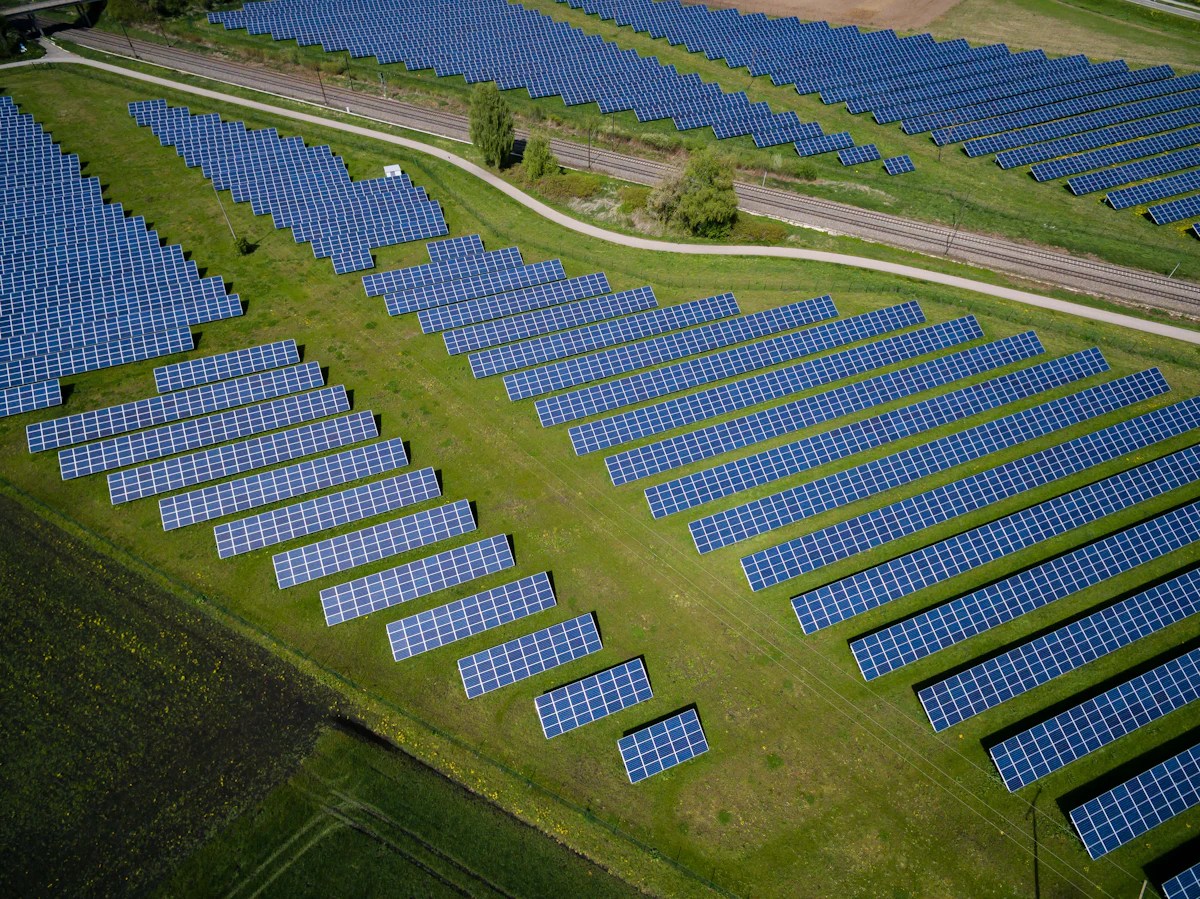
Image Source: Unsplash - Representative image of a modern, clean industrial facility in a Nordic setting.
Beyond the Factory: Energy as a Strategic Asset
This brings us to a pivotal concept for modern manufacturers. Your plant's energy load is massive, but it also presents an opportunity. This is where a company like Highjoule becomes a strategic partner. Instead of viewing energy as a pure cost, forward-thinking plants are turning their facilities into flexible energy hubs.
Imagine this: Your manufacturing line pauses for a shift change or maintenance. At that moment, your on-site energy assets—like a large-scale Highjoule BESS (Battery Energy Storage System) charged by your own roof-top solar or the grid—can discharge stored power back to the grid during peak price hours. This creates a new revenue stream through grid services.
Highjoule's expertise in providing intelligent storage solutions for commercial and industrial applications directly addresses the solar panel manufacturing plant cost in Sweden challenge. Our H-Series C&I Battery Systems are designed for high-throughput, demanding environments. By integrating such a system, a plant can:
- Reduce Peak Demand Charges: Smooth out spikes in grid power draw, significantly cutting utility bills.
- Ensure Power Quality & Uptime: Protect sensitive manufacturing equipment from grid fluctuations, reducing scrap and downtime.
- Monetize Green Credentials: Pair storage with on-site generation to guarantee that a portion of manufacturing is powered 24/7 by renewables, a key selling point for ESG-conscious customers.
In essence, an integrated energy storage system acts as a "shock absorber" for both energy costs and supply, improving the plant's return on investment from day one.
Future-Proofing Your Investment: The Role of Microgrids
Looking further ahead, the most resilient and cost-effective model for a large plant in Sweden may be a renewable-powered microgrid. Highjoule specializes in designing and implementing such systems. A microgrid combines on-site solar PV, wind (where feasible), large-scale battery storage, and advanced energy management software to create a self-optimizing energy island that can operate independently from the main grid if needed.
For a solar panel factory, this is the ultimate synergy: you manufacture the panels that power your own production, supported by storage that ensures continuous operation. It future-proofs the facility against volatile energy markets and solidifies its position as a true lighthouse project for sustainable industry.

Image Source: Unsplash - Hybrid renewable energy system combining solar and wind.
Your Strategic Move
Deciphering the solar panel manufacturing plant cost in Sweden reveals that the true metric isn't just the upfront price tag. It's the Total Cost of Ownership over 20+ years, shaped by energy strategy, operational intelligence, and resilience. Sweden offers a unique ecosystem where high standards meet green ambition, making it a fertile ground for building not just a factory, but a benchmark for the future of manufacturing.
As you refine your business plan, consider this: How will your energy management strategy transform your plant's operational costs from a fixed burden into a dynamic, value-generating asset?
 Inquiry
 Online Chat