


Understanding the Different Types of Generators for Modern Power Needs
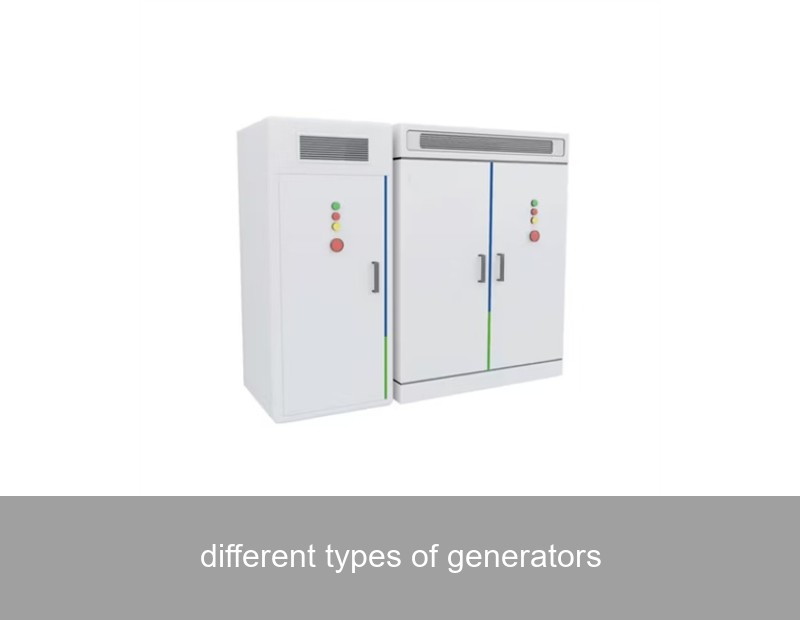
When you hear "generator," what comes to mind? For many, it's the loud, rumbling diesel unit at a construction site or the portable backup for a camping trip. But the world of power generation is undergoing a quiet revolution. Today, different types of generators encompass a spectrum from traditional fossil-fueled engines to silent, software-driven battery systems that store renewable energy. For businesses, communities, and homeowners, understanding this range is crucial for making informed decisions about reliability, cost, and sustainability. This guide will demystify the options, helping you navigate from the familiar hum of diesel to the intelligent hum of a modern Battery Energy Storage System (BESS).
Traditional Power Generators: The Established Workhorses
These are the conventional machines that convert mechanical energy, typically from an internal combustion engine, into electrical power. They are defined by their fuel source and application.
Diesel Generators
The undisputed champion of industrial backup and off-grid power for decades. Diesel gensets are prized for their durability, high torque (making them good for heavy startup loads), and widespread fuel availability. However, they come with significant operational costs, noisy emissions, and increasing regulatory pressure, especially in urban areas and environmentally conscious markets like the EU and California.

Image Source: Wikimedia Commons (CC)
Natural Gas Generators
Often used for prime power in facilities with a natural gas line, such as hospitals or large campuses. They burn cleaner than diesel, with lower particulate emissions, and can be connected to a continuous fuel supply, enabling longer runtimes. Their efficiency and cost-effectiveness are tightly linked to the volatile price of natural gas.
Gasoline Generators
These are typically smaller, portable units used for residential backup or recreational purposes. They are less efficient, have a shorter lifespan than diesel or gas units, and gasoline is less stable for long-term storage. They serve a vital role for short-term, mobile needs but are rarely considered for critical commercial or industrial backup.
| Type | Best For | Key Advantages | Key Challenges |
|---|---|---|---|
| Diesel | Industrial backup, construction sites, off-grid prime power | Robust, high power output, fuel stability | High emissions & noise, fuel cost volatility, maintenance |
| Natural Gas | Continuous prime power, facilities with gas supply | Cleaner burn, continuous fuel supply, lower maintenance | Tied to gas price volatility, requires pipeline infrastructure |
| Gasoline | Residential backup, portable recreational use | Low upfront cost, highly portable, readily available fuel | Low efficiency, short lifespan, fuel degradation, safety concerns |
Renewable & Hybrid Generators: The Sustainable Shift
This category is redefining the very concept of "generation," focusing on harvesting and managing energy rather than just converting fuel.
Solar-Plus-Storage "Generators"
This isn't a single device but a system. Solar panels generate DC electricity, which an inverter converts to AC for use. The critical addition is a battery storage system. During the day, excess solar energy charges the batteries. At night or during an outage, the batteries discharge to power the load. This creates a silent, zero-emission "generating" effect. Companies like Highjoule specialize in integrating high-efficiency solar inverters with advanced Battery Energy Storage Systems (BESS) to create seamless, self-consuming renewable power plants for homes and businesses.
Wind Turbines
More site-specific, wind turbines convert kinetic wind energy into electricity. They are excellent for large-scale renewable generation but are intermittent. Their value is maximized when paired with storage to smooth out generation and provide power when the wind isn't blowing.
Hydrogen Fuel Cells
An emerging technology that generates electricity through an electrochemical reaction between hydrogen and oxygen, with only water vapor as a byproduct. They promise clean, long-duration backup power but currently face challenges with hydrogen production, storage, transportation, and cost.
The Battery Energy Storage System (BESS) Revolution: The Intelligent Alternative
Here's where the narrative truly evolves. A modern BESS doesn't "generate" power in the traditional sense. Instead, it stores electricity from the grid or on-site generation (like solar) and discharges it when needed. Why is this a game-changer? Think of it as a "power buffer" with a brain.
For instance, Highjoule's Horizon BESS platform is designed for commercial and industrial applications. It doesn't just provide backup during an outage. Its intelligent energy management software allows businesses to:
- Reduce Peak Demand Charges: By discharging stored energy during periods of high grid demand, businesses can slash a significant portion of their electricity bills.
- Enhance Renewable Self-Consumption: Store excess solar energy for use at night, increasing energy independence from 30-40% to over 80%.
- Provide Grid Services: In some markets, aggregated BESS units can provide frequency regulation, helping to stabilize the grid and create a new revenue stream.
- Deliver Silent, Instant Backup: With no startup time and zero local emissions, it switches on in milliseconds, protecting sensitive equipment and operations.
This transforms the BESS from a backup device into a strategic energy asset that manages cost, sustainability, and reliability 24/7. According to a report by the U.S. Energy Storage Association, the U.S. storage market saw record deployments in 2023, signaling a massive shift towards this technology.

Image Source: Unsplash
Case Study: A Real-World Shift in Power Strategy
Consider a mid-sized food processing plant in Germany. Facing rising energy costs, strict carbon reduction targets, and the need for flawless refrigeration backup, their old diesel generator was becoming a liability.
Phenomenon: High operational costs, carbon footprint, and noise complaints.
Data: The plant had a 500 kW peak demand, with demand charges constituting ~30% of their monthly bill. Their rooftop solar array (200 kW) was exporting over 40% of its generation to the grid at low feed-in tariffs.
Case & Solution: The plant partnered with Highjoule to deploy a 500 kWh/250 kW Horizon BESS, integrated with their existing solar. The system was programmed for peak shaving and maximizing solar self-consumption.
Insight & Result: Within the first year:
- Demand Charges Reduced by 22%: The BESS automatically discharged during the plant's predictable daily peaks.
- Solar Self-Consumption Increased from 58% to 85%: Excess solar energy chilled water for process cooling, stored in the BESS.
- Reliability Achieved: The BESS provides seamless backup for critical refrigeration loads, with the diesel gen-set now only as a final, rarely-used redundancy.
- Carbon Footprint Lowered: The combined solar-storage system reduced grid dependency, cutting scope 2 emissions significantly.
This case illustrates how rethinking "generation" as "intelligent energy management" delivers tangible financial and operational benefits. The International Renewable Energy Agency (IRENA) highlights that such sector-coupling is key to deep decarbonization.
Choosing the Right System for Your Needs
So, how do you navigate these different types of generators and storage solutions? Ask these questions:
- Primary Need: Is it for emergency backup, daily cost savings, renewable integration, or a combination?
- Runtime & Power: How long do you need backup for, and what is your critical load (kW)?
- Fuel & Site: Do you have fuel storage constraints, noise limits, or emission regulations?
- Total Cost of Ownership: Consider upfront cost, fuel/maintenance over 10+ years, and potential savings/revenue.
- Future-Proofing: Will your energy needs or sustainability goals change?
For many modern applications, the optimal solution is often a hybrid one: a smaller BESS handling frequent, short-duration outages and peak shaving, paired with a generator for extreme, long-duration events. Highjoule's expertise lies in designing these optimized, intelligent systems that leverage the best of both worlds for unmatched reliability and efficiency.
As you evaluate your power strategy, what single energy challenge—be it cost, reliability, or sustainability—if solved, would have the greatest impact on your operations?
 Inquiry
 Online Chat