


Unlocking the Full Potential of Your Solar Panel Photovoltaic System
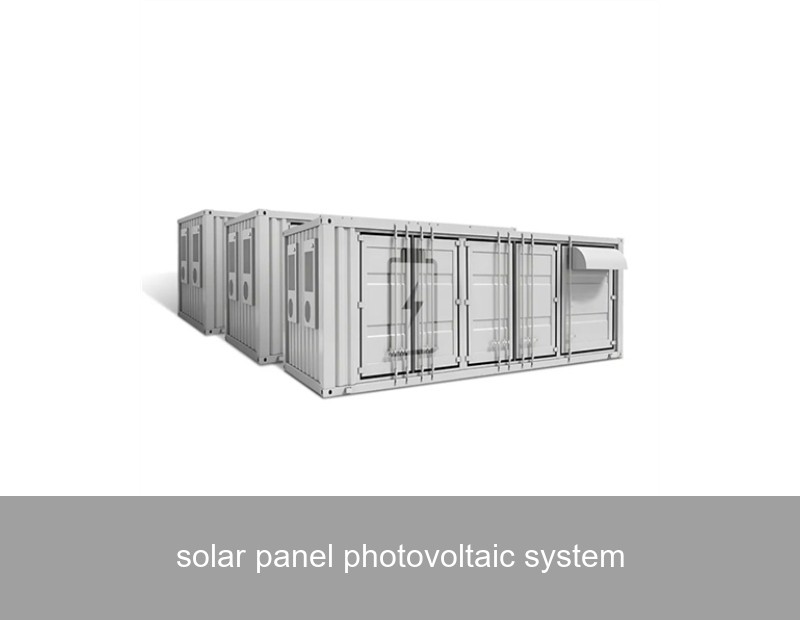
You've made a smart investment in a solar panel photovoltaic system. You see the panels on your roof, your electricity bills have dropped, and you feel good about generating clean energy. But have you ever wondered if you're getting the absolute most out of your system? What happens when the sun goes down, or on those cloudy days? The truth is, a solar installation without a strategy for managing that energy is like a car without a steering wheel. This article will guide you through the next evolution of solar power: transforming it from a daytime contributor into a 24/7 energy solution for your home or business.
Table of Contents
The Phenomenon: Facing the "Solar Cliff"
it's a brilliantly sunny afternoon. Your solar panel photovoltaic system is humming along at peak production, likely generating more power than your home or business can use at that moment. This surplus energy gets fed back to the grid. Fast forward a few hours to the evening peak—families are home, appliances are running, but the sun has set. Your solar production is zero, and you're now drawing all your power from the grid, often at the highest rates of the day. This dramatic drop from surplus to deficit is what industry experts call the "solar cliff."
This pattern creates a fundamental challenge. While net metering (selling power back to the grid) has been a great incentive, feed-in tariffs are decreasing in many regions like Europe and parts of the US. The financial return for exported solar energy is falling, making it more valuable to use your own solar power directly. The goal shifts from just generating kilowatt-hours to maximizing self-consumption.

Image Source: Unsplash - Illustrating the "solar cliff" at sunset.
The Data: Why Self-Consumption is the New Metric
Let's look at the numbers. According to data analyzed by the U.S. Department of Energy, a typical residential solar system without storage only allows for 30-50% self-consumption of the solar energy it produces. The rest is exported. In Germany, a study by the Fraunhofer ISE highlighted that adding a battery storage system can increase this self-consumption rate to 70% or more, dramatically reducing reliance on the public grid.
This isn't just about independence; it's about economics. With time-of-use rates becoming standard, the cost difference between off-peak and peak electricity can be substantial. In California, for instance, this differential can exceed $0.20 per kWh. Storing cheap, self-produced solar energy to use during expensive peak periods translates directly to a stronger return on your solar investment.
| Metric | Solar Panels Only | Solar Panels + Storage |
|---|---|---|
| Average Self-Consumption | 30% - 50% | 70% - 90%+ |
| Grid Dependency at Peak Times | High | Low to None |
| Protection from Grid Outages | No | Yes |
| ROI in High Rate Differential Areas | Moderate | High |
The Case Study: A German Bakery's Recipe for Energy Independence
Let's examine a real-world example from Bavaria, Germany. Bäckerei Schmidt (name changed for privacy) is a medium-sized artisan bakery with high energy demands for ovens, refrigeration, and lighting. They installed a 100 kW solar panel photovoltaic system on their bakery roof. While it cut daytime costs, they still faced high grid consumption in the early morning (before sunrise for baking) and evening.
Their solution was to integrate a 120 kWh commercial battery storage system. Here’s the impact after one year:
- Self-Consumption Rate: Increased from 48% to 84%.
- Grid Energy Purchased at Peak Times: Reduced by over 75%.
- Annual Energy Cost Savings: Increased by an additional €11,200 on top of solar savings alone.
- Backup Power: The system now provides critical backup for refrigeration, ensuring no product loss during short grid outages.
The bakery manager noted, "The storage system turns our solar panels from a cost-saver into a strategic energy asset. We now control our power flow like we control our recipes."
The Solution: Integrating Intelligence with Storage
So, how do you overcome the solar cliff? The answer lies in coupling your solar panel photovoltaic system with an intelligent battery energy storage system (BESS). But not all storage is created equal. A truly effective system requires three key components:
- High-Performance Batteries: Lithium iron phosphate (LFP) chemistry is now the industry benchmark for safety, longevity, and cycle life.
- Advanced Power Electronics: The inverter and battery management system must be seamlessly integrated and highly efficient to avoid conversion losses.
- Smart Energy Management Software: This is the brain. It must predict solar production, learn your consumption patterns, consider utility rate schedules, and autonomously decide when to store, use, or (if beneficial) export energy.
This intelligent integration is what transforms a simple battery into a true energy platform, maximizing your financial return and energy resilience.

Image Source: Unsplash - An engineer monitoring a sophisticated energy storage control system.
How Highjoule Elevates Your Solar Investment
This is precisely where Highjoule steps in. Since 2005, we have pioneered the kind of intelligent storage solutions that complete the solar panel photovoltaic system. Our systems are designed to be the perfect partner for your solar array.
For residential clients, our HOMEsafe Series is a compact, all-in-one unit that integrates a hybrid inverter, LFP battery, and our proprietary EnergyOS software. It installs easily alongside your existing solar, learns your habits within weeks, and starts optimizing your energy flow automatically. You can monitor and control everything from a simple smartphone app, seeing in real-time how much of your own solar power you're using.
For commercial and industrial applications, our GRIDmax C&I Solutions are modular and scalable. Like the system used by the German bakery, they can be tailored to handle massive loads, participate in demand charge reduction programs, and even provide black start capability for microgrids. Highjoule's technology is built on a foundation of safety and reliability, with over 17 years of field-proven performance in thousands of installations across Europe and North America.
Looking to the Future: Your Energy Ecosystem
The journey with solar doesn't end on the roof. The future is an integrated, smart, and resilient energy ecosystem for your property. With a intelligent storage system from Highjoule, your solar panel photovoltaic system becomes the cornerstone of this ecosystem. It opens the door to future integrations like electric vehicle smart charging, where your car becomes another battery on wheels, or connecting with heat pumps for full electrification.
The question is no longer just "How many solar panels do I need?" but rather "How do I build a resilient, cost-optimized energy system for my specific needs?"
What is the single biggest energy challenge you face that prevents you from achieving true energy independence at your home or business?
 Inquiry
 Online Chat