


How to Choose the Right Solar Panel Distributors for Your Energy Project
So, you've decided to harness the sun's power. Whether you're a homeowner looking to cut bills, a business aiming for sustainability, or a contractor building a portfolio, sourcing high-quality solar panels is the critical first step. This is where solar panel distributors come in. They are the vital link between manufacturers and your rooftop or field. But with so many options, how do you select a distributor that ensures reliability, performance, and long-term value? This guide will walk you through the key considerations, backed by data and real-world insights, to empower your decision.
Table of Contents
- The Evolving Role of Solar Panel Distributors
- Key Criteria for Selecting a Solar Distributor
- Thinking Beyond the Panel: The System Integration Imperative
- Case Study: A German Commercial Rooftop Project
- The Future of Solar Distribution and Your Next Step
The Evolving Role of Solar Panel Distributors
Gone are the days when solar panel distributors were simply box-shifters. Today, they are technical partners. In markets like the U.S. and Europe, the complexity of installations, coupled with evolving grid codes and incentive structures (like the EU's Renewable Energy Directive), demands more from the supply chain. A top-tier distributor now provides not just hardware, but also technical support, logistics expertise, warranty management, and often, design software. They act as a filter, vetting manufacturers for quality and durability, which is crucial for a system meant to last 25+ years.

Image: A modern solar distribution hub requires meticulous logistics. Source: Unsplash
Key Criteria for Selecting a Solar Distributor
Choosing a distributor shouldn't be based on price alone. Here’s a framework to evaluate your options:
1. Product Portfolio and Manufacturer Partnerships
Do they carry Tier-1 manufacturers? While not a direct quality guarantee, BloombergNEF's Tier-1 classification is a recognized benchmark for bankability and scale. A good distributor offers a curated selection, balancing premium and value brands to suit different project budgets.
2. Technical Support and Certification
Can they answer deep technical questions about panel degradation (LID, PID), temperature coefficients, or bifacial performance? Their team should be certified (e.g., by manufacturers) and able to help with system design nuances.
3. Logistics and Regional Warehousing
For projects in Europe or the U.S., a distributor with local warehouses drastically reduces shipping costs, lead times, and the carbon footprint of your project. It also simplifies returns and handling of damaged goods.
4. Value-Added Services
The best partners offer more. This includes:
- Financial Modeling Tools: To calculate ROI under local net metering schemes.
- Warranty Registration & Management: A single point of contact for claims.
- Training: For installers on new products or techniques.
Thinking Beyond the Panel: The System Integration Imperative
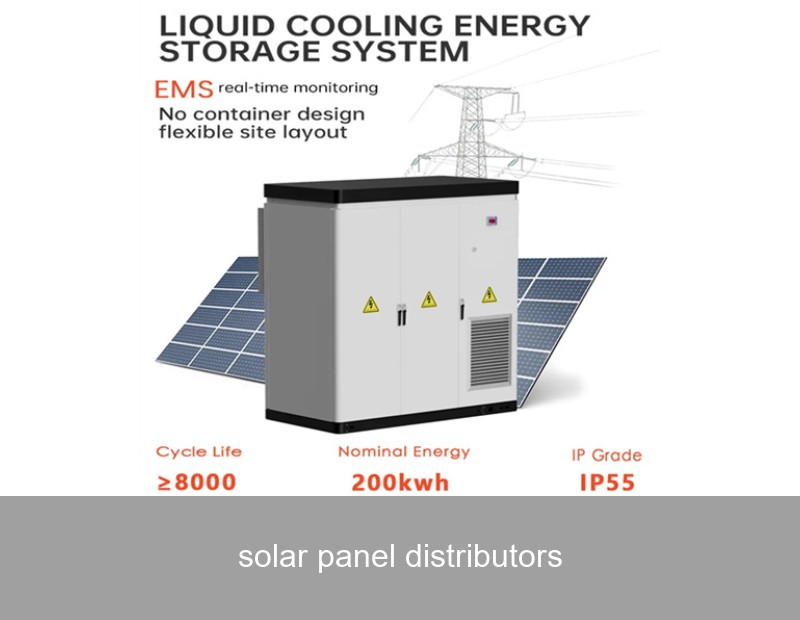
Here's a crucial insight often overlooked: a solar panel is only one component of an energy ecosystem. Its true value is unlocked when seamlessly integrated with a high-performance battery storage system. This is where the role of a distributor can expand—or where you might need a more specialized partner.
Imagine this: you source premium panels from a great distributor, but pair them with a low-quality, incompatible inverter and battery. The result? System inefficiencies, potential safety risks, and a disappointing return on investment. The future is in integrated, smart energy systems.
Companies like Highjoule address this exact challenge. As a global leader in advanced energy storage systems since 2005, Highjoule doesn't just supply components; we provide intelligent, turnkey power solutions. For solar installers and developers, this means you can offer clients a complete package: solar generation and storage from a single, trusted provider. Our H-Series commercial battery systems and HomePower residential units are designed with advanced lithium-iron-phosphate (LFP) chemistry for safety and longevity, and feature built-in energy management software that optimizes self-consumption, manages peak loads, and can even provide grid services. Partnering with a technology provider like Highjoule elevates your offering from simply selling panels to delivering true energy independence and resilience.
| Component | Traditional Approach | Integrated Highjoule Approach |
|---|---|---|
| Energy Storage | Sourced separately, potential compatibility issues. | Pre-engineered for seamless integration with major solar inverter brands. |
| System Control | Multiple interfaces (solar inverter, battery app). | Unified AI-powered platform (Highjoule Energy OS) for monitoring and control. |
| Warranty & Support | Multiple vendors, complicated claims. | Single point of responsibility for the entire storage system. |
Case Study: Maximizing ROI for a Bavarian Dairy Farm
Let's look at a real example from our work in Germany. A medium-sized dairy farm near Munich installed a 150 kW rooftop solar system in 2020. While it reduced daytime grid consumption, the farm's energy costs remained high due to:
- High evening energy use for cooling and milking machines.
- Low feed-in tariffs for excess solar energy exported to the grid.
In 2023, the farm partnered with their installer and Highjoule to add a 120 kWh Highjoule H2 Commercial Battery System. The results after one year were compelling:
- Self-Consumption Rate: Increased from 35% to 82%.
- Annual Energy Cost Savings: An additional €18,500 saved, on top of solar savings.
- Peak Demand Shaving: Reduced grid power draw during expensive peak periods, avoiding capacity fees.
- Backup Power: Critical cooling systems now have 8 hours of backup during grid outages, protecting inventory.
The project's payback period for the storage addition is projected at under 7 years. This case shows that the right technology partner, chosen by an informed installer, transforms a simple solar installation into a strategic energy asset.

Image: Commercial solar installations, like on this farm, benefit immensely from added storage. Source: Unsplash
The Future of Solar Distribution and Your Next Step
The landscape is shifting from component sales to energy solution partnerships. The most forward-thinking solar panel distributors are already forming alliances with storage and software companies. For you, the buyer or installer, this means an opportunity to future-proof your business.
When you evaluate your next distributor, ask them: "How do you support not just my solar needs, but my clients' complete energy management needs?" Do they have partnerships with storage specialists? Can they provide a roadmap for adding storage or EV charging later?
At Highjoule, we work closely with a network of premium distributors and installers across Europe and North America, providing them with the training, tools, and co-marketing support to become local leaders in the energy transition. We believe the best project is one where every component works in perfect harmony.
What specific challenge are you facing in your current or upcoming solar project that an integrated storage solution could solve?
 Inquiry
 Online Chat