


Understanding Solar Panel Price in Cameroon: A Guide to Sustainable Energy Investment
If you're exploring the solar panel price in Cameroon, you're not just looking at a cost. You're investigating a pivotal step towards energy independence, economic resilience, and a sustainable future. Like many emerging markets, Cameroon faces a unique energy landscape: abundant sunshine yet challenges with grid reliability and access. This creates a powerful opportunity for solar power, but the upfront investment can feel daunting. This article will demystify the factors influencing solar costs, showcase real-world applications, and highlight how modern, intelligent energy storage systems are the key to maximizing the value of every solar panel installed.
Table of Contents
- The Phenomenon: Sunshine Abundance Meets Energy Demand
- Breaking Down the Costs: What Influences Solar Panel Price in Cameroon?
- The Data Perspective: More Than Just Panels
- Case Study: A Commercial Enterprise in Bamenda
- The Highjoule Advantage: Intelligent Storage for Maximum ROI
- Future Outlook and Your Next Step
The Phenomenon: Sunshine Abundance Meets Energy Demand
Cameroon enjoys a significant solar resource, with average solar irradiation levels ranging from 4.5 to 5.5 kWh/m²/day across the country. To put that in perspective, this is comparable to sun-rich regions in Southern Europe. Yet, according to the World Bank, while national electrification rates are improving, access remains uneven, and power outages can hinder business productivity and quality of life. This gap between potential and reality is where solar energy shines. The initial inquiry into solar panel price in Cameroon is often driven by a desire to overcome these grid limitations, reduce long-term operational costs tied to diesel generators, and secure a clean, reliable power source.

Image: A typical commercial rooftop solar installation in a sunny climate. Source: Unsplash
Breaking Down the Costs: What Influences Solar Panel Price in Cameroon?
The final price tag for a solar power system is a sum of several components. Understanding these helps move beyond a simple per-panel quote to a true value assessment.
- Hardware Components: This includes the solar panels themselves (monocrystalline panels are typically more efficient and slightly more expensive than polycrystalline), the mounting structures, wiring, and critically, the power conversion and storage equipment: inverters and batteries.
- Installation & Soft Costs: Professional system design, permitting (where applicable), labor, and the installer's expertise are crucial for long-term performance and safety. These costs can vary based on project complexity and location.
- System Scale & Complexity: A small residential system will have a different cost structure per watt than a large commercial or industrial installation. Off-grid systems requiring extensive battery banks are more capital-intensive than grid-tied systems.
- Logistics & Importation: For equipment not locally manufactured, shipping, customs duties, and local market dynamics can influence final pricing.
Therefore, when evaluating solar panel price in Cameroon, it's essential to think in terms of total system cost and lifetime value, not just the photovoltaic modules.
The Data Perspective: More Than Just Panels
Let's look at the numbers. The International Renewable Energy Agency (IRENA) notes that global solar PV module costs have fallen dramatically over the past decade. However, for the end-user in Cameroon, the system's heart for reliability—especially where the grid is weak—lies in the battery storage system. A poorly sized or low-quality battery can undermine the entire solar investment, leading to frequent replacements and unmet power needs.
| System Component | Cost Influence Factor | Impact on Long-Term Value |
|---|---|---|
| Solar Panels | Efficiency, Durability, Brand | Determines energy harvest per square meter over 25+ years. |
| Inverter | Type (String, Micro, Hybrid), Efficiency | Converts DC to AC power; critical for system efficiency and grid interaction. |
| Battery Storage | Technology (Li-ion, Lead-acid), Cycle Life, Depth of Discharge | Defines usable energy capacity, system resilience, and total cost of ownership. |
| Balance of System & Installation | Design quality, Labor, Mounting | Ensures safety, longevity, and optimal performance of all components. |
Case Study: A Commercial Enterprise in Bamenda
Consider a medium-sized agro-processing company in Bamenda. Facing daily power outages of 6-8 hours, they relied on diesel generators, spending approximately XAF 4.5 million (€6,800) monthly on fuel and maintenance. Their primary goal was to slash operational costs and ensure uninterrupted cold storage and processing.
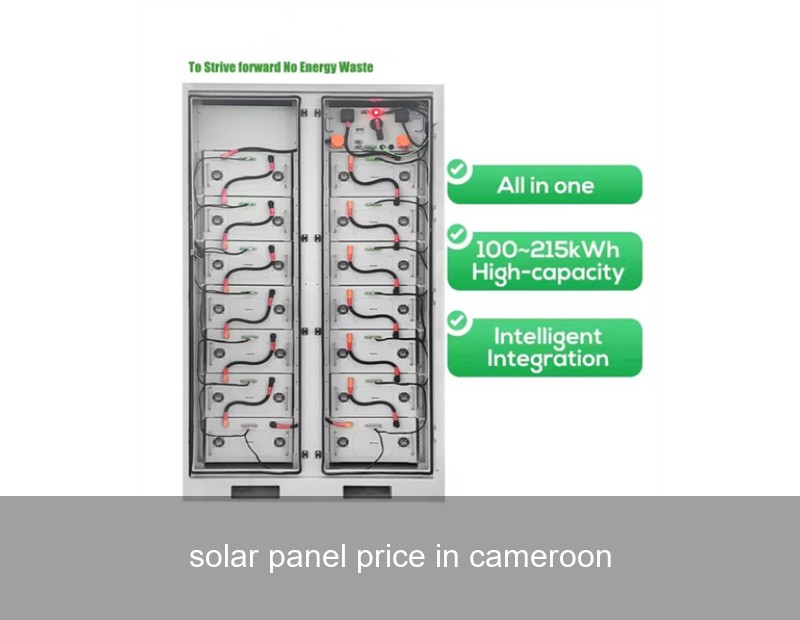
In 2023, they installed a 120 kWp solar PV system. The initial quotes focused heavily on panel and inverter costs. However, a forward-thinking integrator proposed a solution integrating Highjoule's HPS-100 commercial battery energy storage system (BESS).
- System Design: 120 kWp solar array + 240 kWh Highjoule HPS-100 BESS + Hybrid Inverter.
- Outcome: The system was designed to power 100% of daytime operations on solar, charging the batteries. During outages and evenings, the Highjoule BESS seamlessly takes over. Diesel generator use has been reduced by over 90%.
- Financial Impact: The payback period, factoring in the higher initial investment for robust storage, is calculated at 5.2 years. The company now saves over XAF 4 million monthly, funds now redirected to business expansion. The intelligent energy management system within the Highjoule BESS also optimizes cycling, extending battery life and protecting the investment.

Image: A modern commercial battery energy storage system installation. Source: Unsplash
The Highjoule Advantage: Intelligent Storage for Maximum ROI
As the case study shows, the conversation about solar panel price in Cameroon is incomplete without a strategic focus on storage. This is where Highjoule's expertise becomes critical. Founded in 2005, Highjoule is a global leader in advanced, intelligent energy storage solutions.
For clients in Cameroon and similar markets, Highjoule's products like the HPS Series for commercial and industrial applications and the Residential Power Vault offer distinct advantages:
- Longevity & Reliability: Built with high-cycle life lithium-ion cells and sophisticated thermal management, they are engineered for harsh climates, ensuring durability where it matters most.
- Intelligent Energy Management: Our systems aren't just batteries; they are smart energy hubs. They automatically optimize when to store solar energy, when to discharge, and how to manage grid interaction, maximizing self-consumption and protecting equipment.
- Scalability & Flexibility: From large-scale microgrids to residential backup, our modular designs allow systems to grow with energy needs, providing a future-proof investment.
- Total Cost of Ownership: While the upfront cost may be higher than basic solutions, the extended lifespan, higher efficiency, and reduced maintenance lead to a significantly lower cost per kilowatt-hour stored over the system's life, making the solar-storage combination far more valuable.
By partnering with certified installers in the region, Highjoule ensures that systems are correctly designed and installed, turning the solar investment into a true engine for economic and operational resilience.
Future Outlook and Your Next Step
The trajectory for solar energy in Cameroon is promising. As technology advances and more players enter the market, system efficiencies will continue to rise. The key insight for any business or homeowner is to shift the question from "What is the solar panel price in Cameroon?" to "What is the value of a reliable, intelligent energy system for my specific needs over the next 20 years?"
How will your energy strategy evolve to not only cut costs but also build resilience against an uncertain grid and contribute to a sustainable footprint? What role could a smart, integrated storage solution play in your long-term planning?
 Inquiry
 Online Chat