


Beyond the Sticker Shock: Understanding Solar Panel Prices Today
If you've been considering solar energy, you've likely heard the exciting news: solar panel prices today are at historic lows. It's a headline that grabs attention and rightfully so. But as a savvy homeowner or business leader, you know the real question isn't just "how much per watt?" but "what is the total value I'm getting?" The dramatic drop in module costs is just the opening chapter of a much richer story about energy independence, resilience, and true long-term savings. Let's peel back the layers and explore what today's solar market truly offers, and how to ensure your investment delivers maximum returns for years to come.
The Phenomenon: A Dramatic Price Drop and What's Behind It
Over the past 15 years, the solar industry has undergone a transformation nothing short of revolutionary. We've moved from a niche, subsidized technology to a mainstream, cost-competitive energy source. The driving force? A powerful combination of technological innovation, manufacturing scale, and global supply chain maturation. Advances in photovoltaic cell efficiency, particularly the rise of monocrystalline PERC and now N-type TOPCon cells, mean each panel generates more power in the same footprint. Simultaneously, gigawatt-scale factories, primarily in Asia, have achieved unprecedented economies of scale. According to the International Energy Agency (IEA), solar PV manufacturing capacity is now over 800 GW per year, creating a highly competitive market. This perfect storm has pushed module prices down by over 80% since 2010. But here's the crucial insight: while the panels get the spotlight, the real intelligence of a modern energy system lies elsewhere.

Image Source: Unsplash - Visual representation of solar growth and cost trends.
The Data: A Decade of Solar Cost Evolution
Let's look at the numbers to ground our discussion. The levelized cost of electricity (LCOE) for utility-scale solar has plummeted, making it the cheapest source of new electricity in many parts of the world, including Europe and the United States. However, for residential and commercial users, the installed system price is the more relevant metric. While solar panel prices today can be as low as $0.20-$0.40 per watt for the modules themselves, the installed system cost typically ranges from $2.50 to $3.50 per watt in the U.S., and €1,800 to €2,800 per kWp in Europe, depending on system size and complexity. This significant difference highlights a critical truth: the "balance of system" costs—inverters, mounting, labor, and permitting—now constitute the majority of your investment. This shift changes the strategic focus from simply buying the cheapest panels to optimizing the entire system for performance, durability, and integration.
The Real Cost: It's More Than Just the Panels
So, if the modules aren't the main cost driver anymore, where should your focus be? A high-performing, reliable solar installation is an ecosystem. Choosing the right components and how they communicate is paramount for safety, yield, and longevity.
The Balance of System (BOS) Breakdown
- Inverters: The brain of your PV system. Microinverters vs. string inverters with power optimizers are a key decision, impacting efficiency, monitoring granularity, and shade tolerance.
- Mounting & Racking: This is your system's foundation. Quality here ensures resilience against wind, snow, and decades of weathering.
- Installation & Labor: Professional installation by certified technicians is non-negotiable for safety, warranty validity, and optimal performance.
- Permits & Interconnection: Navigating local regulations and utility requirements is a complex but essential step.
The Hidden Game-Changer: Intelligent Energy Storage
This is where the conversation gets truly exciting. With solar panel prices today being so favorable, the logical next step is to ask: "How can I use every kilowatt-hour I produce?" This is where battery energy storage systems (BESS) transform your solar array from a daytime-only generator into a 24/7 personal power plant. Storage allows you to capture excess solar energy produced at midday for use in the evening peak, during outages, or when electricity rates are highest. It's the key to maximizing self-consumption, often pushing it from 30-40% to over 80%. For businesses, this can directly translate to demand charge reduction and unparalleled energy security. The value of your solar investment multiplies when paired with the right storage solution.
Case Study: Maximizing ROI in a German Commercial Setting
Let's examine a real-world example from our work at Highjoule. A medium-sized dairy processing plant in Bavaria, Germany, faced high and volatile energy costs, with a significant portion of consumption occurring after sunset for refrigeration. They installed a 250 kWp rooftop solar array. Without storage, their self-consumption rate was projected at only 35%, meaning most solar power would be fed to the grid at a lower feed-in tariff.
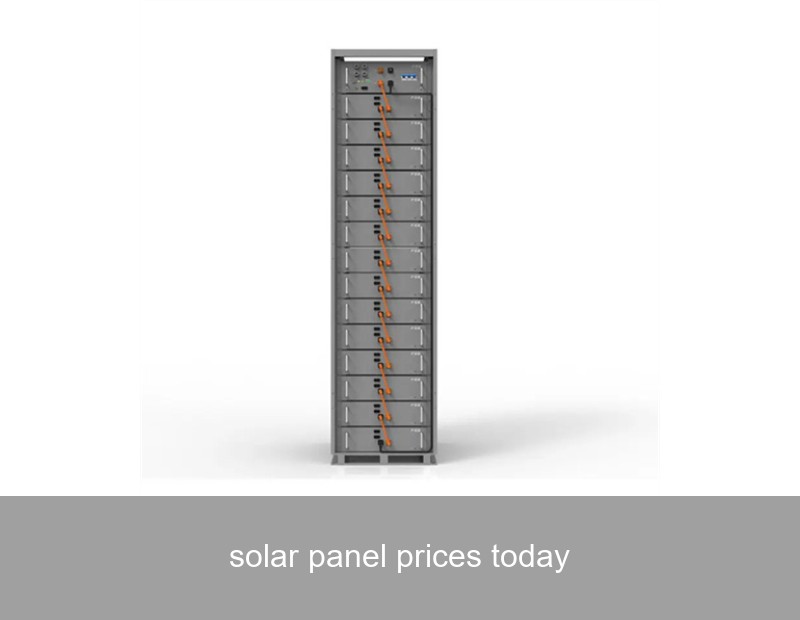
By integrating a Highjoule HiveStack Commercial 200 kWh battery storage system with our proprietary energy management software (EMS), the story changed completely. The system was programmed to charge the batteries with surplus solar production and strategically discharge during evening peak hours and to shave peak demand loads.
| Metric | Without Highjoule Storage | With Highjoule HiveStack + EMS |
|---|---|---|
| Solar Self-Consumption | ~35% | **>85%** |
| Grid Energy Import (Peak Hours) | Reduced by 40% | Reduced by **92%** |
| Demand Charge Impact | Minimal Reduction | **~28% Reduction** |
| Estimated Payback Time | 7-8 years | **<5 years** |
The result? The combined solar-plus-storage system slashed their energy bills and provided a predictable payback period under 5 years, while also ensuring critical refrigeration loads could be maintained during brief grid interruptions. This case underscores that the lowest solar panel prices today don't guarantee the best return; intelligent integration does.

Image Source: Unsplash - Example of a modern commercial battery energy storage installation.
Future-Proofing Your Investment: Key Considerations for 2024
As you evaluate quotes focusing on solar panel prices today, ask these forward-looking questions:
- Scalability: Can I easily add more panels or storage capacity later? A modular system architecture is essential.
- Software & Intelligence: Does the system offer smart, forecast-driven energy management, or is it just a simple timer? Can it adapt to changing utility rates (like dynamic tariffs in Europe)?
- Grid Services & Revenue: In some markets, aggregated storage can provide grid stability services. Is your hardware and software capable of participating in such programs?
- Warranty & Support: A 25-year panel warranty is standard, but what about the inverter (10-12 years typical) and the battery (10+ years with throughput guarantees)? Look for a provider that offers comprehensive, long-term support.
The Highjoule Advantage: Smart Integration for Optimal Value
At Highjoule, we view attractive solar panel prices today as the entry point to designing a truly intelligent energy asset. Our expertise lies in seamlessly integrating high-efficiency solar with our advanced, modular battery storage systems—like the HiveStack for Commercial & Industrial applications and the HomePower series for residences. What sets us apart is our AdaptiveOS energy management platform. This AI-driven software doesn't just react; it forecasts weather, consumption patterns, and electricity market prices (where applicable) to make real-time decisions that optimize your energy flow for cost savings and resilience.
We provide a holistic solution: from initial consultancy and system design using top-tier PV components, to the installation of our UL/IEC-certified storage systems, and ongoing performance monitoring and optimization. Our goal is to ensure that the low upfront cost of solar modules translates into the highest possible lifetime value for your energy system.
Given that the hardware cost is only one part of the equation, what specific energy goal—be it complete backup power, peak shaving, or maximizing self-consumption—would most significantly impact your home or business's bottom line this year?
 Inquiry
 Online Chat