


Unlocking Reliable Clean Energy: The Smart Guide to Solar Panel Windmill Combo Systems
Imagine a power source that works day and night, summer and winter. This isn't a futuristic dream—it's the practical reality of combining solar panels and wind turbines. A solar panel windmill combo, often called a hybrid renewable energy system, is rapidly becoming the gold standard for those seeking true energy independence and maximized return on investment. For homeowners, farmers, and businesses across Europe and the US, this pairing is more than just installing two technologies; it's about creating a resilient, intelligent energy ecosystem. At Highjoule, with nearly two decades of expertise in advanced energy storage, we've seen firsthand how the right storage solution transforms these hybrid systems from a good idea into an unstoppable power plant.
The Phenomenon of Intermittency: Why One Source Isn't Enough
Let's be honest: the sun doesn't always shine, and the wind doesn't always blow. This is the fundamental challenge of renewable energy—intermittency. Relying solely on solar panels can leave you vulnerable on cloudy days and completely powerless at night. A standalone wind turbine might sit idle during calm periods. This natural variability creates a frustrating gap between energy generation and energy consumption.
Think of it like a farm depending on a single crop. A drought or pest could wipe out the entire harvest. Diversifying crops spreads the risk. Similarly, a solar panel windmill combo diversifies your "energy harvest." Solar production typically peaks in the middle of the day and during summer months. Wind patterns often (though not always) complement this, with stronger winds in the evening, at night, and during fall/winter seasons. This complementary generation profile is the system's first major advantage.

Image Source: Unsplash - A visual representation of hybrid renewable energy.
The Data Behind Hybrid Power: More Than Just a Feeling
The synergy between solar and wind isn't just theoretical. Data from real-world installations and meteorological studies back up the significant benefits. According to analysis by the National Renewable Energy Laboratory (NREL), hybridizing generation sources can dramatically reduce the variability of power output. In some climates, a well-designed hybrid system can achieve a capacity factor—the ratio of actual output to maximum possible output—that is 20-40% higher than a solar-only or wind-only system of similar peak capacity.
What does this mean for you? Simply put, it translates to:
- Higher Self-Consumption: You generate usable power more hours of the year, consuming more of your own clean energy directly.
- Reduced Grid Dependence: You need to buy less expensive power from the utility, especially during peak tariff periods.
- Smaller, More Cost-Effective Storage: Because generation is spread out, you may not need an excessively large battery bank to cover long gaps. The storage system works more efficiently, smoothing out the remaining fluctuations.
| Time of Day / Season | Solar-Only Output | Wind-Only Output | Hybrid System Output |
|---|---|---|---|
| Sunny Summer Day | Very High | Variable (Often Low) | High & Stable |
| Cloudy Winter Day | Low | Potentially High | Moderate to Good |
| Night | Zero | Potentially High | Good (from wind) |
A Real-World Case Study: The Nordic Agri-Business
Consider the case of a medium-sized dairy farm in Southern Sweden. The farm had high energy demands for milking machines, cooling, and general operations. They initially installed a 50 kW solar array. While it cut summer bills, winter generation was minimal, and they remained heavily grid-reliant. In 2022, they decided to integrate a 30 kW wind turbine and, critically, a Highjoule HPS-100 commercial battery storage system.
The results, monitored over one full year, were compelling:
- Annual Energy Independence: Increased from 35% (solar-only) to 78% (solar-wind-battery combo).
- Grid Import Reduction: Reduced grid electricity purchases by over 60%.
- ROI Acceleration: The combined system's payback period was calculated to be nearly 3 years faster than the solar-only setup, thanks to higher and more consistent savings.
The Highjoule HPS system acted as the central brain and buffer. It stored excess solar power from midday and captured wind energy from nighttime gusts, dispatching it precisely when the farm's milking parlors kicked into high gear in the early morning and late afternoon—times when neither sun nor wind was at its peak.
The Key to Success: Intelligent Energy Management
The Swedish farm's success story highlights the most crucial component of any effective solar panel windmill combo: the intelligence that ties it all together. Connecting solar panels and a wind turbine to the same electrical bus without sophisticated control is a recipe for instability. You need a system that can:
- Prioritize Loads: Direct power to critical operations first.
- Manage Charge/Discharge: Protect batteries from erratic charging from two different sources.
- Forecast and Optimize: Use weather data to predict solar and wind generation, pre-charging the battery before a calm, cloudy period.
This is where specialized hybrid inverters and energy management systems (EMS) become non-negotiable. They are the conductors of your renewable energy orchestra.
Highjoule's Role in Your Hybrid Energy System
Since 2005, Highjoule has been at the forefront of solving the intermittency challenge, not just with storage hardware, but with integrated intelligence. Our products are designed from the ground up to be the perfect partner for solar panel windmill combo installations.
For residential and small commercial applications, our EverFlow Home Battery Series features a built-in hybrid inverter that seamlessly integrates with both solar PV and wind turbine inputs. Its AI-driven software learns your consumption patterns and local weather trends to automatically choose the most economical power flow—using solar, wind, battery, or grid—saving you money every hour.
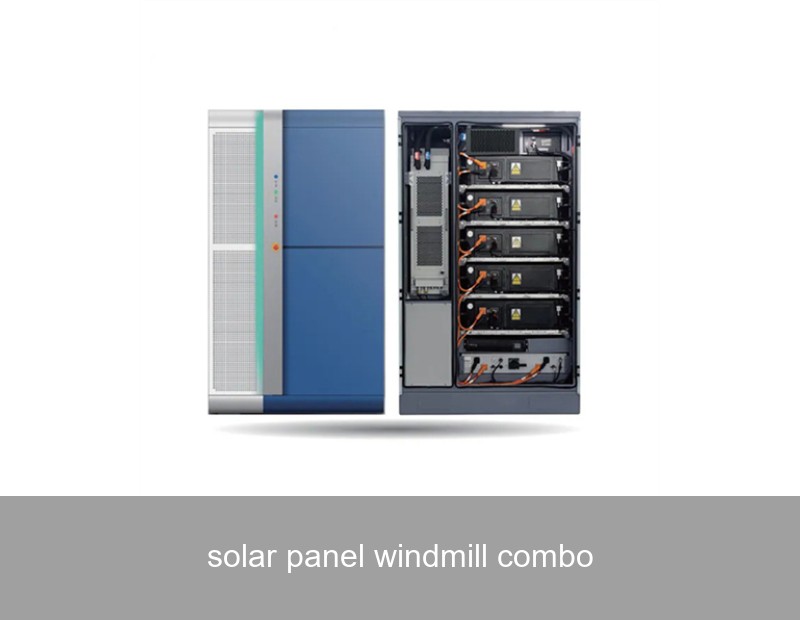
For larger commercial, industrial, and microgrid projects, our GridSynergy Platform is a containerized or modular battery energy storage system (BESS) with advanced grid-forming capabilities. It doesn't just store energy; it can actively stabilize the local microgrid created by your hybrid system, ensuring power quality and reliability for sensitive equipment, even when the main grid is unstable or offline. As noted by the Energy Storage News industry portal, such grid-forming storage is becoming critical for modern renewable-heavy grids.

Image Source: Unsplash - Representative image of a containerized battery system.
Designing Your Solar Panel Windmill Combo: Key Considerations
Interested in exploring this path? Here’s a practical framework to start your journey:
- Site Assessment is King: A professional must analyze your solar irradiance and, even more critically, your wind resource. Average wind speed, prevailing direction, and turbulence are vital. Tools like Global Wind Atlas can provide a preliminary view, but on-site measurement is best.
- Right-Size the Components: This isn't about maximizing each source but optimizing the trio: solar, wind, and storage. Your energy profile dictates the design.
- Choose Compatible Technology: Ensure your inverters, charge controllers, and battery systems are designed to work together. Proprietary, closed systems can limit future expansion.
- Plan for Intelligence: Factor in the cost and capability of the energy management system. It is the project's nervous system.
- Understand Regulations & Incentives: Grid connection rules for hybrid systems, especially with storage, vary. In the US, the Investment Tax Credit (ITC) now explicitly includes standalone storage, a huge benefit. In Europe, local feed-in tariffs or capacity markets may apply.
Is a Hybrid System Right for You?
The ideal candidate for a solar panel windmill combo often has a combination of these factors: a good wind resource (often rural or coastal properties), high and consistent electricity demand, a desire for extreme resilience, and space for both technologies. For an urban home with modest consumption, solar-plus-storage is likely sufficient. But for a remote facility, a farm, or a business committed to 24/7 green operations, the hybrid approach is a game-changer.
What specific energy challenge on your property—be it a stubbornly high night-time load, seasonal variability, or a goal of 100% off-grid capability—could a thoughtfully engineered combination of sun, wind, and smart storage finally solve?
 Inquiry
 Online Chat