


Dual Inverter Solar and Electricity: The Smart Way to Power Resilience and Savings
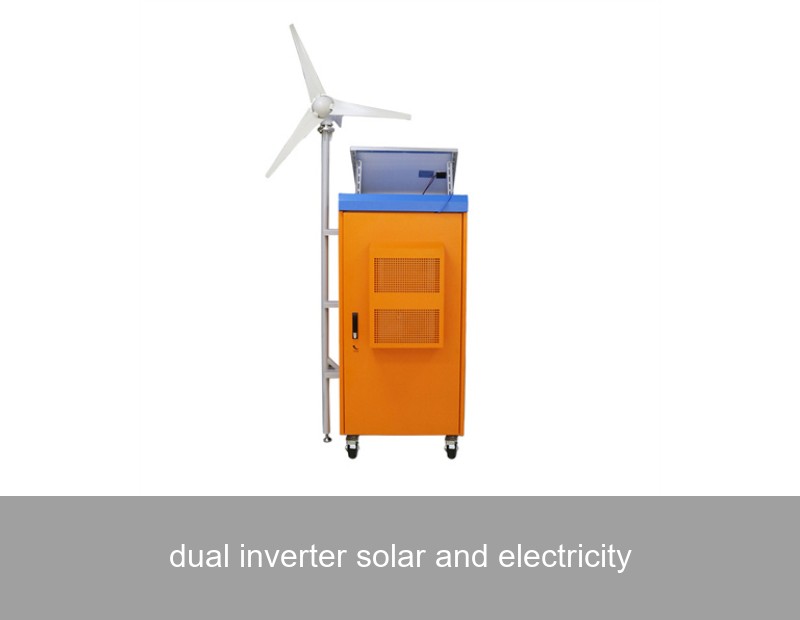
Have you ever wondered why some solar-powered homes seem to glide through grid outages without a flicker, while others with similar setups still feel vulnerable? Or why two households with identical solar panel counts can see markedly different savings on their electricity bills? The answer increasingly lies not just in having solar panels, but in the dual inverter solar and electricity system orchestrating the show behind the meter. This advanced architecture is redefining energy independence for homeowners and businesses across Europe and the US. Let's explore how this technology works and why it might be the upgrade your renewable energy system needs.
Table of Contents
What is a Dual Inverter System?
At its heart, a dual inverter solar and electricity system features two separate, specialized inverters working in harmony. Unlike a traditional single "hybrid" inverter that handles everything, this setup dedicates one inverter solely to converting direct current (DC) from your solar panels into usable alternating current (AC) for your home. The second, often called a battery inverter or multi-mode inverter, is dedicated to managing your energy storage—charging and discharging your battery bank efficiently and seamlessly providing backup power.
Think of it like a high-performance kitchen. A single-hybrid inverter is a versatile chef trying to cook, plate, and manage the pantry alone. A dual inverter system is a specialized team: a master chef (solar inverter) focused on creating dishes from fresh ingredients (solar power), and a dedicated sous-chef (battery inverter) who expertly stores leftovers (battery charging), retrieves them (discharging), and keeps service running if the main chef is unavailable (grid outage). This division of labor unlocks superior performance, reliability, and flexibility.
The Core Difference: Single vs. Dual Inverter Architecture
To appreciate the advancement, a quick comparison is helpful.
| Feature | Traditional Single Hybrid Inverter | Dual Inverter System |
|---|---|---|
| Architecture | All functions (solar conversion, battery management, grid interaction) in one unit. | Separate, optimized units for solar conversion and battery management. |
| Efficiency | Good, but can have efficiency trade-offs when multi-tasking. | Often higher peak efficiencies; each inverter operates in its optimal range. |
| Redundancy & Reliability | Single point of failure. If the unit fails, both solar and backup are lost. | Inherent redundancy. If one inverter has an issue, the other can often continue operating. |
| Flexibility & Upgradability | Limited. System capacity is often locked to the inverter's ratings. | High. Easier to expand solar array or battery storage independently. |
| Backup Power Performance | Commonly powers essential loads during an outage. | Can be designed to power the entire home (whole-home backup), with smoother transition. |
Key Benefits for Homeowners and Businesses
Why is the market shifting towards dual inverter solar and electricity solutions? The advantages are tangible:
- Enhanced Resilience: With dedicated battery management, switchover to backup power during a grid outage is typically faster and more robust. Some systems, like those from Highjoule, can provide whole-home backup, keeping your entire property running, not just a few circuits.
- Maximized Self-Consumption: The system can more intelligently decide the optimal path for every watt of solar energy—should it go directly to your appliances, charge the battery, or be exported to the grid? This minimizes waste and maximizes use of your own free solar power.
- Future-Proof Design: Planning to add more panels or a second battery in a few years? With a dual-inverter setup, you can often upgrade one component without replacing the entire system. This modularity protects your investment.
- Improved Monitoring and Control: Advanced systems offer granular insights into solar production, home consumption, battery status, and grid interaction, all through a user-friendly app. This data empowers you to optimize your energy habits further.

Image Source: Unsplash (Representative image of a home with solar and storage)
Real-World Impact: A Case Study from Bavaria
Data speaks louder than theory. Consider a medium-sized dairy farm in Bavaria, Germany. Facing volatile energy costs and needing reliable power for cooling systems, they installed a dual inverter solar and electricity system in early 2023.
- System Specs: 45 kWp solar array, 40 kWh lithium-ion battery storage, featuring a dedicated solar inverter and a Highjoule HPS Series multi-mode battery inverter.
- Results (First 12 Months):
- Self-Consumption Rate: Increased from 35% (solar only) to 92% (with dual inverter + storage).
- Grid Import Reduction: 89% reduction in purchased electricity during peak tariff hours.
- ROI Acceleration: Projected payback period shortened by ~2 years due to optimized time-of-use arbitrage and backup capability preventing spoilage during a 9-hour grid outage.
This case mirrors findings from the Fraunhofer Institute for Solar Energy Systems, whose research underscores that intelligent system design, including component decoupling, is key to maximizing economic and technical value in residential and commercial PV-storage systems.
The Highjoule Approach: Intelligent Integration
At Highjoule, we've been at the forefront of advanced energy storage since 2005. We understand that a true dual inverter solar and electricity system is more than just two boxes on a wall; it's about intelligent integration. Our HPS (Hybrid Power System) Series of multi-mode inverters are engineered specifically to be the perfect partner to high-efficiency solar inverters.
Our systems feature advanced software that acts as the "brain," making real-time decisions to optimize energy flow based on weather forecasts, your consumption patterns, and dynamic electricity rates (common in Europe and parts of the US). This ensures you're not just storing energy, but storing it strategically for when it's most valuable—either for backup or for financial return. For commercial and microgrid applications, this level of control is indispensable for managing demand charges and ensuring operational continuity.

Image Source: Unsplash (Representative image of advanced energy hardware)
Furthermore, our global service network provides peace of mind. Whether you're in California facing public safety power shutoffs or in Scandinavia looking to offset high winter energy costs, Highjoule's solutions are designed for the specific challenges of your region.
Is a Dual Inverter System Right for You?
Choosing an energy system is a significant decision. A dual inverter solar and electricity setup is particularly compelling if:
- Energy resilience (whole-home backup) is a top priority.
- You have or plan to have a large solar array and significant battery storage.
- Your utility has complex rate structures (time-of-use, demand charges).
- You want the flexibility to upgrade your solar or storage independently in the future.
For simpler needs, a single hybrid inverter may suffice. However, as energy needs evolve, the scalability and robustness of a dual system offer long-term advantages. We always recommend consulting with a certified installer who can model different scenarios based on your historical energy use (check your utility bills!) and local conditions. Resources like the U.S. Department of Energy's solar guide are excellent starting points for education.
Your Energy Future
The transition to renewable energy isn't just about generating power—it's about managing it intelligently. Dual inverter solar and electricity technology represents a mature, sophisticated step in that journey, offering control, resilience, and efficiency that single-inverter systems struggle to match. With nearly two decades of innovation, Highjoule is proud to provide the intelligent hardware and software that make this advanced energy management accessible and reliable.
What specific energy challenge—be it unpredictable bills, grid reliability concerns, or a desire for true energy independence—is motivating you to explore the next generation of solar and storage solutions today?
 Inquiry
 Online Chat