


Beyond the Sun: Why a Solar Panel with Generator is the Smart Choice for Modern Energy Independence
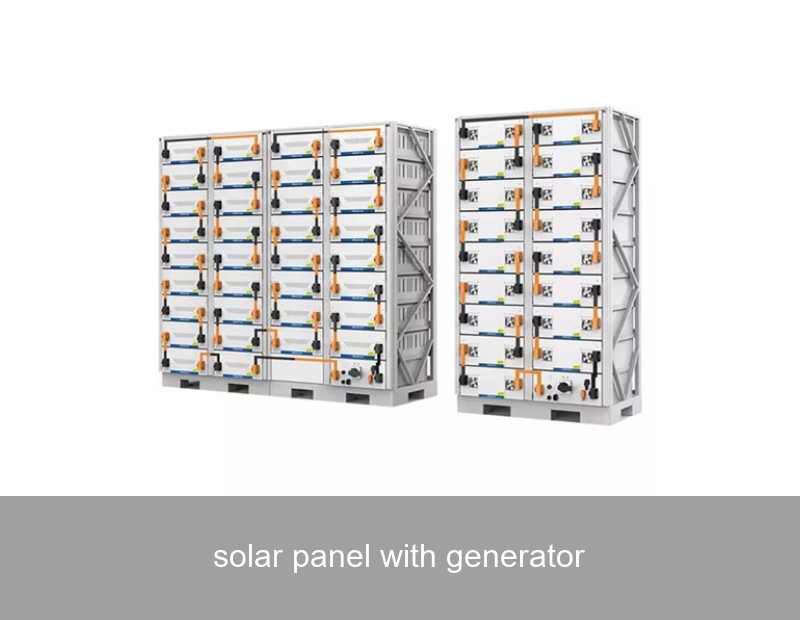
Imagine this: a powerful storm knocks out the grid just as the sun sets. Your solar panels, now idle, can't power your home through the night. This common scenario reveals a critical gap in relying solely on solar. The true key to resilience isn't just a solar panel with generator, but a more intelligent, integrated system. This article explores the evolution from traditional fuel-guzzling backups to modern, automated energy ecosystems that provide true peace of mind and financial savvy.
Table of Contents
- The Glaring Limitation of Solar-Only Systems
- The Generator Dilemma: Traditional vs. Modern Solutions
- Real-World Proof: A Case Study from California
- The Highjoule Solution: Intelligent Energy Orchestration
- Making the Right Choice for Your Home or Business
The Glaring Limitation of Solar-Only Systems
Solar panels are fantastic at converting sunlight into electricity. But what happens when the sun isn't shining? This isn't just a nighttime issue; cloudy days, seasonal changes, and even grid outages during daylight hours (where safety regulations often force solar systems to shut off) can leave you without power. The traditional answer has been a fossil-fuel backup generator. While effective in a pinch, this creates a disjointed, inefficient, and often noisy setup. You're essentially managing two separate systems: one clean, one dirty. The modern approach is to think in terms of a unified solar panel with generator system, where the "generator" component is a silent, instant-response battery storage unit that works in perfect harmony with your solar array.
The Generator Dilemma: Traditional vs. Modern Solutions
Let's break down the two main backup philosophies.
| Feature | Traditional Fuel Generator (as backup) | Modern Battery Storage System (as backup) |
|---|---|---|
| Response Time | 30 seconds to 2 minutes for automatic models. | Instantaneous (less than 20 milliseconds). |
| Fuel & Maintenance | Requires stored fuel (gas, propane, diesel), regular engine maintenance, and testing. | Fuel-free, minimal maintenance, mostly digital monitoring. |
| Operation & Noise | Loud, emits fumes, cannot be safely operated in enclosed spaces. | Silent, zero local emissions, safe for indoor installation (e.g., garage, basement). |
| Integration with Solar | Typically operates independently; cannot use solar power during an outage unless paired with specific inverters. | Seamlessly integrates, allowing solar to charge the batteries and power the home even during grid failures. |
| Environmental Impact | High (CO2 and particulate emissions). | Low, especially when charged by renewable solar. |
The data speaks volumes. While a traditional generator has its place for extremely long-duration outages in remote areas, for most residential and commercial applications, a battery storage system is the superior "generator" counterpart to solar panels.

Image Source: Unsplash (Representative image of a modern solar and storage installation)
The Smart Hybrid: Integrating Solar with Advanced Storage
So, what does a well-integrated system look like? It's more than just hardware; it's about intelligent energy management. Think of it as a three-part orchestra:
- The Producer (Solar Panels): Creates clean energy during the day.
- The Reservoir (Battery Storage): Stores excess solar production for use at night or during outages.
- The Conductor (Energy Management System - EMS): The true brains. It decides in real-time whether to power the home, charge the battery, or export to the grid, based on weather forecasts, electricity rates, and your usage patterns.
This system allows for "time-of-use optimization" – using stored solar power during expensive peak-rate hours – which can dramatically increase your savings on top of providing backup. According to the U.S. Department of Energy, pairing storage with solar maximizes the value of your solar investment and enhances grid resilience.
Real-World Proof: A Case Study from California
Consider the situation in California, USA, where Public Safety Power Shutoffs (PSPS) due to wildfire risk have become a recurring challenge. A 2022 study by the National Renewable Energy Laboratory (NREL) analyzed homes with solar-plus-storage during these events.
The Data: The study found that homes equipped with a properly sized solar and battery system maintained full critical load operation (refrigeration, lighting, communications, etc.) for the duration of typical multi-day outages. Crucially, these systems used solar generation during the day to recharge the batteries, effectively creating a self-sustaining microgrid. One monitored household with a 10 kW solar array and a 20 kWh battery system sailed through a 48-hour blackout without drawing from the grid once, while a neighbor with solar-only had no power after sunset.
This case underscores that resilience isn't just about having a backup; it's about having a renewable and rechargeable backup that works synergistically with your solar panels.
The Highjoule Solution: Intelligent Energy Orchestration
At Highjoule, we've been at the forefront of this integrated energy shift since 2005. We don't just see a solar panel with generator; we see an intelligent energy asset. Our HPS (Highjoule Power System) series for residential and commercial applications is designed to be the ultimate conductor in your energy orchestra.
Our systems feature:
- High-Density Lithium-Ion Batteries: Compact, safe, and with a long cycle life, designed to integrate seamlessly with both new and existing solar installations.
- Adaptive Power Management Software: Our proprietary EMS learns your energy habits and automatically optimizes for self-consumption, cost savings, or backup preparedness. You can control modes and monitor performance from a simple smartphone app.
- Scalable Architecture: Start with what you need and add more battery capacity as your needs grow, protecting your investment for the long term.
- Professional Integration Services: Our global network of certified installers ensures your system is not just a collection of parts, but a finely tuned, reliable whole-home or whole-business solution.
For businesses and microgrids, our Industrial Energy Platform (IEP) takes this further, allowing for demand charge management, participation in grid services, and ensuring operational continuity that protects revenue.

Image Source: Unsplash (Representative image of energy system monitoring)
Making the Right Choice for Your Home or Business
The journey to energy independence starts with asking the right questions. How critical is uninterrupted power for your safety, work, or business operations? Are you looking to maximize the financial return of your solar investment? What are your local grid reliability and electricity rate structures like?
Moving beyond the concept of a simple solar panel with generator to a smart, storage-integrated system is no longer a luxury for the tech-savvy; it's a pragmatic and increasingly economical choice for homeowners and business leaders across Europe and North America. The technology is proven, the financial models are compelling, and the value in resilience is immeasurable.
Is your current solar installation truly prepared for the next unexpected outage, or is it only a fair-weather friend? What would the ability to power your critical loads for days, using only sunlight, mean for your peace of mind?
 Inquiry
 Online Chat