


Solar Paneling: How Much Does It Really Cost, and Is It Worth It?
So, you're thinking about joining the millions harnessing the sun's power. Your first question is likely the most practical one: solar paneling, how much? It's a great starting point, but the answer is more nuanced than a simple price tag. The true cost of solar is an equation involving your energy needs, local climate, financial incentives, and the long-term value of energy independence. As a global leader in advanced energy storage since 2005, Highjoule understands that the journey to sustainable power begins with clear, honest information. Let's demystify the costs and explore the real value of a solar investment for your home or business.
Table of Contents
- The Price Puzzle: Breaking Down the "Sticker Shock"
- The Hidden Game-Changer: Energy Storage
- A Real-World Case: The German Bakery's Success Story
- Calculating Your Return: More Than Just Dollar Savings
- The Highjoule Solution: Smart, Integrated Power
- What's Your Energy Independence Number?
The Price Puzzle: Breaking Down the "Sticker Shock"
When you first research solar panel costs, you might see figures like "$15,000 to $25,000" for an average residential system. This initial number can be daunting. But this is where context is everything. This price typically covers a complete grid-tied system: the panels, inverters, mounting hardware, and professional installation. The final cost is influenced by:
- System Size (kW): Determined by your past energy consumption. A larger home or energy-intensive business needs a larger system.
- Panel Efficiency & Type: High-efficiency monocrystalline panels cost more but produce more power in limited space.
- Roof Complexity & Location: A simple, south-facing roof is easier and cheaper to install on than a complex roof with multiple angles or shading.
- Local Labor & Permit Costs: These vary significantly by region in both the US and Europe.
The critical shift in thinking is to move from upfront cost to total cost of ownership. Thanks to decades of innovation, the price of solar photovoltaic (PV) modules has plummeted by over 80% in the last decade (NREL, 2021). Combined with strong government incentives, the effective net cost is much lower.

Image: A typical residential solar installation. Source: Unsplash
The Hidden Game-Changer: Energy Storage
Here's the modern twist to the solar story. A traditional, grid-tied solar system shuts off during a power outage for safety reasons. It also sends excess daytime energy back to the grid, often for a small credit. But what if you could capture that excess and use it on your own terms? This is where battery energy storage systems (BESS) transform the equation.
Adding storage, like Highjoule's ResiCore residential battery system, increases the initial investment but massively amplifies the value. Suddenly, your solar panels become a personal, resilient power plant. You can:
- Use your solar energy at night, drastically reducing grid reliance.
- Keep critical loads running during grid outages.
- Take advantage of time-of-use electricity rates by using stored power during peak, expensive hours.
So, when asking "solar paneling, how much?", the more future-proof question is: "Solar and storage, how much value?"
A Real-World Case: The German Bakery's Success Story
Let's move from theory to practice with a concrete example from our work in Bavaria, Germany. A mid-sized family bakery, "Brotzeit," faced rising energy costs and wanted to secure its refrigeration and production lines against increasing grid instability.
| Challenge | Solution | Results (First 12 Months) |
|---|---|---|
| High, volatile energy bills; need for uninterrupted refrigeration. | Highjoule designed and installed a 45 kW rooftop solar PV array coupled with a 60 kWh IndustroCore commercial battery storage system. |
|
For Brotzeit, the cost was a strategic capital investment, not just an expense. It provided predictable energy costs, operational resilience, and a tangible marketing advantage. This holistic view of cost versus value is key for any commercial or industrial application.
Calculating Your Return: More Than Just Dollar Savings
The financial return on solar (and storage) is measured by metrics like Return on Investment (ROI) and Payback Period. In sun-rich parts of the US like California or Arizona, payback periods can be under 7 years. In Europe, with higher traditional electricity prices, payback can be even faster in countries like Germany or the UK.
But the return extends beyond your utility bill:
- Property Value Increase: Studies show homes with solar sell faster and at a premium. The U.S. Department of Energy notes that solar is viewed as a premium upgrade, similar to a renovated kitchen.
- Protection Against Inflation: You lock in a large portion of your electricity cost for 25+ years, immune to market price spikes.
- Environmental & Ethical Value: Reducing your carbon footprint and contributing to grid stability has immense non-monetary value.

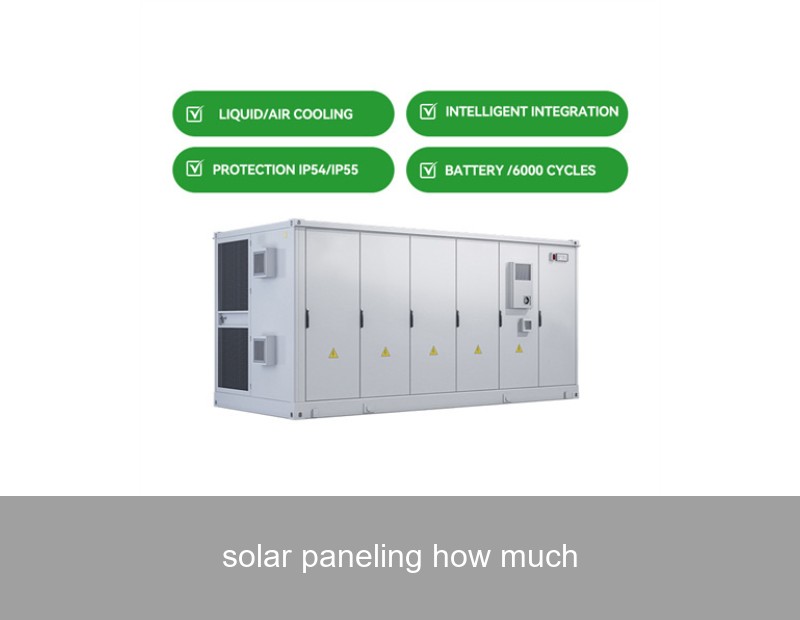
Image: A modern battery energy storage system. Source: Unsplash
The Highjoule Solution: Smart, Integrated Power
This is where Highjoule's expertise moves from theory to your reality. We don't just sell components; we provide intelligent, integrated power solutions. For over 18 years, we've specialized in designing systems where solar generation and advanced storage work in perfect harmony.
Our Smart Energy Hub platform is the brain of the operation. It doesn't just store energy; it intelligently manages it based on your usage patterns, weather forecasts, and real-time grid conditions. For a homeowner with our ResiCore system, this means automatically choosing the most economical and resilient power flow. For a factory using our IndustroCore or MicroGrid Core solutions, it means participating in grid services or ensuring seamless process continuity.
When you partner with Highjoule, the question "solar paneling, how much?" evolves into a detailed consultation. Our experts analyze your energy profiles, site specifics, and resilience goals to design a system with a transparent, justified cost and a clear, long-term value proposition.
Key Components of a Highjoule Value Proposal:
- Custom Design: No one-size-fits-all. We size your system for optimal performance and ROI.
- Premium Components: We use tier-1 solar panels and our own high-cycle-life, safe lithium iron phosphate (LFP) batteries.
- Intelligent Software: Our platform maximizes self-consumption and provides real-time system insights.
- Full Service: From permitting and installation to maintenance and monitoring, we provide a single point of responsibility.
What's Your Energy Independence Number?
The journey to answering "solar paneling, how much?" is personal. It starts with understanding your own "energy independence number"—the point where your power is clean, affordable, and under your control. Is it achieving 80% self-sufficiency? Is it guaranteeing your home office never goes offline? Or is it securing your business's production against blackouts?
We invite you to look beyond the initial quote. Consider the 25-year horizon. With the right technology partner, the cost of solar and storage becomes an investment in resilience, sustainability, and predictable expenses. What specific energy challenge in your home or business would be solved by having your own intelligent, reliable power source?
 Inquiry
 Online Chat