


Beyond Installation: The True Meaning of Solar Panels Sustainability
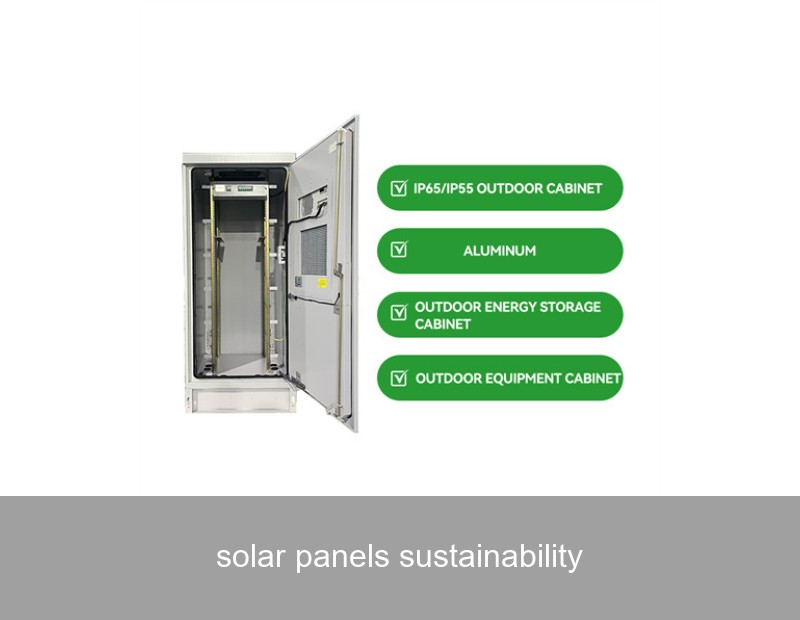
When we think of solar panels sustainability, the image is often a pristine rooftop array under a bright sun. It’s a powerful symbol of clean energy. But what happens when the sun sets, or on those cloudy days that are all too common in places like Munich or Seattle? This is where the common narrative around solar energy hits a wall. True sustainability isn't just about generating clean power; it's about delivering reliable, efficient, and intelligent power when it's needed most. Let's explore how the conversation is shifting from solar panels alone to integrated systems that define the next generation of energy resilience.
Table of Contents
- The Intermittency Challenge: Sun Doesn't Shine 24/7
- Measuring True Impact: The Data Behind the Shine
- Case Study: A Bavarian Dairy Farm's Journey to Energy Independence
- The Storage Imperative: Completing the Sustainability Cycle
- Highjoule's Approach: Intelligent Systems for Real-World Needs
- The Future of Solar Sustainability: What's Next?
The Intermittency Challenge: Sun Doesn't Shine 24/7
The fundamental truth of solar power is its variability. Grid operators from California to Germany grapple with the "duck curve"—the steep drop in solar production in the evening when demand remains high. This mismatch can lead to reliance on fossil-fuel peaker plants, undermining the carbon savings of solar installations. Simply put, without a way to capture and time-shift that abundant midday energy, the sustainability of a solar panel system is inherently limited. It's like having a harvest of fresh food but no way to preserve it for the winter.
Measuring True Impact: The Data Behind the Shine
To understand solar panels sustainability holistically, we must look at lifecycle assessments (LCA) and energy payback time (EPBT). Modern solar panels have an EPBT of 1-4 years, meaning they recoup the energy used in their manufacturing within that time, and can then produce clean energy for 25+ years (NREL, 2021). However, this positive equation assumes optimal use of the generated electricity. When excess solar is curtailed or wasted, the effective carbon offset per panel drops. The key metric evolves from "kilowatts installed" to "kilowatt-hours utilized on-site and reliably delivered."

Image Source: Unsplash - A modern home solar setup, hinting at the need for integrated storage.
Case Study: A Bavarian Dairy Farm's Journey to Energy Independence
Let's ground this in reality. The Schmidt family runs a medium-sized dairy farm outside Augsburg, Germany. In 2020, they installed a 50 kW rooftop solar system. Their initial goal was to offset daytime energy costs for cooling and machinery. They succeeded in covering 60% of their daytime load, but evening operations and overnight refrigeration still pulled heavily from the grid.
In 2022, they decided to address this gap by integrating a battery energy storage system (BESS). The results after one year were transformative:
| Metric | Before Storage (Solar Only) | After Storage (Solar + BESS) |
|---|---|---|
| Grid Energy Independence | ~35% | **89%** |
| Self-Consumption of Solar Power | 45% | **96%** |
| Annual Energy Cost Savings | €4,200 | **€11,800** |
| Carbon Footprint Reduction | 28 tonnes CO2e/year | **42 tonnes CO2e/year** |
This case clearly shows that solar panels sustainability is maximized not at the point of generation, but at the point of consumption, enabled by storage.
The Storage Imperative: Completing the Sustainability Cycle
Battery storage is the linchpin of a truly sustainable solar energy system. It does more than just "save for later." Advanced systems provide:
- Load Shifting: Using stored solar energy during peak tariff periods.
- Grid Services: Helping stabilize the local grid, a growing need as renewable penetration increases (IEA, 2023).
- Backup Power: Ensuring critical operations continue during outages, a concern for both US and European businesses.
- Longevity: By preventing solar energy from being exported at low value, storage improves the financial and environmental return on the entire system.
Highjoule's Approach: Intelligent Systems for Real-World Needs
At Highjoule, we've focused on this very challenge since 2005. We see storage not as an add-on, but as the intelligent core that unlocks the full potential of solar investments. Our product philosophy is built on three pillars that extend solar panels sustainability:
- High-Efficiency Power Conversion: Our bi-directional inverters minimize energy loss during charge/discharge cycles, ensuring more of your precious solar energy is available for use.
- Adaptive Energy Management Software (AEMS): This is the "brain." Highjoule's AEMS doesn't just store and release energy. It learns your consumption patterns, weather forecasts, and utility rate structures to autonomously optimize for cost savings, carbon reduction, or resilience.
- Scalable & Safe Architecture: From our H-Joule Residential Series for homes to the modular H-Joule C&I Cube for commercial and industrial sites, our systems are designed for safety and easy expansion. Our industrial-grade lithium iron phosphate (LiFePO4) batteries offer enhanced safety and longer cycle life, aligning with the long-term sustainability promise of your solar panels.
For a microgrid at a remote industrial site or a hospital seeking uninterrupted power, Highjoule systems provide the control and predictability that solar alone cannot.

Image Source: Unsplash - An engineer monitoring a commercial-scale battery storage system.
The Future of Solar Sustainability: What's Next?
The next frontier is the seamless, digital integration of generation, storage, and consumption. Imagine your solar + storage system automatically participating in a virtual power plant (VPP) to support the grid during stress events, earning you revenue while contributing to community-wide stability. Or a system that prioritizes charging your EV with excess solar based on your scheduled departure time. This level of intelligent orchestration is where sustainability meets smart technology.
Furthermore, the end-of-life management for both panels and batteries is gaining focus. True sustainability requires a circular economy approach. Highjoule is actively involved in research partnerships for battery repurposing (second-life applications) and recycling, ensuring our products are responsible throughout their entire lifecycle.
Your Energy, Your Control
The journey to genuine energy sustainability is evolving. It's no longer just about the panels on your roof. It's about building an intelligent, resilient, and efficient energy ecosystem around them. As you consider or reevaluate your solar investment, ask yourself: Is my system designed for the sunniest day, or for every hour of the year? How can I ensure not a single kilowatt-hour of my clean energy goes to waste?
What role could an intelligent storage system play in achieving your specific energy independence and sustainability goals?
 Inquiry
 Online Chat