


Unlocking the Full Potential of Your Solar Panels: The 6000W Solar Power Energy Storage Cabinet
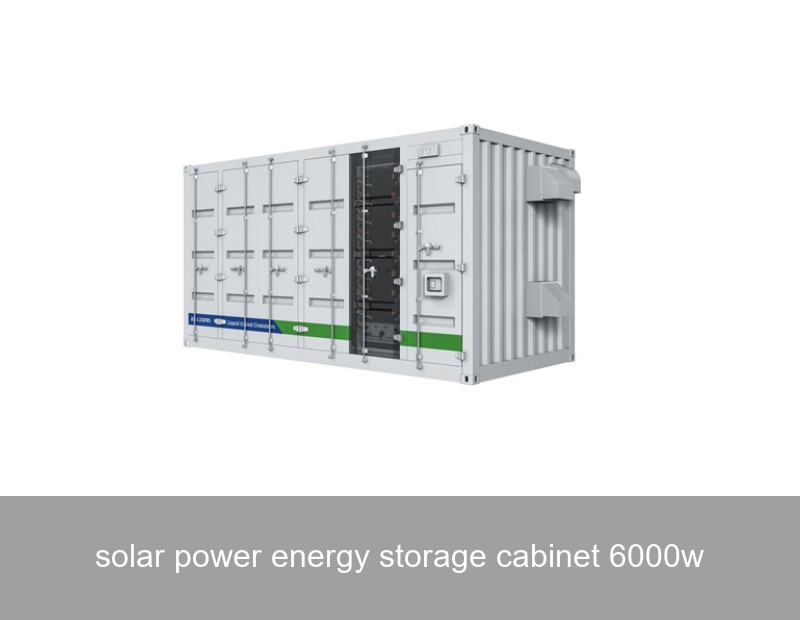
You've made the smart investment in solar panels. On bright, sunny days, your meter might even spin backwards. But what happens when the sun sets, or clouds roll in? That's where the conversation shifts from just generation to intelligent storage. A dedicated 6000W solar power energy storage cabinet is the missing link that transforms your solar array from a daytime contributor to a 24/7 power plant. Let's explore why this specific capacity is becoming a cornerstone for empowered energy independence in homes and businesses across Europe and the US.
Table of Contents
- The Challenge: Wasted Sunlight and Grid Dependency
- The Solution: What is a 6000W Solar Energy Storage Cabinet?
- Why 6000W? The Sweet Spot for Modern Energy Needs
- Key Features to Look For in a High-Performance System
- Real-World Impact: A Case Study from Bavaria
- Beyond the Basics: The Highjoule Approach to Intelligent Storage What's Your Energy Resilience Profile?
The Challenge: Wasted Sunlight and Grid Dependency
Here's a common scenario for solar owners without storage: your system peaks at noon, but your household energy consumption often peaks in the early morning and evening. The National Renewable Energy Laboratory (NREL) notes that this "duck curve" phenomenon—where midday solar production vastly outpaces demand—is intensifying. This mismatch means excess solar energy is often exported to the grid for minimal compensation, while you later buy back expensive power at night. You're left vulnerable to grid outages, rising electricity tariffs, and unable to maximize your self-consumption.

Image: A home with solar panels at sunset, a time when energy storage becomes critical. Source: Unsplash
The Solution: What is a 6000W Solar Energy Storage Cabinet?
Think of a solar power energy storage cabinet as the heart of your personal energy ecosystem. It's an integrated system, typically wall-mounted or floor-standing, that houses the essential components: a lithium-ion battery bank (like LiFePO4 for safety and longevity), a hybrid or AC-coupled inverter, a battery management system (BMS), and thermal management. The "6000W" rating, specifically, refers to the system's continuous power output capability. In simpler terms, it can simultaneously deliver up to 6000 watts of power to run your appliances—enough to handle heavy loads like air conditioners, heat pumps, and ovens, while keeping the lights on and devices charging.
Why 6000W? The Sweet Spot for Modern Energy Needs
Why is 6000W emerging as a key power rating? It aligns perfectly with the load profiles of average to larger homes and small commercial operations.
- Whole-Home Backup: A 6000W output can typically cover the majority of a home's essential and non-essential circuits during an outage, not just a few select ones.
- Electric Vehicle (EV) Charging Support: It can handle Level 2 EV charging (often 7-11 kW) when combined with smart energy management, by supplementing solar or staggering loads.
- Heat Pump Compatibility: As Europe and the US transition away from gas boilers, 6000W systems provide the robust power needed to start and run modern air-source heat pumps.
| Common Home Appliance | Typical Power Draw (Watts) | Can a 6000W Cabinet Handle It? |
|---|---|---|
| Refrigerator | 150-400 | Easily |
| Central Air Conditioner (3-ton) | 3500-5000 | Yes, with margin for other loads |
| Electric Oven | 2000-5000 | Yes |
| Heat Pump | 3000-8000 | Yes, for most models (smart management advised) |
| Level 2 EV Charger | 7200-11000 | Can support when paired with solar production or load scheduling |
Key Features to Look For in a High-Performance System
Not all 6000W cabinets are created equal. When evaluating options, prioritize these features:
- Scalable Capacity: Energy storage needs grow. Look for systems that allow you to easily add more battery modules later without replacing the entire cabinet.
- Advanced Battery Chemistry: Lithium Iron Phosphate (LiFePO4) is the industry benchmark for safety (thermal stability) and cycle life (often 6000+ cycles).
- Integrated Energy Management System (EMS): This is the brain. It should intelligently decide when to charge from solar, discharge to the home, or export to the grid based on weather forecasts, time-of-use rates, and your habits.
- Grid Services & Off-Grid Capability: In some markets, systems can provide grid stabilization services. True off-grid capability requires a seamless transfer switch.
Real-World Impact: A Case Study from Bavaria
Let's move from theory to practice. Consider the Müller family in southern Germany. They installed a 12 kWp solar array on their farmhouse but were only consuming 30% of the generation directly. In 2022, they integrated a Highjoule HEC-6000 solar power energy storage cabinet with 20 kWh of expandable LiFePO4 storage.
- Self-Consumption Rate: Increased from 30% to over 85%.
- Grid Independence: Achieved 92% annual energy autonomy, surviving multiple grid outages without interruption.
- Financial Return: Reduced their annual electricity bill by €1,850, projecting a payback period on the storage system of under 7 years, enhanced by local storage incentives.
"The system isn't just a battery; it's our energy command center," says Mr. Müller. "We now charge our EV almost exclusively from our own solar surplus, which the Highjoule system intelligently manages for us."

Image: Example of a neatly installed, modern energy storage cabinet. Source: Unsplash
Beyond the Basics: The Highjoule Approach to Intelligent Storage
As a global leader since 2005, Highjoule designs storage solutions like the HEC-6000 series with a holistic view. We understand that a cabinet is more than its components; it's a platform for energy resilience.
Our 6000W cabinets are built with the following principles:
- Seamless Integration: They are compatible with both new and existing solar installations (AC or DC-coupled), offering flexibility for retrofit projects.
- Smart Grid Interaction: Our proprietary EMS software can be configured to capitalize on dynamic electricity pricing, a growing trend in the US and Europe, automatically selling stored power back when prices peak.
- Industrial-Grade Reliability: Leveraging our experience in commercial and microgrid applications, we use robust components and rigorous testing to ensure the system withstands decades of daily cycling.
- Comprehensive Monitoring: Users gain full visibility into energy flows, savings, and system health via an intuitive app, turning complex data into actionable insights.
For businesses, this same 6000W platform can be stacked and scaled to form resilient microgrids, protecting critical operations from grid volatility and contributing to corporate sustainability goals, as outlined in frameworks like the U.S. Department of Energy's grid resilience initiatives.
What's Your Energy Resilience Profile?
Imagine a future where your energy costs are predictable, your power is clean and reliable, and your home or business contributes to a more stable grid. The technology to make this a reality is here and proven. The journey begins with a simple question: How would you power your life during the next grid outage, and what value would you place on never having to ask that question again?
 Inquiry
 Online Chat