


Finding the Right Supplier of VPI Energy for a Resilient and Sustainable Future
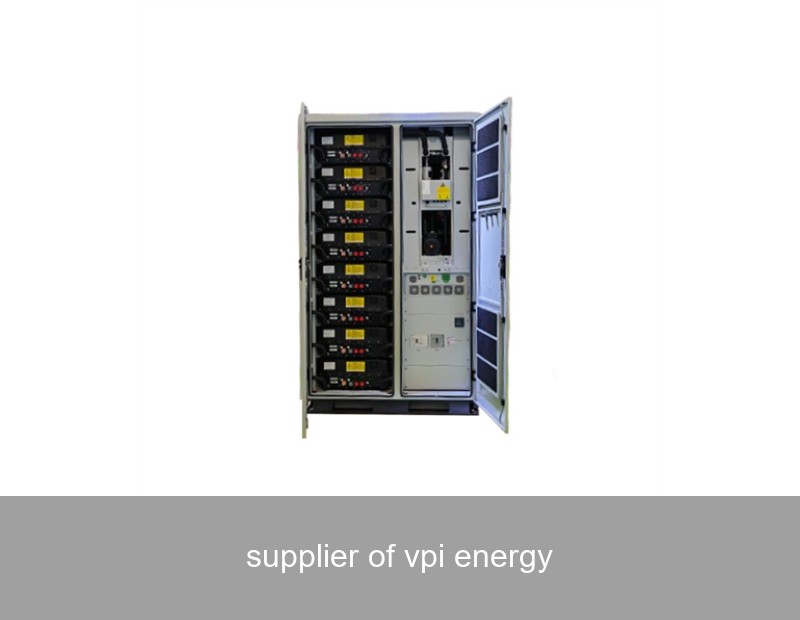
If you're managing a commercial facility, industrial plant, or a community microgrid, you've likely felt the pressure. The pressure to increase energy independence, to reduce operational costs, and to meet ambitious sustainability targets. For many, the answer lies in advanced energy storage. But not just any storage—a solution built on safety, intelligence, and proven durability. This is where the search for a reliable supplier of VPI energy becomes critical. VPI, or Voltage Performance Index, is more than a technical term; it's a hallmark of a battery system's ability to deliver stable, high-quality power consistently under real-world conditions. Choosing the right partner for such technology can make the difference between a project that excels and one that falls short.
Table of Contents
The VPI Advantage: More Than Just a Battery
Let's demystify VPI. In essence, a high Voltage Performance Index indicates a battery energy storage system (BESS) that maintains its voltage within a tight, optimal range throughout its discharge cycle. Why should you care? Because voltage stability is the bedrock of power quality. For sensitive industrial machinery, data centers, or even modern commercial HVAC systems, voltage sags or fluctuations can lead to costly downtime, equipment stress, and data loss. A supplier of VPI energy focuses on delivering systems engineered to prevent these issues, ensuring your operations run smoothly and efficiently.
Think of it like water pressure in a building. A low-quality system might provide a strong initial flow that quickly dwindles to a trickle, disrupting everything. A high-VPI system, however, is like having perfectly regulated pressure from start to finish, ensuring every process that depends on it functions flawlessly.
The Market Phenomenon: Why Demand for Advanced BESS is Surging
The shift is undeniable. Across Europe and North America, we're witnessing a perfect storm driving the adoption of sophisticated energy storage. The phenomenon is clear: volatile energy prices, increasing grid instability, and stringent carbon reduction goals are pushing businesses beyond simple backup power.
The data tells a compelling story. According to the International Energy Agency (IEA), global grid-scale battery storage capacity is set to multiply exponentially, with a significant portion of growth anchored in the US and European markets. This isn't just about capacity; it's about capability. Facility managers are now looking for systems that offer:
- Arbitrage: Buying and storing cheap energy (often from renewables) to use during expensive peak periods.
- Grid Services: Providing frequency regulation or voltage support to stabilize the local grid, creating a new revenue stream.
- Resilience: Seamless backup power that kicks in within milliseconds to keep critical operations online.
This is the new benchmark. Companies are no longer asking "if" they need storage, but "what kind" of storage will deliver the highest return on investment and operational resilience. This is the precise gap that a dedicated supplier of VPI energy solutions fills.
Case Study: A German Industrial Park's Journey to Energy Autonomy
Let's move from theory to practice. Consider a real-world example from Bavaria, Germany. A mid-sized manufacturing park, housing several precision engineering firms, faced a dual challenge: skyrocketing electricity costs due to peak demand charges and a corporate mandate to reduce its carbon footprint by 30% within five years. Their existing solar PV installation was helpful but insufficient, as surplus midday energy was being sold to the grid at low rates, while they bought it back at night at high prices.
Their solution involved partnering with a technology provider to implement a tailored 2 MWh battery energy storage system. The key requirements were exceptional cycle life, superior voltage stability (high VPI) to protect sensitive CNC machinery, and an intelligent energy management system (EMS) to optimize every kilowatt-hour.
After a thorough evaluation of several vendors, they selected Highjoule as their supplier of VPI energy storage. Highjoule's IntelliBESS Pro series was deployed, featuring its proprietary battery chemistry and adaptive power conversion system designed for high VPI output.
Image: A modern industrial battery storage installation. Source: Unsplash (Representative image)

The results, measured over 18 months, were significant:
| Metric | Before Highjoule IntelliBESS | After Highjoule IntelliBESS |
|---|---|---|
| Peak Demand Charges | €85,000 per year | €28,000 per year |
| Solar Self-Consumption | 35% | 89% |
| Grid Dependency During Operations | 100% at night | < 20% at night |
| Reported Equipment Faults from Power Quality | 4-6 per year | 0 |
This case underscores the tangible impact. The park didn't just save money; it enhanced its manufacturing reliability and made a substantial leap toward its sustainability goals. The high-VPI characteristic of the system was crucial in eliminating power-quality-related downtime, a value often overlooked in purely financial calculations.
Highjoule's Role as Your Trusted Supplier of VPI Energy Solutions
Since 2005, Highjoule has evolved from a pioneering battery technology company into a global leader in complete, intelligent energy storage systems. Our mission is to be more than just a vendor; we aim to be your strategic partner in energy transformation. As a leading supplier of VPI energy systems, our approach is built on three pillars:
- Engineered Excellence: Our core hardware, like the IntelliBESS Pro for commercial/industrial use and the HomeFlow+ for residential applications, is designed with VPI as a core performance metric. We use advanced lithium-iron-phosphate (LFP) chemistry, known for its safety and long cycle life, coupled with our own power electronics that ensure voltage output remains stable and clean.
- Intelligence at the Core: Hardware is only as good as its brain. Our JouleMind AI energy management platform is what transforms a battery into a smart grid asset. It continuously learns your energy patterns, weather data, and utility rates to autonomously optimize charging, discharging, and grid interactions for maximum economic and operational benefit.
- Full-Spectrum Support: We provide end-to-end services—from initial consultancy and system design to installation support, grid integration assistance, and long-term performance monitoring. We understand the regulatory landscapes in both Europe and the US, helping you navigate incentives and compliance with ease.
Image: Residential energy storage enabling solar self-consumption. Source: Unsplash (Representative image)

Whether you're looking to fortify a critical microgrid, shave peak demand for a factory, or simply maximize a rooftop solar investment for your home, Highjoule's solutions are architected with the reliability and intelligence you need from a true supplier of VPI energy technology.
Navigating the Future Energy Landscape
The energy landscape is becoming more decentralized, digital, and dynamic. Technologies like vehicle-to-grid (V2G) and virtual power plants (VPPs) are moving from pilot projects to mainstream reality. In this evolving context, the role of a sophisticated BESS shifts from a passive asset to an active grid participant. The U.S. Department of Energy highlights the potential of VPPs to enhance grid reliability and integrate renewables at scale.
This future demands storage systems that are not only big but also smart, responsive, and fundamentally reliable in the quality of power they deliver. The VPI metric will become increasingly important as more sensitive loads and revenue-generating grid services depend on the flawless performance of your storage asset.
Your Next Step Towards Energy Resilience
The journey to a more resilient, cost-effective, and sustainable energy setup begins with a clear understanding of your needs and the right technology partner. As you evaluate potential suppliers, ask them not just about capacity and price, but about voltage stability, long-term degradation rates, and the intelligence of their software. Ask them how they will help you navigate incentive programs like the EU's Green Deal Industrial Plan or the US Investment Tax Credit (ITC).
What specific energy challenge—be it unpredictable demand charges, renewable integration, or critical backup needs—is most pressing for your operation, and how could a system designed for superior voltage performance become the cornerstone of your solution?
 Inquiry
 Online Chat