


Solar Power for Household Use: Your Guide to Energy Independence
Imagine opening your electricity bill and feeling a sense of calm, not dread. For a growing number of households across Europe and the U.S., this is the new reality, thanks to the strategic adoption of solar power for household use. It's more than just panels on a roof; it's a transformative shift towards self-reliance, cost control, and a sustainable lifestyle. But navigating this transition from a curious idea to a humming home power plant can seem complex. Where do you start? This guide will demystify residential solar, explore the critical role of modern energy storage, and show you how a complete system works in harmony.
Table of Contents
- The Phenomenon: More Than Just Panels
- The Data: Why Homeowners Are Making the Switch
- The Core System: Solar Panels, Inverters, and the Storage Key
- A Real-World Case Study: The Johnson Family, Phoenix, AZ
- Beyond the Basics: Smart Management & Grid Services
- How Highjoule Empowers Your Solar Journey
- Is Your Home Ready for the Next Step?
The Phenomenon: More Than Just Panels
For decades, solar power for household use was a simple equation: panels generate power during the day, and you use it. Any excess was sent back to the grid, often for a small credit. But here's the catch: the sun doesn't shine on a utility's schedule. Energy demand typically peaks in the early evening when solar production falls. This creates a mismatch, leaving homeowners still reliant on the grid and vulnerable to rising peak-time rates.
The modern solution is an integrated solar-plus-storage system. Think of it as your personal energy ecosystem. The solar panels are your "crop," harvesting free energy from the sun. The battery storage system is your "pantry," preserving that harvest for when you need it most—at night, during outages, or on cloudy days. This combination is what truly unlocks energy independence.
The Data: Why Homeowners Are Making the Switch
The movement towards residential solar is backed by compelling numbers. According to the Solar Energy Industries Association (SEIA), the U.S. residential solar market has seen consistent growth, with millions of homes now powered by the sun. In Europe, driven by both environmental goals and energy security concerns, countries like Germany, Spain, and Italy continue to see robust installations.
The primary drivers are clear:
- Financial Savings: Locking in a lower, predictable cost for electricity for 25+ years.
- Energy Security: Providing backup power during increasing grid outages caused by extreme weather.
- Environmental Impact: Directly reducing a household's carbon footprint.
- Increased Home Value: Studies show homes with solar and storage often sell at a premium.

Image Source: Unsplash - A modern home harnessing solar power.
The Core System: Solar Panels, Inverters, and the Storage Key
Let's break down the essential components of a contemporary home solar system.
1. Solar Photovoltaic (PV) Panels
These are the most visible part, converting sunlight into direct current (DC) electricity. Modern panels are highly efficient and durable, with warranties often extending 25 years or more.
2. The Inverter: The Brain of the Operation
Since your home and the grid use alternating current (AC), the DC from your panels must be converted. There are two main types:
- String Inverters: Centralized units that handle the output of a whole panel string.
- Microinverters: Smaller units attached to each panel, optimizing performance individually, especially useful if part of your roof is shaded.
3. The Battery Energy Storage System (BESS): The Game-Changer
This is where the true magic of modern solar power for household use happens. A high-quality home battery like the Highjoule HES Series stores your surplus solar energy instead of sending it all to the grid. Key features to look for include:
| Feature | Why It Matters |
|---|---|
| Usable Capacity (kWh) | Determines how much energy you can store for later use (e.g., overnight). |
| Power Rating (kW) | Dictates how many heavy appliances (AC, oven) you can run simultaneously on battery power. |
| Depth of Discharge (DoD) | The percentage of the battery you can safely use without damaging it. Highjoule systems offer a high DoD for maximum usable capacity. |
| Round-Trip Efficiency | How much energy you get back vs. what you put in. Higher efficiency means less waste. |
| Integrated Energy Management System (EMS) | Smart software that learns your usage patterns and optimizes when to charge, discharge, or export. |
A Real-World Case Study: The Johnson Family, Phoenix, AZ
Let's look at a concrete example. The Johnson family lives in a 2,200 sq. ft. home in Phoenix. They installed an 8.5 kW solar array in 2022 but were still paying significant "demand charges" and had no power during brief grid outages.
Solution: In early 2023, they added a Highjoule HES-13 home energy storage system with 13.8 kWh of usable capacity.
Results (12-month period post-installation vs. pre-storage):
- Grid Independence: Increased their self-consumption of solar power from 40% to 85%.
- Bill Savings: Reduced their monthly electricity bill by an additional 60%, effectively near-zero for 8 months of the year.
- Backup Power: Experienced two grid outages totaling 7 hours. The system seamlessly powered essential loads (refrigeration, lights, internet, HVAC fan) for the full duration.
- ROI: Projected payback period for the added storage system reduced to under 7 years, thanks to local incentives and avoided peak charges.
"Adding the Highjoule battery didn't just save us money," says Sarah Johnson. "It gave us peace of mind. During the summer outages, our home remained a safe, cool haven while our neighbors scrambled."
Beyond the Basics: Smart Management & Grid Services
The future of solar power for household use is intelligent. Advanced systems can now participate in Virtual Power Plants (VPPs). In a VPP, a utility aggregates the power from hundreds or thousands of home batteries to support the grid during times of extreme demand, rewarding participants. Highjoule's systems are designed to be VPP-ready, allowing homeowners to potentially earn revenue from their stored energy while contributing to community-wide grid stability—a win-win.

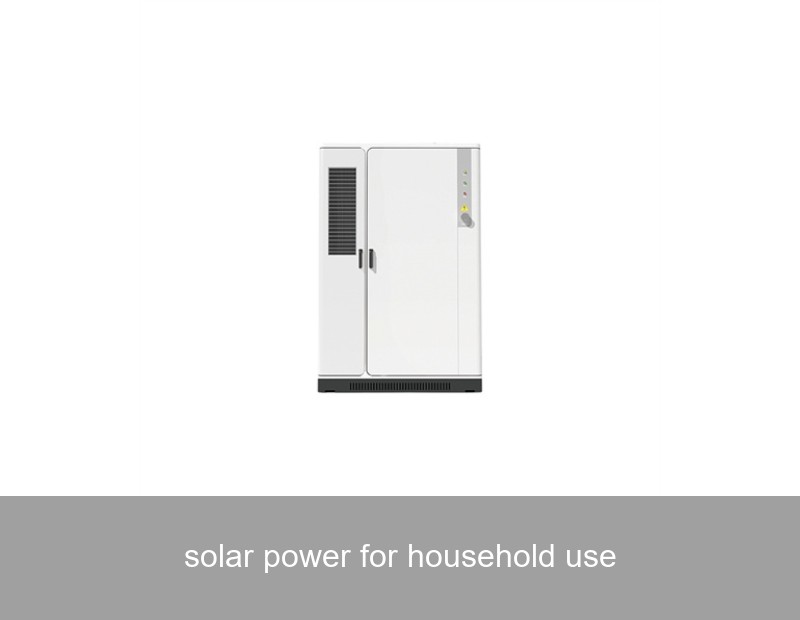
Image Source: Unsplash - A sleek, modern home battery storage unit.
How Highjoule Empowers Your Solar Journey
As a global leader in advanced energy storage since 2005, Highjoule doesn't just sell batteries; we deliver complete, intelligent power solutions. For homeowners, this means:
- The Highjoule HES Series: Our flagship residential battery systems are known for their safety (using stable lithium iron phosphate chemistry), scalability, and intelligent software. They integrate seamlessly with both new and existing solar installations.
- Highjoule Energy OS: The proprietary brain of the system. This intuitive platform, accessible via a smartphone app, gives you complete control. You can monitor production and consumption, set backup priorities, and choose between savings or backup-focused modes.
- Expert Support & Warranty: We provide comprehensive support through our network of certified installers in Europe and North America, backed by strong product warranties. Our expertise ensures your system is designed to meet your specific household's energy profile and goals.
Whether you're looking for robust backup power, maximum self-consumption, or future-ready VPP participation, Highjoule's technology is engineered to adapt.
Is Your Home Ready for the Next Step?
The journey to energy independence starts with a question. What is your primary goal for exploring solar power for household use? Is it to eliminate unpredictable bills, to ensure your family's safety during storms, or to make a definitive choice for a cleaner energy future? Perhaps it's all three.
We invite you to consider: What would you power first if the grid went down tonight, and how would it feel to know your home's lights could stay on, powered by the sun you harvested yesterday?
 Inquiry
 Online Chat