


Solar Power Generator with Battery Storage: Your Complete Guide to Energy Independence
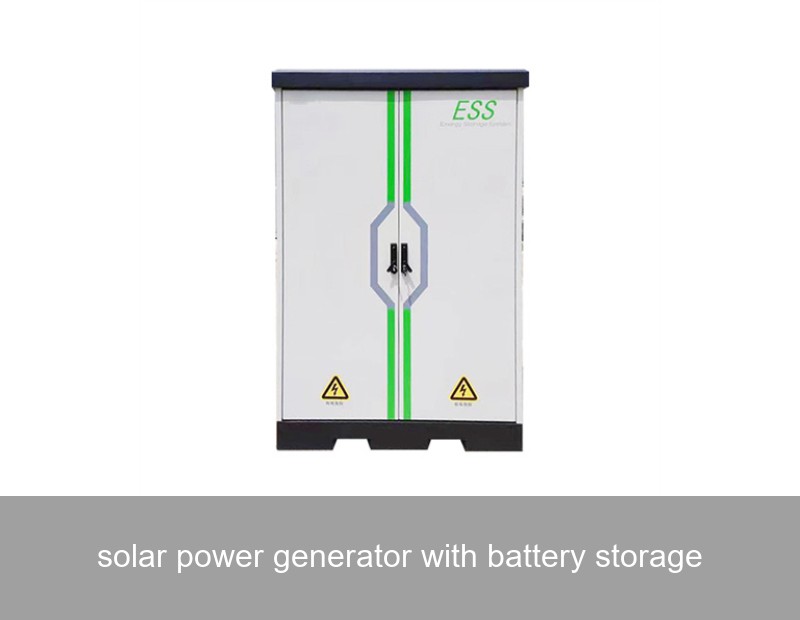
Have you ever watched your solar panels working hard under the midday sun, only to wonder where all that clean energy goes when the clouds roll in or night falls? You're not alone. This common experience highlights a fundamental challenge of renewable energy: its intermittency. The solution, rapidly becoming a household essential, is a solar power generator with battery storage. This integrated system doesn't just generate power; it intelligently stores it, transforming how homes and businesses consume electricity. For over 18 years, Highjoule has been at the forefront of this revolution, engineering smart, efficient, and sustainable battery storage solutions that seamlessly integrate with solar generators to unlock true energy resilience.
Table of Contents
- The Phenomenon: Sunlight Doesn't Shine on a Schedule
- The Data: Why Storage is the Missing Link
- Case Study: A Real-World Shift in California
- The Integrated Solution: More Than Just a Battery Box
- Highjoule's Role: Intelligent Storage for Your Solar Generator
- Making the Choice: Key Considerations for Your System
The Phenomenon: Sunlight Doesn't Shine on a Schedule
Traditional solar panel systems operate on a simple, often inefficient principle: generate and immediately consume or export. During peak production hours, you might produce more than you need, sending excess back to the grid for a small feed-in tariff. Come evening, when energy demand peaks, you draw expensive power from the utility. This mismatch is a global issue, leading to grid instability and missed savings for the consumer. A solar power generator with battery storage breaks this cycle, creating a personal energy hub.

Image: A modern home energy system combining solar generation and wall-mounted battery storage. Source: Unsplash
The Data: Why Storage is the Missing Link
The numbers make a compelling case. According to the U.S. Department of Energy, pairing storage with solar can increase the value of solar energy by aligning it with peak demand periods. Let's break down the impact:
| Metric | Solar Only System | Solar + Battery Storage System |
|---|---|---|
| Self-Consumption | Typically 30-50% | Can exceed 80% |
| Grid Independence During Outages | None (grid-tied systems shut off) | Hours to days, depending on configuration |
| Bill Savings Potential | Moderate (reduces daytime usage) | High (reduces peak-time & nighttime purchases) |
| Return on Investment | Steady, longer | Accelerated in regions with high TOU rates or incentives |
This data isn't just theoretical. It's driving adoption, particularly in markets like Europe and North America with time-of-use (TOU) tariffs and a strong focus on energy security.
Case Study: A Real-World Shift in California
Consider the real example of a medium-sized winery in Napa Valley, California. Facing frequent Public Safety Power Shutoffs (PSPS) to prevent wildfires, their operations—from refrigeration to fermentation control—were at risk. Their existing 100 kW solar array was ineffective during outages.
The Solution & Outcome: They installed a 120 kWh integrated solar power generator with battery storage system. The battery bank, managed by an advanced energy management system, was sized to power critical loads for over 10 hours. In the first year:
- Grid Import Reduction: Reduced peak-time grid electricity purchases by 92%.
- Outage Protection: Successfully rode through 8 grid outages, saving an estimated $15,000 in spoiled product.
- Financial Return: Leveraged the Federal Investment Tax Credit (ITC) for storage, achieving a projected payback period of under 7 years.
This case underscores that the value proposition extends far beyond bill savings to encompass business continuity and risk mitigation.
The Integrated Solution: More Than Just a Battery Box
A modern solar power generator with battery storage is a sophisticated ecosystem. It's not merely panels plus a battery. Key components include:
- The Solar Generator (PV Array): The primary energy source.
- The Battery Bank: The heart of storage, typically using Lithium Iron Phosphate (LiFePO4) chemistry for its safety, longevity, and performance.
- The Hybrid Inverter or AC Coupling: The brain. This device manages energy flow—converting DC from solar and batteries to AC for your home, and vice-versa for charging. It decides when to store, when to use, and when to export.
- Energy Management System (EMS): The intelligence. Advanced software learns consumption patterns, weather forecasts, and utility rate schedules to optimize every kilowatt-hour for maximum economy and comfort.
Highjoule's Role: Intelligent Storage for Your Solar Generator
This is where Highjoule's expertise becomes critical. While we don't manufacture solar panels, we specialize in the core technology that makes a solar power generator with battery storage truly intelligent: the battery system and its control. Our H-Series Commercial & Industrial (C&I) and H-Residential product lines are designed for seamless integration with leading solar inverters and generators.
Our systems feature:
- Modular Scalability: Start with what you need and expand capacity as your energy demands grow, protecting your initial investment.
- Highjoule Smart EMS: Our proprietary software platform enables advanced features like peak shaving, demand charge reduction for businesses, and optional grid services participation.
- Unmatched Safety & Warranty: Built with LiFePO4 cells, multi-layer BMS protection, and backed by industry-leading warranties, our systems are engineered for reliable, worry-free operation for decades.
For a microgrid project in a remote European community or a residential installation in Texas, Highjoule provides the storage backbone that ensures the solar generator's output is never wasted.

Image: Inside a large-scale battery energy storage system (BESS) for commercial/industrial use. Source: Unsplash
Making the Choice: Key Considerations for Your System
Ready to explore your own system? Ask yourself and your installer these key questions:
1. What are my primary goals?
(Bill savings, backup power, carbon footprint reduction, or all three?) This will dictate system sizing.
2. How is my utility structured?
Do they have TOU rates, demand charges (for businesses), or net metering policies? This dramatically affects the financial model. Resources like the DSIRE database can help identify local incentives.
3. What is the system's intelligence level?
Can it adapt to changing tariffs and weather? This is where partnering with a technology provider like Highjoule, focused on smart storage, adds long-term value.
4. What about installation and service?
Ensure your provider has certified experience in integrated solar-storage systems for safe, code-compliant, and optimized performance.
The journey to energy independence is clearer than ever. With the right solar power generator with battery storage, you're not just a consumer—you become the manager of your own clean, resilient, and cost-effective microgrid. What would you power first during an outage, and how much value would you place on knowing it's always on?
 Inquiry
 Online Chat