


Solar Panel for Battery Charger: Your Guide to Off-Grid Power and Energy Independence
Have you ever watched your phone battery dip into the red and felt a pang of anxiety? Now, imagine scaling that up to your entire home or business during a power outage. As electricity costs soar and grid reliability becomes a growing concern, especially in regions like Europe and the US, more people are looking for self-sufficient solutions. The answer is increasingly found in a simple yet powerful pairing: a solar panel for battery charger systems. This isn't just about keeping a flashlight running; it's about transforming sunlight into a reliable, stored energy reserve for your critical needs. In this guide, we'll demystify how these systems work, their real-world benefits, and how choosing the right technology can unlock true energy independence.
Table of Contents
How Does a Solar Panel for Battery Charger System Work?
At its core, the process is an elegant dance of energy conversion and management. It starts with photovoltaic (PV) solar panels on your roof or property. When sunlight hits these panels, they generate direct current (DC) electricity. However, this raw DC power isn't directly suitable for charging most battery banks or powering household appliances. This is where the essential "brain" of the operation comes in: the solar charge controller. This device regulates the voltage and current flowing from the panels to the battery, preventing overcharging and damage.
The energy is then stored in a dedicated battery storage system. Modern systems typically use Lithium-ion batteries due to their high efficiency, longer lifespan, and greater depth of discharge. Finally, since most homes and businesses run on alternating current (AC), a device called an inverter converts the stored DC power from the batteries into usable AC power. In advanced systems, all these components are integrated into a single, intelligent unit that optimizes every watt of solar energy you harvest.
Key Components of a Modern Solar Charging System
To build an effective system, you need more than just a panel and a battery. Here’s the breakdown:
- Solar Panels (PV Array): The primary energy harvesters. Monocrystalline panels are often preferred for their higher efficiency in limited spaces.
- Solar Charge Controller (MPPT Recommended): Maximum Power Point Tracking (MPPT) controllers are the gold standard. They can be up to 30% more efficient than older PWM types by constantly adjusting to extract the maximum possible power from the panels.
- Battery Storage System: The energy reservoir. Lithium Iron Phosphate (LFP) batteries are now the leading choice for safety, cycle life, and performance.
- Inverter/Charger: A dual-purpose device that converts DC to AC for your loads and can also convert AC from the grid to DC to charge the batteries if needed.
- Energy Management System (EMS): The intelligent software that decides when to charge from solar, discharge to power your home, or interact with the grid.

Image Source: Unsplash (Photographer: Andreas Gücklhorn)
The Tangible Benefits: Beyond Just Backup Power
While emergency backup is a major driver, the advantages of integrating a solar panel for battery charger setup are multifaceted:
| Benefit | Description | Impact |
|---|---|---|
| Energy Bill Savings | Use stored solar energy during peak evening hours when grid rates are highest (time-of-use rates). | Can reduce electricity costs by 20-60%, depending on local rates and system size. |
| Grid Independence & Resilience | Keep essential circuits running during blackouts, which are increasing in frequency and duration. | Peace of mind and continuity for homes, home offices, and critical business operations. |
| Increased Self-Consumption | Store excess solar energy produced at midday for use later, rather than selling it back to the grid at low rates. | Maximizes the return on your solar panel investment, often improving payback period. |
| Environmental Contribution | Displaces fossil-fuel-based grid power, reducing your carbon footprint. | Directly supports decarbonization and cleaner air goals. |
A Real-World Case Study: Resilience in California
Let's look at a concrete example from Sonoma County, California, an area frequently impacted by Public Safety Power Shutoffs (PSPS) due to wildfire risk. A medium-sized winery faced crippling losses during these outages, risking temperature-sensitive fermentation tanks and losing sales from their tasting room.
In 2022, they installed a 50 kW solar array coupled with a 120 kWh battery storage system. The results were transformative:
- Outage Protection: During a 3-day PSPS event, the system kept critical cooling, lighting, and point-of-sale systems operational 24/7. The winery estimated avoided losses of over $45,000 in spoiled product and lost revenue.
- Financial Return: By strategically using stored energy to avoid peak demand charges from the utility, they reduced their overall annual electricity bill by 31%.
- Sustainability Win: The system increased their on-site renewable energy consumption from 60% to over 90%, making their brand story even stronger.
This case underscores that a well-designed solar panel for battery charger system isn't an expense; it's a strategic investment in resilience and operational efficiency. For more data on grid outages, see the U.S. Energy Information Administration report on increasing outage frequency.
Choosing the Right System: What to Look For
Not all systems are created equal. When evaluating solutions, focus on these critical factors:
- Battery Chemistry & Warranty: Opt for LFP (Lithium Iron Phosphate) batteries. Look for a warranty that guarantees a high percentage of original capacity (e.g., 70%) after 10 years or thousands of cycles.
- Scalability: Can you easily add more battery capacity later if your needs grow? Modular designs are a huge advantage.
- Inverter Power & Surge Capacity: Ensure the inverter can handle the simultaneous startup load of your essential appliances (like well pumps or HVAC).
- Software Intelligence: The EMS should offer user-friendly monitoring, customizable modes (e.g., "Backup," "Cost Savings," "Full Self-Consumption"), and potential for future grid service integration.
- Professional Installation & Support: This is a complex, long-term investment. Choose a provider with certified installers and a proven track record of local support.
How Highjoule Enables Smarter Solar Energy Storage
This is where Highjoule's expertise comes into play. Since 2005, we have been at the forefront of advanced energy storage, designing systems that seamlessly bridge the gap between solar generation and reliable power use. Our solutions are built on the principles of intelligence, efficiency, and longevity.
For residential and commercial customers looking to maximize their solar panel for battery charger setup, Highjoule offers integrated systems like the HES-Series Home Energy Stack. This all-in-one unit combines a high-efficiency hybrid inverter, an LFP battery bank, and our proprietary Adaptive EMS in a single, compact cabinet. What sets it apart is its predictive software, which learns your energy patterns and weather forecasts to optimize charge/discharge cycles automatically, ensuring you have power when you need it and save money every day.

Image Source: Unsplash (Photographer: American Public Power Association)
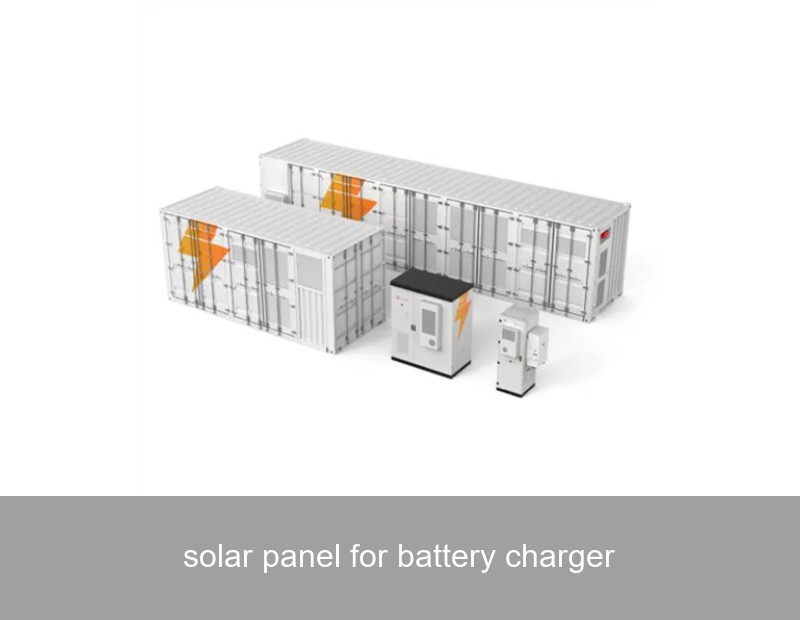
For larger commercial and microgrid applications, our CIS-Containerized Integrated Storage provides utility-scale power in a plug-and-play format. These systems are designed to provide black-start capability, demand charge management, and renewable energy firming, making them ideal for factories, agricultural operations, and remote communities. Highjoule's global support network ensures your system performs optimally for its entire lifespan. Learn more about battery technology advancements from trusted sources like the National Renewable Energy Laboratory (NREL).
Ready to Take the Next Step?
The journey to energy independence starts with a clear understanding of your own energy profile. Have you looked at your utility bill recently to identify your peak usage and highest cost periods? What would be the first thing you'd want to keep running during a prolonged power outage?
 Inquiry
 Online Chat