


Demystifying Solar Power Home System Price: Your Investment in Energy Independence
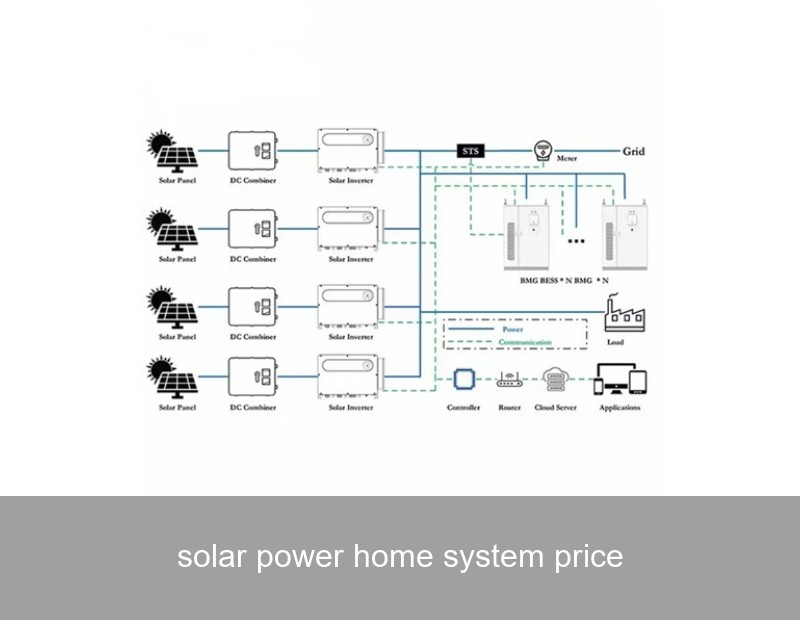
So, you're thinking about harnessing the sun to power your home. It's a smart move, driven by a desire for cleaner energy, greater self-reliance, and protection from ever-fluctuating utility rates. But as you start your research, one question inevitably takes center stage: what is the real price of a solar power home system? The figures you find online can be dizzying, ranging from seemingly affordable to outright daunting. The truth is, the final price tag isn't a one-size-fits-all number; it's a personalized equation shaped by your energy needs, location, and the quality of components you choose. Let's break down this investment, moving beyond the sticker shock to understand the value and long-term savings a well-designed solar and storage system delivers.
Table of Contents
- The Price Puzzle: Why Quotes Vary So Wildly
- Breaking Down the Costs: The Core Components
- The Game Changer: How Battery Storage Impacts Price & Value
- A Real-World Case: Solar + Storage in Action
- Looking Beyond the Initial Price: Incentives and Long-Term ROI
- The Highjoule Approach: Smart Systems for Maximized Value
- Your Next Step Towards Energy Independence
The Price Puzzle: Why Quotes Vary So Wildly
You've likely requested a few quotes and received vastly different numbers. This variation isn't necessarily a red flag; it's a reflection of the many variables in play. A solar power home system price is influenced by:
- System Size (kW): The most significant factor. A 4kW system for a modest home will cost significantly less than a 10kW system for a large property with high consumption.
- Equipment Tier: Solar panels and inverters come in different efficiency and durability grades. Premium, high-efficiency panels cost more but produce more power in limited space.
- Installation Complexity: Roof type (tile vs. metal), pitch, and accessibility affect labor costs. Ground-mounted systems involve different work.
- Local Market & Labor Rates: Installation costs vary by region, influenced by local permitting fees, utility interconnection costs, and contractor pricing.
- Add-ons: The decision to include a battery energy storage system (BESS) is a major price adder but also a massive value multiplier, which we'll explore in detail.

Image: A key factor in system price is installation complexity. Source: Unsplash
Breaking Down the Costs: The Core Components
To understand the price, let's look under the hood. A typical grid-tied system (without battery) includes:
| Component | Percentage of Total Cost | What It Does |
|---|---|---|
| Solar Panels (Modules) | ~25-30% | Convert sunlight into direct current (DC) electricity. |
| Inverter(s) | ~10-15% | The "brain." Converts DC electricity from panels to usable AC electricity for your home. |
| Mounting Hardware & Electrical | ~10-15% | Secures panels to roof and manages wiring. |
| Installation Labor & Soft Costs | ~40-50% | Permitting, design, installation labor, inspection, and contractor overhead. |
According to data from the U.S. Department of Energy, soft costs like permitting, financing, and customer acquisition now represent a substantial portion of the total price. This is why choosing an experienced provider with a streamlined process is crucial for value.
The Game Changer: How Battery Storage Impacts Price & Value
Here's where the modern energy conversation shifts. While a solar-only system reduces your bills, a solar-plus-storage system transforms your relationship with energy. Adding a battery like the Highjoule HOMESERIES increases the upfront solar power home system price, but it delivers capabilities that solar alone cannot:
- Backup Power: Keep lights on during grid outages.
- Energy Time-Shifting: Store excess solar energy produced during the day to use at night, maximizing self-consumption.
- Utility Rate Optimization: In regions with time-of-use (TOU) rates, you can avoid buying expensive peak-hour electricity from the grid.
The price of a battery system depends on its capacity (measured in kWh) and power output (kW). A key insight is to think not just about cost, but about value resilience. In markets like California or parts of Europe with less stable grids or high TOU rates, the payback period for a battery can be surprisingly short.
Highjoule's Integrated Solution
At Highjoule, we believe the true value lies in integration and intelligence. Our HOMESERIES battery storage systems are not just add-ons; they are core components of a holistic home energy ecosystem. Paired with our AI-powered Energy Management System (EMS), the system doesn't just store energy—it learns your household patterns, weather forecasts, and utility rate schedules to autonomously optimize when to charge, discharge, or export energy. This smart management is what turns a capital investment into a dynamic financial asset, actively working to lower your energy costs every single day.
A Real-World Case: Solar + Storage in Action
Let's move from theory to practice. Consider the Müller family in Freiburg, Germany—a region with ambitious renewable goals but also variable weather.
- Phenomenon: High daytime solar export rates were falling, while evening electricity prices from the grid were rising. Their solar-only system wasn't maximizing financial returns.
- Data & Solution: In 2023, they installed a 8.2kW solar array coupled with a 13.5kWh Highjoule HOMESERIES battery. The total system price was higher, but the German federal funding for storage systems offset a portion.
- Outcome: The system now achieves over 85% energy self-sufficiency year-round. By storing excess midday solar power, they cover nearly 100% of their evening load, drastically reducing grid purchases. Their calculations show a projected payback period of under 9 years, after which the next 15+ years of the system's life will generate virtually free electricity and provide backup security.
This case highlights that the relevant metric isn't just the system's price per watt, but the cost per optimized kilowatt-hour over the system's lifetime.

Image: Modern battery storage systems, like Highjoule's HOMESERIES, integrate seamlessly into homes. Source: Unsplash
Looking Beyond the Initial Price: Incentives and Long-Term ROI
The sticker price is only the starting point. Significant financial incentives can dramatically reduce your net cost:
- United States: The federal Investment Tax Credit (ITC) currently offers a 30% tax credit for both solar and standalone battery storage (if meeting certain criteria). This is a direct dollar-for-dollar reduction in your tax liability.
- Europe: Many countries and municipalities offer grants, reduced VAT, or favorable feed-in tariffs. Italy's "Superbonus" scheme and various UK grants have historically boosted adoption.
When evaluating the solar power home system price, always ask your provider for a detailed Return on Investment (ROI) analysis. This should factor in:
- Your local electricity rate and its projected inflation (typically 3-5% annually).
- All applicable incentives and rebates.
- Estimated system performance and degradation over 25+ years.
- The added financial and resilience value of battery storage.
Often, you'll find that the monthly loan payment for the system is less than your former average utility bill, creating positive cash flow from day one.
Your Next Step Towards Energy Independence
Understanding the solar power home system price is the first step in a transformative journey. It's an investment that pays dividends in bill savings, property value increase, and unparalleled energy security. The key is to shift the question from "What does it cost?" to "What is it worth to my family and our future?"
We invite you to reflect: If your home could become a personal power plant, insulating you from grid volatility and contributing to a cleaner planet, what unique energy goals would you want that system to achieve for you?
 Inquiry
 Online Chat