


Understanding Solar Power Philippines Cost: A Smart Investment for Energy Independence
If you're a homeowner or business leader in the Philippines researching renewable energy, the question on your mind is likely: "What is the real solar power Philippines cost?" It's a crucial question. While the upfront price tag can seem significant, the true story of solar cost is one of long-term savings, resilience against volatile utility rates, and a powerful step towards energy self-sufficiency. In a nation blessed with abundant sunshine but facing some of the highest electricity prices in Southeast Asia, solar isn't just an eco-friendly choice—it's a strategic financial decision. This article will break down the costs, savings, and real-world performance of solar power in the Philippine context, helping you see beyond the initial investment to the decades of benefits.
Table of Contents
- Breaking Down the Solar Power Philippines Cost
- From Cost to Savings: The Financial Payback
- Real-World Impact: A Residential Case Study from Laguna
- Beyond Panels: The Critical Role of Energy Storage
- Highjoule's Tailored Solutions for the Philippine Market
- Is Your Roof Ready for an Energy Transformation?
Breaking Down the Solar Power Philippines Cost
The total cost of a solar photovoltaic (PV) system is more than just the panels on your roof. It's a complete engineered solution. For a typical Philippine household, a 5kW system—a common size that can significantly offset usage—can range from approximately PHP 150,000 to PHP 300,000 or more. This variation isn't arbitrary; it depends on the quality of components and the complexity of your installation.
Let's dissect the key components that make up this investment:
- Solar Panels: These are the workhorses, converting sunlight into DC electricity. Premium, high-efficiency panels cost more but produce more power in limited roof space.
- Inverters: This is the brain of the system. It converts the DC electricity from the panels into the AC electricity your home appliances use. Choosing a reliable, efficient inverter is paramount for system performance and longevity.
- Mounting Structure & Balance of System (BOS): This includes the racks to secure panels to your roof, wiring, connectors, and safety devices. Quality here ensures your system withstands tropical storms and decades of weather.
- Installation & Labor: Professional installation by accredited engineers and electricians ensures your system is safe, compliant with local regulations (like the Philippine Electrical Code), and optimized for maximum yield.
- Permits & Documentation: Costs associated with securing barangay and utility permits, as well as the net metering application with your distribution utility (e.g., Meralco).
| Component | Estimated Cost Range (PHP) | Percentage of Total |
|---|---|---|
| Solar Panels (Tier-1) | 70,000 - 110,000 | ~40% |
| Inverter (String/Hybrid) | 40,000 - 80,000 | ~25% |
| Mounting, Cabling, BOS | 25,000 - 40,000 | ~15% |
| Installation & Labor | 20,000 - 35,000 | ~12% |
| Permits & Net Metering Fees | 5,000 - 15,000 | ~8% |
| Total Estimated System Cost | 160,000 - 280,000 | 100% |
From Cost to Savings: The Financial Payback
Viewing solar as a purchase misses the point. It's an investment with a measurable return. The primary mechanism for savings in the Philippines is through net metering. Under this policy, overseen by the Energy Regulatory Commission (ERC), your solar system is connected to the grid. When you produce more electricity than you use (e.g., on a sunny day when you're out), the excess is exported to the grid, and your utility meter literally runs backward, earning you credits.
At night or during cloudy weather, you draw power from the grid, using up those credits. The result? You only pay for your net energy consumption. For many well-sized systems, this can slash monthly electricity bills by 50% to 90%. With average residential electricity rates in the Philippines consistently hovering among the highest in the region—often above PHP 10 per kWh—the savings are substantial. The payback period, the time it takes for your savings to equal the initial cost, typically ranges from 5 to 8 years. Considering solar panels have performance warranties of 25 years or more, that's over 15 years of virtually free electricity afterward.

Image Source: Unsplash - A typical residential solar installation in a sunny climate.
Real-World Impact: A Residential Case Study from Laguna
Let's move from theory to practice. Consider the Santos family in Calamba, Laguna. Before solar, their monthly Meralco bill averaged PHP 8,500 due to air conditioning and general household use. In early 2022, they installed a 6.5kW rooftop system with a hybrid inverter.
- System Cost: PHP 220,000 (inclusive of all components and net metering application).
- Post-Installation Bills: Their bills now range from PHP 800 to PHP 1,200 during most months, representing an 85-90% reduction.
- Annual Savings: Approximately PHP 90,000 per year.
- Simple Payback Period: PHP 220,000 / PHP 90,000/year = ~2.4 years.
Their payback was faster than average due to high pre-solar consumption and excellent roof orientation. More importantly, they now have a predictable, low energy cost for decades, insulating themselves from future rate hikes. "The initial cost felt like a big step," Mrs. Santos shared, "but seeing our first PHP 900 bill made it real. We're not just saving money; we feel in control of our power."
Beyond Panels: The Critical Role of Energy Storage
While net metering is excellent, it has a limitation: during a grid outage, standard grid-tied systems shut off for safety. This is where solar-plus-storage systems redefine energy independence. By adding a battery storage system, you can store your excess solar energy for use at night or during blackouts.
Think about it: the frequent tropical storms and grid maintenance in the Philippines can lead to power interruptions. With a battery backup, your lights, fridge, and fans stay on. The cost increases with storage capacity, but the value proposition shifts from pure bill savings to include uninterruptible power supply (UPS) and energy security. This is no longer a luxury but a critical consideration for home-based businesses, medical needs, and general peace of mind.
Highjoule's Tailored Solutions for the Philippine Market
This is where Highjoule brings its global expertise to Filipino homes and businesses. Established in 2005, we understand that the tropical climate, grid stability challenges, and specific energy needs of the Philippines require more than an off-the-shelf product. We provide intelligent, integrated storage solutions that maximize the value of your solar investment.
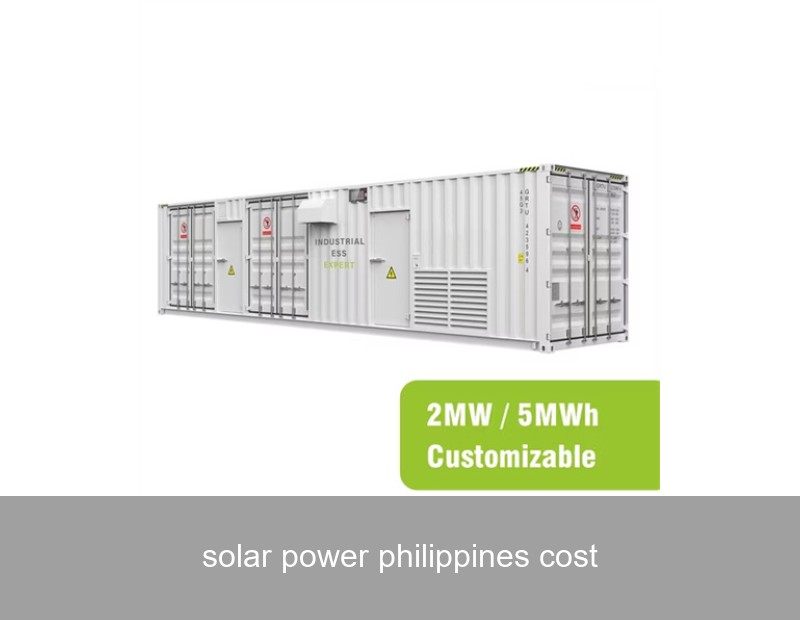
For the residential market, our Highjoule HomePower series of lithium-ion battery systems is designed to seamlessly integrate with new or existing solar installations. These systems feature sophisticated energy management software that learns your consumption patterns, automatically prioritizing solar self-consumption and optimizing when to charge from the grid or discharge from the battery. This ensures you get the maximum financial return and the strongest backup protection. For commercial and industrial clients, our scalable Industrial Energy Storage (IES) platforms help manage demand charges, provide peak shaving, and ensure critical operations continue during outages.

Image Source: Unsplash - A modern home battery energy storage system installation.
Our approach is holistic. We don't just sell hardware; we provide a complete power resilience audit and design a system that fits your specific budget, physical space, and energy goals. Whether your priority is slashing your Meralco bill to the minimum or ensuring your family business never loses power, Highjoule's technology and design expertise make it achievable.
Is Your Roof Ready for an Energy Transformation?
The conversation about solar power Philippines cost is ultimately a conversation about value. It's about trading a variable, lifelong expense for a fixed, one-time investment with a clear finish line. After that, the energy from the sun is free. With the added intelligence of storage from providers like Highjoule, you also buy predictability and security for your home or enterprise.
So, the next question isn't just "How much does it cost?" but rather "What is the cost of *not* taking control of my energy future?" With electricity rates unlikely to decrease, the most financially savvy time to invest in solar and storage might be sooner than you think. Have you calculated what your lifetime electricity costs could be without solar, compared to the investment in your own power plant?
 Inquiry
 Online Chat