


Understanding the 500 kW Solar System Cost in Poland: Investment, Components, and Returns
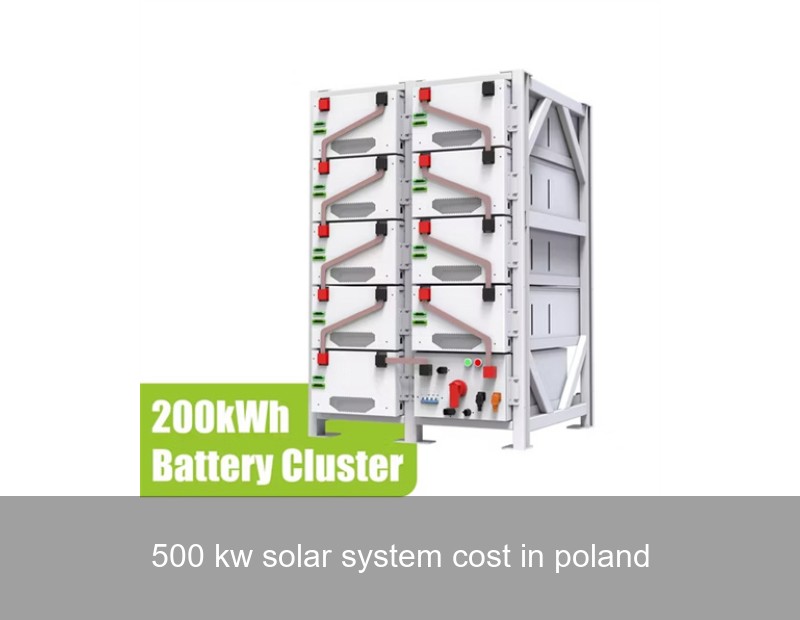
So, you're considering a major step towards energy independence and sustainability for your business in Poland. A 500 kW solar system is a significant commercial or industrial undertaking, and the first question that naturally arises is: what is the actual 500 kW solar system cost in Poland? The answer isn't a single figure, but a fascinating equation balancing upfront investment, long-term savings, and the strategic value of a resilient power supply. In Poland's evolving energy landscape, moving from conventional power to solar isn't just an eco-friendly choice—it's becoming a cornerstone of smart financial and operational planning. Let's break down the costs, the factors at play, and how partnering with an expert like Highjoule can transform this investment from a capital expense into a powerful growth engine.
Table of Contents
- The Cost Breakdown of a 500 kW System in Poland
- Key Factors Influencing Your Total Investment
- Real-World Case Study: A Polish Manufacturing Facility
- ROI, Financing, and Incentives
- Beyond Panels: The Critical Role of Storage and Smart Management
- Is a 500 kW Solar System the Right Move for Your Polish Operation?
The Cost Breakdown of a 500 kW Solar System in Poland
As of 2024, the total installed cost for a commercial 500 kW photovoltaic (PV) system in Poland typically ranges between €350,000 and €550,000. This wide range, equating to approximately €0.70 to €1.10 per watt, is due to several variables we'll explore. However, understanding the core components of this investment is the first step.
A turnkey system price generally includes:
- Solar Panels (PV Modules): The heart of the system, accounting for 25-35% of the cost. Choices between monocrystalline (higher efficiency, slightly higher cost) and polycrystalline panels impact both price and long-term yield.
- Inverters: These devices convert the DC electricity from panels into usable AC power. For a 500 kW system, you'll likely use multiple central inverters or a string inverter setup (15-20% of cost).
- Mounting Structures & Electrical Balance of System (BOS): This includes racks, cabling, combiner boxes, and safety equipment (20-25% of cost). The roof type (flat vs. pitched) or ground-mount requirements significantly influence this segment.
- Installation & Labor: Professional design, engineering, and installation are critical for performance and safety (15-25% of cost).
- Permits, Grid Connection, & Documentation: Administrative costs for grid connection agreements and building permits are a necessary part of the budget.

Image Source: Unsplash (Commercial solar installation)
Key Factors Influencing Your Total Investment
Why such a broad price bracket? Your specific context shapes the final figure.
| Factor | Impact on Cost | Consideration for Poland |
|---|---|---|
| System Design & Complexity | High | Flat roofs require ballasted systems; ground mounts need groundwork. Shading or multiple roof angles increase design complexity. |
| Component Quality & Brand | Medium-High | Premium Tier-1 panels and inverters (e.g., from Highjoule's certified partners) offer better efficiency and longer warranties, impacting upfront cost but securing long-term returns. |
| Grid Connection Capacity | Variable | If your local grid infrastructure requires upgrades to handle the solar feed-in, this can add to the cost. A battery energy storage system (BESS) can help manage this. |
| Location within Poland | Low-Medium | Solar irradiance is relatively consistent across Poland, but labor and logistics costs can vary slightly by region. |
Real-World Case Study: A Polish Manufacturing Facility
Let's move from theory to practice. A medium-sized food processing plant near Wrocław partnered with Highjoule in 2023 to address its high daytime energy consumption and rising electricity costs.
- Challenge: Unpredictable energy prices and a desire to lock in long-term operational costs.
- Solution: A 512 kWp rooftop solar system, integrated with a Highjoule H-Stack Commercial 100 kWh battery storage system.
- Cost & Data: The total turnkey investment was €465,000. The system was designed to cover over 40% of the facility's annual electricity needs directly.
- Outcome: In its first year, the system generated approximately 510 MWh of electricity. By using solar power during peak daylight hours and storing excess energy in the H-Stack battery for use in the early evening, the plant reduced its grid electricity purchases by 38%. This translated to an annual saving of over €68,000, projecting a simple payback period of under 7 years—a figure accelerated by leveraging Poland's support schemes.
This case highlights a crucial point: the modern "cost" discussion is shifting from just panel price to value engineering—how solar integrates with storage and smart management to maximize self-consumption and savings.
ROI, Financing, and Incentives in Poland
The initial 500 kW solar system cost in Poland is substantial, but the financial mechanisms are favorable. The return on investment (ROI) is calculated against decades of free energy generation (system lifespan of 25+ years).
- Net-Metering/Billing: For systems up to 1 MW, prosumers can send surplus energy to the grid and withdraw 80% (for systems >50 kWp) or 70% later. This effectively uses the grid as a "virtual battery."
- Tax Relief: Businesses can deduct the VAT on the solar installation and benefit from accelerated depreciation.
- EU Funding & Loans: Programs like the EU's Innovation Fund or low-interest loans from Polish banks (e.g., BGK) support green energy transitions.
Financing options such as Power Purchase Agreements (PPAs), where a third party owns the system and sells you the power at a fixed rate, can also reduce upfront cost to zero.
Beyond Panels: The Critical Role of Storage and Smart Management
For a commercial 500 kW system, maximizing self-consumption is key to ROI. Without storage, excess solar energy produced at midday is exported to the grid at a lower rate, while you buy expensive power in the evening. This is where the complete system approach from a provider like Highjoule becomes indispensable.
Highjoule doesn't just supply solar components; we design integrated smart energy systems. Our H-Stack Commercial Battery Storage solutions allow businesses to:
- Increase Self-Consumption: Store daytime surplus for use during peak tariff periods, boosting energy independence from 40% to 70% or more.
- Ensure Power Resilience: Provide backup power for critical loads during grid outages, a valuable feature for manufacturing or cold storage.
- Optimize Energy Arbitrage: Charge batteries when grid prices are low (e.g., at night) and discharge when prices are high.
Our proprietary energy management system (EMS) acts as the brain, continuously analyzing energy production, consumption patterns, and grid signals to make optimal, automated decisions for storage and consumption. This transforms a static solar array into a dynamic, profit-optimizing asset.

Image Source: Unsplash (Battery storage system)
Is a 500 kW Solar System the Right Move for Your Polish Operation?
The conversation about the 500 kW solar system cost in Poland ultimately leads to a broader question about your business's future. Are you looking to simply reduce next quarter's electricity bill, or are you building a more resilient, cost-predictable, and sustainable operation for the next decade? With the right partner, the initial investment is the first step in a long-term strategic gain.
Highjoule, with nearly two decades of global experience, brings this holistic expertise to the Polish market. We handle everything from initial feasibility studies and custom engineering to installation, grid compliance, and long-term monitoring of your system's performance. We ensure your investment is optimized not just for today's tariffs, but for tomorrow's energy landscape.
What specific energy challenge is driving your exploration of solar power, and how could capturing and storing your own clean energy change the financial model of your business?
 Inquiry
 Online Chat