


Beyond Panels: Why Your Solar Power Supplier Must Be an Energy Strategist
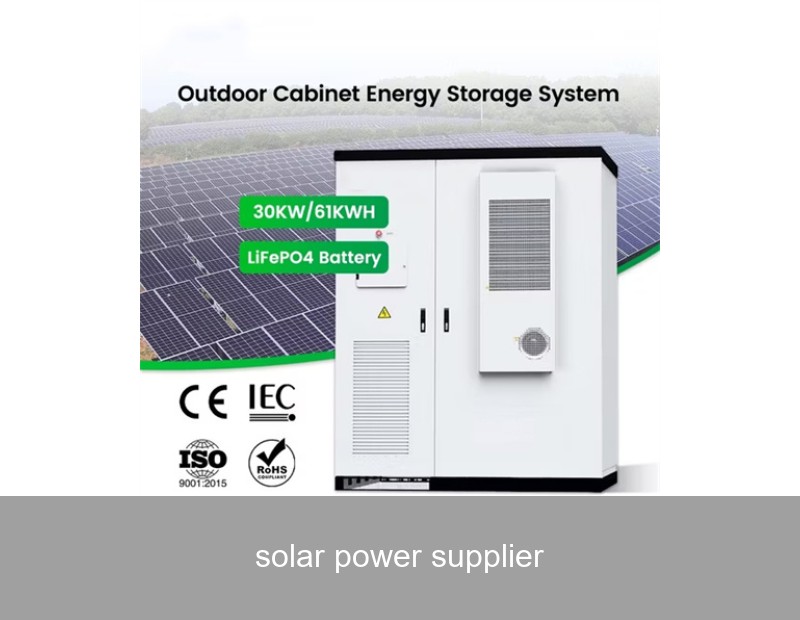
When you think of a solar power supplier, what comes to mind? Rows of photovoltaic panels, an installer on your roof, and a promise of lower electricity bills. For years, that was the standard. But here's a reality many businesses and homeowners across Europe and the U.S. are facing: installing solar panels is just the first step. The true challenge—and the real opportunity—lies in managing that energy intelligently. The sun doesn't shine on demand, and the grid isn't always reliable or cheap. This gap between generation and consumption is where the modern solar power supplier evolves from a simple equipment provider into a crucial partner for energy resilience and independence.
The Grid Reliance Phenomenon
You've made a significant investment in a rooftop solar array. On a bright, sunny afternoon, your system is producing more power than you can use. You happily export this surplus to the grid, often for a modest feed-in tariff. Fast forward to 7 PM. The sun has set, your production is zero, but your operations are still running, or your household energy demand is peaking. You're now forced to buy electricity back from the grid at a premium rate. You've become a textbook case of the "duck curve" – a phenomenon well-documented by grid operators like California ISO (CAISO), where net demand plummets during midday solar peaks and soars in the evening. This reliance creates a frustrating cycle: you're both a seller and a buyer, often losing out financially and still vulnerable to grid outages and volatile energy prices.

Image Source: U.S. Department of Energy, illustrating the "Duck Curve" challenge for grids with high solar penetration.
The Data: Sunlight Isn't Enough
The numbers paint a clear picture. According to the International Renewable Energy Agency (IRENA), solar PV capacity has seen exponential growth globally. However, the capacity factor—the ratio of actual energy output to maximum possible output—for solar is typically between 15-25% in most regions. This means a 100 kW system only averages 15-25 kW of continuous power over a year. For a business running 24/7, this covers only a fraction of its needs. Furthermore, grid electricity prices in markets like Germany and parts of the U.S. have been on a steady upward trajectory, with commercial rates increasingly subject to time-of-use charges that penalize peak-hour consumption. Simply put, a solar-only system leaves a substantial portion of your energy costs and security unaddressed.
Case Study: The "SonnenBrot" Bakery in Bavaria, Germany
Let's make this concrete. "SonnenBrot," a mid-sized bakery with high energy demands for ovens, refrigeration, and lighting, installed a 200 kWp solar system in 2020. Their initial goal was to cut costs. By midday, they were producing excess energy, but their early morning baking shift (3 AM - 6 AM) and evening production run relied almost entirely on the grid. Their solar self-consumption rate was just 35%. They were exporting cheap, self-produced energy and buying expensive grid power when they needed it most. Their solar power supplier had provided excellent panels, but the system's economics were limited by its design.
The turning point came in 2022. Working with Highjoule as their new energy solutions partner, the bakery integrated a Highjoule Hive-C 150 kWh Commercial Battery Storage System with advanced energy management software. The results after one year were transformative:
| Metric | Before Highjoule (Solar Only) | After Highjoule (Solar + Storage) |
|---|---|---|
| Solar Self-Consumption | 35% | 92% |
| Grid Electricity Purchases | 65% of total need | 8% of total need |
| Energy Cost Savings (Annual) | ~€28,000 | ~€68,000 |
| Backup Power Capability | None | Critical loads for 10+ hours |
The Highjoule system stores the midday solar surplus and automatically dispatches it during the high-price, low-production morning and evening hours. The bakery is now an energy-resilient operation, protected from blackouts and price spikes.
The Key Insight: From Supplier to Intelligent Energy Manager
The SonnenBrot story reveals the core insight: the value of a solar power supplier is no longer defined solely by the efficiency of the panels they sell. It is defined by their ability to provide a holistic system that captures, stores, and optimizes energy. This is the difference between a commodity transaction and a strategic partnership. Intelligent battery storage is the crucial link that transforms solar from an intermittent source into a dependable, 24/7 power asset. It flattens the duck curve for your individual operation, maximizes your financial return, and turns your property into a node of grid stability.
How Highjoule Transforms Solar Power Supply
At Highjoule, founded in 2005, we have always viewed ourselves as more than just equipment vendors. We are architects of energy independence. For our clients in the commercial, industrial, and residential sectors across Europe and North America, we provide the brain and the brawn behind a truly intelligent solar power system.
- The Highjoule Hive Series (Residential & Commercial): Our scalable, modular battery storage systems are the cornerstone. Whether it's the Hive-R for a home or the containerized Hive-C for a factory, they are built with robust, long-cycle-life lithium-iron-phosphate (LFP) chemistry for safety and longevity.
- Orion Energy Management Platform: This is the "brain." Our proprietary software doesn't just monitor; it forecasts, learns, and autonomously optimizes your energy flow. It considers weather predictions, your consumption patterns, real-time grid electricity prices, and even utility demand-response programs to make decisions that save you the most money and provide the most security.
- Integrated System Design & Support: We work with a network of certified solar installers to design and commission seamless solar-plus-storage solutions. Our global service network ensures your system performs optimally for decades, not just years.
Choosing Highjoule means your solar power supplier brings a complete, future-proofed energy strategy to the table from day one.

Image Source: Highjoule - A Highjoule Hive-C system providing energy resilience for an industrial facility.
The Future of Your Solar Power Supply
The energy landscape is shifting from centralized, one-way distribution to decentralized, interactive networks. With policies like the EU's Green Deal and the U.S. Inflation Reduction Act incentivizing storage, the question is no longer if you should add storage, but when and with whom. Will you continue to see your solar investment operate at only a fraction of its potential, or will you leverage it to take full control of your energy destiny?
What would it mean for your business or home to have a predictable, locked-in energy cost for the next 20 years, while also gaining an unwavering layer of protection against increasing grid instability? The next generation of solar power supply starts with a conversation about your true goals—not just kilowatts on the roof, but kilowatt-hours of certainty, control, and resilience.
 Inquiry
 Online Chat