


Finding the Right Supplier of MW Storage: Your Guide to Grid-Scale Battery Solutions
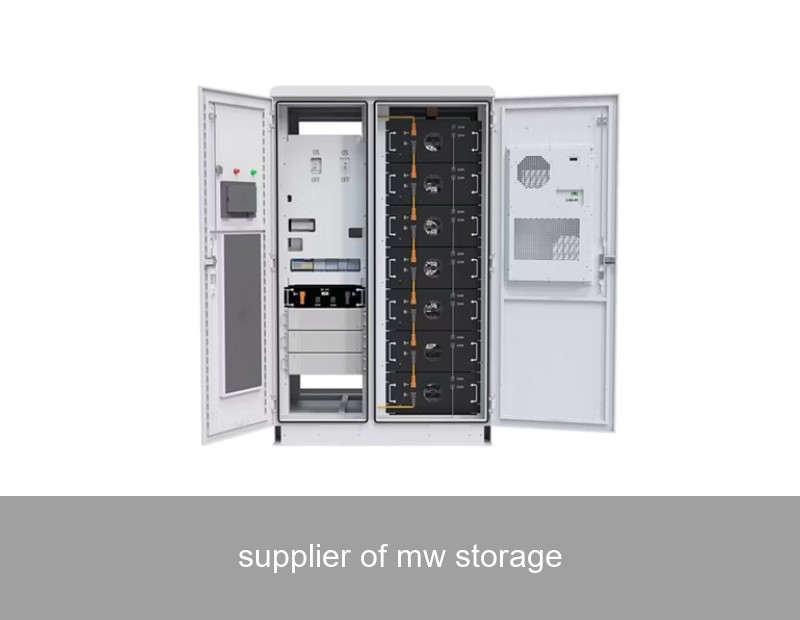
As the global energy landscape undergoes a seismic shift towards renewables, a critical challenge emerges: how do we keep the lights on when the sun doesn't shine and the wind doesn't blow? The answer increasingly lies in megawatt-scale battery energy storage systems (BESS). For utilities, independent power producers, and large commercial entities, choosing a reliable and innovative supplier of MW storage is no longer a side project—it's a strategic cornerstone for energy security, economic efficiency, and sustainability. This article will guide you through the key considerations, backed by data and real-world examples, to inform your decision.
Table of Contents
- The MW Storage Imperative: Beyond the Kilowatt
- Key Criteria for Your MW Storage Supplier
- Case Study: Grid Stability in Germany
- The Highjoule Approach: Engineered for Scale and Intelligence
- The Future Landscape of Grid-Scale Storage

Credit: Image from Unsplash by American Public Power Association
The MW Storage Imperative: Beyond the Kilowatt
Let's be clear: we're not talking about a powerwall for your home. MW-scale storage refers to systems typically starting at 1 Megawatt (MW) and 1 Megawatt-hour (MWh), scaling up to hundreds of MW/MWh. These are behemoth installations that function as the shock absorbers and buffers for the entire electrical grid. The phenomenon is clear: intermittent renewable penetration is soaring. In Europe, Ember's 2024 report notes wind and solar generated a record 27% of the EU's electricity in 2023. In the U.S., the EIA projects battery storage capacity to nearly double in 2024 alone.
This rapid growth creates a tangible need. Grid operators face volatility, frequency imbalances, and the risk of curtailment (wasting excess renewable energy). MW-scale batteries step in to provide essential services like frequency regulation, peak shaving, renewable energy time-shifting, and black-start capabilities. The data is compelling: a single 100 MW/200 MWh system can discharge enough electricity to power approximately 20,000 homes for four hours during peak demand, directly offsetting the need for fossil-fuel "peaker" plants.
Key Criteria for Your MW Storage Supplier
Selecting a supplier of MW storage is a complex, long-term partnership. Here are the non-negotiable factors to evaluate:
- Proven Technology & System Integration: Do they have a track record of deploying functional, safe, and reliable MW systems? The supplier must master the full stack: battery chemistry (like LFP - Lithium Iron Phosphate), power conversion systems (PCS), thermal management, and the critical energy management system (EMS) software.
- Safety & Compliance: At this scale, safety is paramount. Look for suppliers with stringent standards (UL, IEC, NFPA), advanced fire suppression integration, and robust battery management systems (BMS) that monitor every cell.
- Financial Viability & Lifecycle Support: The project's bankability depends on the supplier's financial health and their ability to offer long-term performance guarantees and O&M (Operations & Maintenance) support. Total cost of ownership (TCO) is more important than just upfront cost.
- Grid Service Expertise: Can their system be configured and software-controlled to provide the specific grid services (FCR, aFRR, etc.) that are lucrative in your market (e.g., National Grid in the UK, CAISO in the U.S.)?
| Supplier Feature | Why It Matters for MW Projects |
|---|---|
| Turnkey Solution Capability | Reduces risk by having a single point of responsibility for design, procurement, construction, and commissioning. |
| Advanced EMS with AI Forecasting | Maximizes revenue by optimizing charge/dispatch cycles based on weather, market prices, and grid signals. |
| Scalable & Modular Architecture | Allows for phased expansion of capacity (MWh) and power (MW) as needs evolve, protecting initial investment. |
Case Study: Grid Stability and Renewable Integration in Germany
Let's look at a concrete example from Europe. In 2022, a major utility in Lower Saxony, Germany, faced significant grid congestion and frequency instability due to high regional wind power penetration. Their challenge was to integrate more renewable energy while maintaining grid code compliance.
They partnered with an experienced supplier of MW storage to deploy a 35 MW / 38 MWh battery storage system. The system's primary function was to provide primary frequency response (FCR) and absorb excess wind energy during periods of low demand. Within the first year of operation, the project delivered impressive results:
- Grid Stability: Achieved a 99.8% availability rate for frequency regulation services, consistently responding to grid fluctuations in under 1 second.
- Renewable Utilization: Reduced local wind curtailment by an estimated 18%, enabling more clean energy to reach consumers.
- Economic Return: Generated steady revenue through the FCR market, while providing internal cost savings via peak shaving for the utility's own infrastructure.
This case underscores how the right MW storage asset is not a cost center but a strategic, multi-revenue stream investment that addresses both technical grid needs and financial objectives.
The Highjoule Approach: Engineered for Scale and Intelligence
At Highjoule, with nearly two decades of experience since 2005, we understand these complexities intimately. As a global supplier of MW storage, we don't just sell battery containers; we deliver integrated, intelligent power solutions. Our flagship product for utility and C&I applications, the HiveGrid Megapack, is engineered from the ground up for megawatt-scale performance and safety.
The HiveGrid system features industry-leading LFP battery cells in a modular, containerized design, allowing for seamless scaling from 2 MW to hundreds of MW. What truly differentiates it is the Neuron Energy Management Platform. This AI-driven software is the brain of the operation, continuously analyzing grid conditions, weather forecasts, and energy market prices to optimize every kilowatt-hour for maximum value—whether for arbitrage, capacity services, or backup power.

Credit: Image from Unsplash by American Public Power Association
Our services extend beyond delivery. We offer comprehensive Energy-as-a-Service (EaaS) models, where we finance, own, and operate the storage asset, providing our clients with predictable energy costs and performance without upfront capital. For clients who prefer ownership, our long-term performance guarantees and 24/7 monitoring ensure the system delivers for its entire 15+ year lifespan.
The Future Landscape of Grid-Scale Storage
The technology is advancing rapidly. We're moving towards longer-duration storage (8-12 hours), which will be crucial for true seasonal balancing. Innovations in supply chain and recycling are also paramount. A forward-thinking supplier of MW storage must have a clear strategy for sustainable battery lifecycle management, from raw material sourcing to second-life applications and end-of-life recycling—a core part of Highjoule's circular economy commitment.
Furthermore, the integration of storage with hybrid renewable plants (solar-plus-storage, wind-plus-storage) is becoming the default for new projects. This requires deep expertise in AC/DC coupling and complex control systems to create a single, dispatchable power plant.
Your Next Step
The journey to selecting the right MW storage partner is detailed, but the payoff is a more resilient, profitable, and sustainable energy footprint. As you evaluate potential suppliers, ask yourself: Does their solution offer the technological depth, financial flexibility, and long-term partnership vision to not just meet today's needs, but also adapt to tomorrow's grid demands?
What specific grid challenge or revenue opportunity is driving your exploration of MW-scale storage today?
 Inquiry
 Online Chat