


Solar Products for Agriculture: Powering a Sustainable Farming Revolution
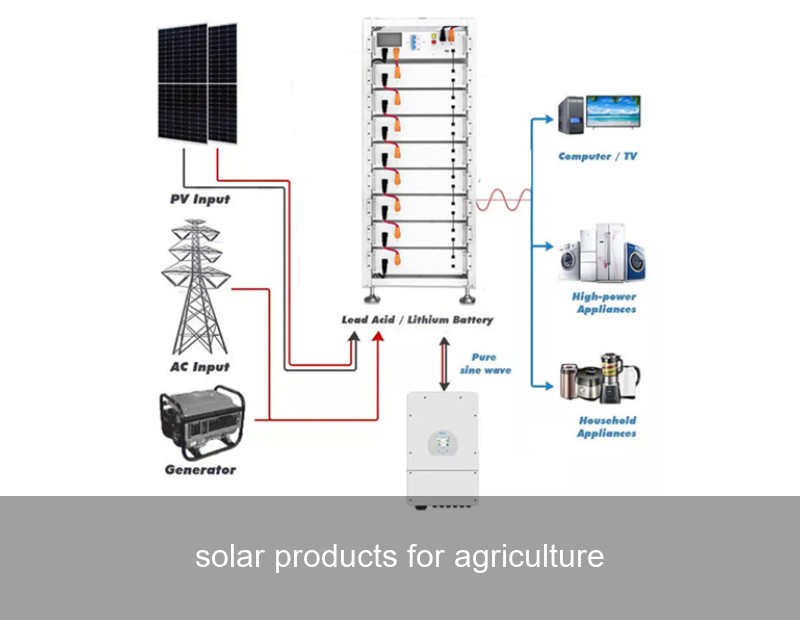
Imagine a farm where the sun doesn't just grow crops—it powers the entire operation. For modern farmers across Europe and the US, this is no longer a futuristic dream but a practical, cost-saving reality. The integration of solar products for agriculture is transforming the industry, offering a powerful antidote to rising energy costs and volatile grid power. From irrigation pumps to cold storage, solar energy is becoming the backbone of a resilient and profitable farm. But how do you move from concept to a reliable, high-performing system? This is where expertise in both solar generation and, crucially, advanced energy storage makes all the difference.
The Challenge: High Costs and Unreliable Grids
Farmers have always been at the mercy of the elements. Today, they are also at the mercy of the energy market. Electricity is a major operational expense, powering essential systems like:
- Irrigation & Water Pumping: The lifeblood of any farm, often requiring significant power, especially in peak seasons.
- Refrigeration & Cold Storage: Critical for preserving perishable produce and maintaining quality from field to market.
- Ventilation & Climate Control: Essential for livestock barns, greenhouses, and poultry houses.
- Lighting & General Operations: From barns to workshops and farm residences.
Grid outages or unstable power can be catastrophic, leading to spoiled inventory, stressed livestock, and halted operations. Furthermore, in remote agricultural areas, grid connection can be weak or prohibitively expensive to upgrade.
The Solar Solution: More Than Just Panels
Agricultural solar goes far beyond installing a few rooftop panels. It's a tailored ecosystem designed to meet specific, high-demand loads. Key solar products for agriculture include:
- Ground-Mount and Rooftop Solar Arrays: Maximizing land or unused building space to generate clean electricity.
- Solar Water Pumping Systems: Directly converting solar DC power to run pumps, ideal for daytime irrigation without battery storage.
- Solar-Powered Electric Fencing: Providing reliable, low-maintenance security over vast perimeters.
- Solar Lighting for Outbuildings and Pathways: Enhancing safety and security without trenching for grid power.
However, the sun doesn't shine 24/7. The most critical component for a truly resilient farm is a battery energy storage system (BESS). It stores excess solar energy generated during the day for use at night, during peak rate periods, or during a grid outage. This turns a solar array from a daytime supplement into a full-fledged, round-the-clock power plant.

Image Source: Unsplash. Solar panels can be integrated into farmland, providing energy without sacrificing significant crop space.
A Real-World Case Study: Resilience in a California Vineyard
Consider the challenge faced by a 200-acre vineyard in California's Sonoma County. Their primary pain points were the high cost of running diesel pumps for irrigation and the existential threat of grid outages during critical harvest and fermentation periods, which could spoil an entire year's yield.
In 2022, they implemented a comprehensive solar and storage microgrid solution. The system included:
- A 500 kW ground-mounted solar array on a marginal hillside.
- A 750 kWh containerized battery storage system.
- Intelligent energy management software to prioritize loads.
The Results (Data from their first full year of operation):
| Metric | Result |
|---|---|
| Grid Electricity Purchased | Reduced by 92% |
| Diesel Fuel Consumption | Eliminated for irrigation pumps |
| Operational Cost Savings | $85,000 annually |
| CO2 Emissions Avoided | Equivalent to ~150 tons per year |
| Power Resilience | Critical operations can run for 48+ hours off-grid |
This case exemplifies the tangible ROI of modern solar products for agriculture, combining generation and storage for maximum impact. For more on the growth of agrivoltaics, see this report from the National Renewable Energy Laboratory (NREL).
The Highjoule Advantage: Intelligent Storage for Agricultural Resilience
While solar panels capture energy, it's the storage system that defines a farm's energy independence. This is where Highjoule's nearly two decades of expertise becomes vital. Our solutions ensure that the clean energy you produce is available exactly when you need it most.
Highjoule's H-Series Commercial & Industrial Battery Systems are engineered for the demanding agricultural environment. They offer:
- High Cycle Life & Durability: Built to handle daily charge/discharge cycles for decades, offering a strong long-term return on investment.
- Scalable Architecture: Start with what you need and expand storage capacity as your farm's energy needs grow.
- Advanced Thermal Management: Ensures safe and efficient operation in extreme temperatures, from freezing winters to scorching summer heat.
- Grid Services Readiness: In some markets, your storage system can even generate revenue by providing stability services to the local grid when not needed on the farm.
For larger operations or microgrids, our MegaJoule Utility-Scale Storage Platform provides the backbone for complete energy sovereignty, allowing farms to operate as self-sufficient islands of power.

Image Source: Unsplash. A modern battery energy storage system integrated into farm infrastructure.
Beyond Hardware: The Highjoule Smart Energy Management Platform
Our proprietary software is the "brain" of the system. It intelligently directs energy flow based on your priorities:
- Should solar power the chilling unit first, or the water pump?
- When should the battery charge from the grid to take advantage of low overnight rates?
- How can energy use be automated to reduce labor and human error?
This smart management is what transforms a collection of components into a seamless, money-saving, and risk-reducing asset. Learn about the importance of storage for renewable integration from the International Renewable Energy Agency (IRENA).
How to Get Started with Your Agricultural Solar Project
Embarking on a solar and storage journey requires careful planning. Here’s a logical step-by-step approach:
- Energy Audit: Analyze 12 months of utility bills. Identify your biggest loads and when they operate. Map out critical circuits that must stay on during an outage.
- Site Assessment: Evaluate available space (rooftops, carports, marginal land) for solar panels. Assess your electrical infrastructure for potential upgrades.
- Define Goals: Is your primary driver cost savings, resilience against outages, achieving sustainability goals, or a combination?
- Partner with Experts: Work with a certified installer who understands agricultural loads and has experience integrating robust storage systems like Highjoule's. They can model system performance and financial payback.
- Explore Incentives: In the US, the US Department of Agriculture REAP grants and Investment Tax Credit (ITC) can significantly offset costs. Similar programs exist in many European countries.
The Future is Integrated
The most forward-thinking farms are looking at "agrivoltaics"—the co-location of solar panels and crop production. Studies show that in some climates, the partial shade from raised panels can reduce water evaporation and even improve yields for certain crops. This symbiotic relationship represents the ultimate convergence of food, water, and energy security—a true win-win for the planet and the producer.
So, as you look at your land, your operations, and your balance sheet, ask yourself this: What could you grow, protect, and achieve with a limitless, sun-powered energy supply that works as hard as you do?
 Inquiry
 Online Chat