


Solar Projects in Chennai: Powering India's Detroit Towards a Sustainable Future
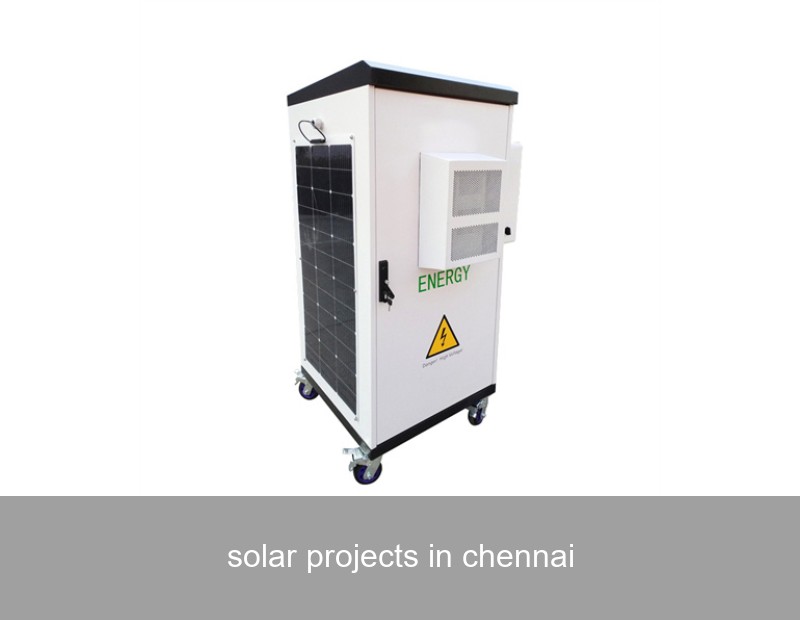
Chennai, India's bustling automotive and manufacturing hub, is experiencing a quiet revolution on its rooftops and in its industrial zones. The city, famously dubbed the "Detroit of Asia," is rapidly embracing solar energy to power its growth. But the story of solar projects in Chennai is evolving beyond just installing panels. The real challenge—and opportunity—lies in harnessing that abundant sunlight efficiently and reliably, especially when the grid is unstable or the sun isn't shining. This is where advanced energy storage transforms a simple solar installation into a resilient, intelligent power system.
Table of Contents
The Phenomenon: Chennai's Solar Surge
Drive through the industrial corridors of Oragadam or Sriperumbudur, and you'll see a shimmering new landscape: vast rooftops of factories and warehouses covered in photovoltaic (PV) panels. Chennai's tropical climate offers over 300 sunny days a year, making it a prime candidate for solar energy adoption. For businesses, the driver is twofold: slashing enormous electricity bills and ensuring uninterrupted operations in a city where power cuts can still disrupt production lines. The initial wave of solar projects in Chennai focused on meeting daytime load. However, many early adopters quickly realized a limitation—their systems were dormant after sunset, just when some shifts began or critical cooling loads needed power.

Image Source: Unsplash - Representative image of industrial solar installation.
The Data: Sunlight, Savings, and Grid Gaps
Let's talk numbers. According to the Tamil Nadu Energy Development Agency (TEDA), the state had installed over 5 GW of solar power capacity as of 2023, with a significant contribution from commercial and industrial (C&I) sectors in and around Chennai (TEDA Statistics). A typical 1 MW solar plant in Chennai can generate approximately 1.4 to 1.6 million units (kWh) of electricity annually. Yet, the levelized cost of energy (LCOE) from solar is only part of the equation. The true cost for businesses includes demand charges, diesel generator (DG) backup fuel costs, and the hidden expense of downtime. A 2022 report by the International Energy Agency (IEA) highlighted that India's C&I sector remains vulnerable to grid reliability issues, making storage-augmented solar not just an option but a necessity for competitive operations.
| Parameter | Typical Value for Chennai C&I Project | Impact |
|---|---|---|
| Average Solar Generation | 1,500 kWh/kWp/year | High yield improves ROI |
| Grid Outage Frequency | 2-4 hours/week (varies by zone) | Drives need for backup |
| DG Backup Cost | ₹18-22/kWh generated | Significant operational expense |
| Evening Peak Tariff | ₹9-11/kWh (commercial) | Opportunity for cost arbitrage |
The Case Study: A Chennai Automotive Parts Manufacturer
Consider the real-world example of "AutoComponents Ltd." (a pseudonym for a client we've worked with), a mid-sized automotive parts supplier in the Ambattur Industrial Estate. In 2021, they installed a 500 kW rooftop solar system. While daytime bills dropped by 60%, two problems persisted:
- Their highest energy consumption peaked from 6 PM to 10 PM during finishing operations, when solar generation was zero.
- They still relied on noisy, polluting, and expensive diesel generators during grid failures, which affected their sustainability goals and community relations.
In 2023, they partnered with Highjoule to integrate a 750 kWh battery energy storage system (BESS) with their existing solar array. The Highjoule H-Cube Industrial system was chosen for its high cycle life, liquid cooling for Chennai's extreme heat, and advanced energy management system (EMS). The results after one year were compelling:
- Energy Cost Reduction: Overall electricity costs reduced by an additional 25% (on top of solar savings) by storing excess solar and discharging during evening peak tariffs.
- DG Replacement: Diesel generator usage was reduced by over 95%. The BESS provides seamless, instant backup during grid outages.
- Reliability: Production line stoppages due to power issues were eliminated, safeguarding just-in-time delivery contracts.
- Sustainability: Their carbon footprint shrank dramatically, aligning with global OEM sustainability requirements.
This case is a microcosm of what's possible for solar projects in Chennai when they are designed with storage-first intelligence.
The Insight: Why Storage is the Game-Changer
So, what's the key takeaway? Solar PV is a phenomenal energy source, but it's inherently intermittent. For businesses where power is mission-critical, pairing solar with storage creates a dispatchable resource. Think of it this way: your solar panels are like an excellent rainwater harvesting system, but without a water tank (the battery), you can't use that water at night or during a dry spell. The battery storage system is that crucial tank, allowing you to time-shift energy use.
For Chennai's industries, this means:
- Maximizing Self-Consumption: Use more of the solar energy you produce on-site instead of exporting it at lower feed-in tariffs.
- Peak Shaving: Avoid punitive demand charges from the utility by discharging the battery during short periods of highest power draw.
- Grid Independence: Create a resilient microgrid that keeps essential operations running 24/7, regardless of grid conditions.

Image Source: Unsplash - Representative image of a modern Battery Energy Storage System.
How Highjoule Powers Smarter Solar Projects in Chennai and Beyond
At Highjoule, with nearly two decades of experience since 2005, we've seen the global shift from solar-only to solar-plus-storage. Our solutions are designed precisely for the challenges faced by cities like Chennai. We don't just supply batteries; we provide integrated, intelligent power platforms.
For commercial and industrial clients in Chennai exploring or expanding their solar projects, Highjoule offers:
- The H-Cube Modular BESS: A scalable, containerized solution perfect for large factories and microgrids. Its liquid-cooled lithium-ion phosphate (LFP) chemistry is ideal for high-ambient temperatures, ensuring safety and long life.
- The H-Flex Commercial System: Designed for smaller commercial buildings, data centers, and office complexes, offering seamless integration with existing solar inverters.
- Intelligent Energy Management Software: The brain of the operation. Our AI-driven platform forecasts solar generation and load patterns, automatically optimizing charge/discharge cycles to maximize economic return and reliability. It can be monitored and managed remotely from anywhere in the world—a key feature for global corporations with facilities in Chennai.
Our approach is to conduct a detailed energy audit first, understanding your load profile, solar generation, and operational goals. We then design a system that delivers a clear ROI, not just green credentials.
The Future of Solar in Industrial Cities: An Open Question
Chennai's journey is a blueprint for industrial cities worldwide, from the American Midwest to Europe's manufacturing centers. As battery costs continue to decline and grid dynamics become more complex, the question for business leaders is no longer "Should we go solar?" but rather "How can we design our solar project to be a resilient, cost-optimizing asset for the next 25 years?"
The integration of storage is becoming the standard, not the exception. It turns a capital expense into a strategic investment that controls energy costs for decades. For a plant manager in Chennai, an operations director in Germany, or a sustainability officer in the US, the core challenge is similar.
What operational, financial, or sustainability goal is your current power setup preventing you from achieving?
 Inquiry
 Online Chat