


Lithium Battery Trinidad: Powering a Sustainable Energy Transition in the Caribbean
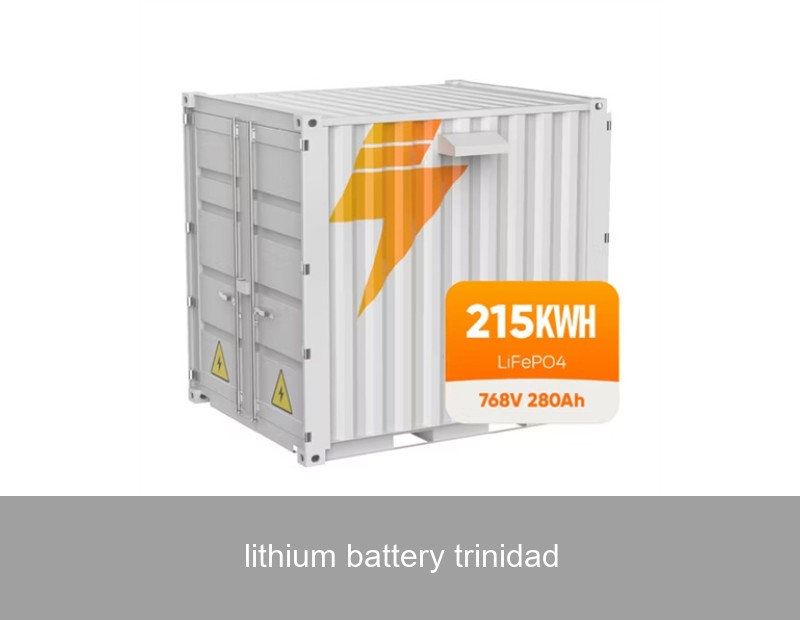
When you think of Trinidad and Tobago, images of vibrant carnivals and rich natural resources might come to mind. Yet, beneath this vibrant culture lies a complex energy landscape. Traditionally reliant on abundant natural gas, the nation, like many islands, faces the pressing global challenge of integrating renewable energy and ensuring grid stability. This is where advanced lithium battery technology becomes a game-changer. For Trinidad, adopting sophisticated lithium-ion battery energy storage systems (BESS) isn't just an upgrade; it's a strategic move toward energy diversification, cost reduction, and a more resilient power infrastructure. As a global leader, Highjoule is at the forefront of delivering these intelligent storage solutions tailored for island nations and beyond.
Table of Contents
- The Energy Phenomenon: Trinidad's Dual Reality
- What the Data Reveals: The Storage Imperative
- Case Study: Lessons from a Neighbor - Barbados' Solar + Storage Success
- Highjoule's Role: Tailored Lithium Battery Solutions for Trinidad's Landscape
- Key Benefits of a Modern Lithium Battery System
- The Future Outlook: Microgrids and Energy Independence
The Energy Phenomenon: Trinidad's Dual Reality
Trinidad and Tobago boasts one of the highest GDPs in the Caribbean, largely fueled by its oil and gas sector. However, this very strength presents a unique paradox. The domestic electricity grid, primarily powered by natural gas, is exposed to price volatility and the global shift away from fossil fuels. Meanwhile, the potential for solar energy is tremendous, with abundant year-round sunshine. The main hurdle? Intermittency. Solar panels don't generate power at night, and grid stability can be compromised with high levels of variable renewable input. This is the precise challenge modern lithium battery Trinidad projects are designed to solve: capturing excess solar energy during the day and dispatching it when needed most, creating a smoother, more reliable flow of power.
What the Data Reveals: The Storage Imperative
The global trend is unequivocal. According to the International Energy Agency (IEA), energy storage capacity is set to multiply exponentially by 2030, with grid-scale batteries leading the charge. For island grids, which are often isolated and vulnerable, the value of storage is even higher. Studies have shown that integrating battery storage can increase the feasible penetration of renewables on island grids by over 50%, while significantly reducing reliance on expensive, polluting diesel peaker plants. Lithium-ion technology, with its rapidly declining costs, high energy density, and efficient cycle life, has become the standard bearer for such applications.

Credit: Large-scale battery storage is key to modern energy grids. Photo via Unsplash.
Case Study: Lessons from a Neighbor - Barbados' Solar + Storage Success
We don't have to look far to see a blueprint for success. Barbados, another Caribbean nation, has aggressively pursued solar energy integration paired with battery storage. A notable example is the 10 MW solar PV facility at Trents, St. Lucy, which includes battery storage to firm its output. This project contributes to Barbados's goal of achieving 100% renewable energy and carbon neutrality by 2030. The result? Enhanced grid reliability, reduced fossil fuel imports, and protection against volatile oil prices. For Trinidad, with its larger industrial base, scaling such models could yield even greater economic and environmental benefits. It demonstrates that the technology is proven, effective, and ready for deployment in the Caribbean context.
Highjoule's Role: Tailored Lithium Battery Solutions for Trinidad's Landscape
At Highjoule, we understand that every grid has its own fingerprint. Our approach to supporting Trinidad's energy future isn't about selling an off-the-shelf box; it's about providing a comprehensive, intelligent power solution. Our flagship GridMaster Pro BESS is engineered for commercial, industrial, and utility-scale applications—perfect for Trinidad's manufacturing sector, large commercial facilities, and utility company (T&TEC) itself.
What sets Highjoule apart in the context of lithium battery Trinidad initiatives?
- Climate-Adaptive Design: Our systems are built to withstand high humidity and corrosive coastal environments, ensuring longevity and performance.
- Advanced Grid Support: Beyond just storing energy, our BESS provides critical grid services like frequency regulation and voltage support, which are vital for maintaining stability as renewable penetration grows.
- Intelligent Energy Management Software (EMS): The true brain of the system. Our EMS can forecast energy generation (from solar or wind), analyze consumption patterns, and autonomously optimize charge/discharge cycles to maximize economic return and grid support.
- Full Lifecycle Partnership: From initial feasibility studies and system design to commissioning, maintenance, and end-of-life recycling planning, Highjoule partners with clients for the long term.
Key Benefits of a Modern Lithium Battery System
Implementing a Highjoule lithium battery storage system in Trinidad offers a multi-faceted return on investment:
| Benefit | Impact for Trinidad |
|---|---|
| Grid Resilience & Stability | Acts as a buffer against outages, smooths renewable energy fluctuations, and provides backup power for critical infrastructure. |
| Cost Reduction | Reduces peak demand charges for businesses, allows for arbitrage (store cheap energy, use during expensive periods), and defers costly grid upgrades. |
| Renewable Integration | Unlocks the potential for large-scale solar and wind projects by making their output dispatchable and reliable, supporting national decarbonization goals. |
| Energy Security | Diversifies the energy mix, reducing over-reliance on a single commodity (natural gas) and insulating the economy from price shocks. |
The Future Outlook: Microgrids and Energy Independence
The journey with lithium batteries often starts with a single commercial or utility project, but the vision expands to community and industrial microgrids. Imagine a major industrial complex in Point Lisas operating on a mix of its own solar generation, backed by a large-scale Highjoule BESS, and seamlessly connected to the main grid only when necessary. This enhances its operational reliability and cuts energy costs dramatically. For remote communities or critical facilities like hospitals, such self-sufficient microgrids are a pathway to true energy independence. The National Renewable Energy Laboratory (NREL) highlights microgrids as a cornerstone of resilient energy systems, a concept perfectly suited for island nations.

Credit: Microgrids powered by solar and storage offer community resilience. Photo via Unsplash.
Your Energy Transition Questions
The conversation around lithium battery Trinidad is just beginning. The technology is here, the examples are proven, and the need is clear. For a business leader, utility planner, or policy maker in Trinidad and Tobago, the question is no longer "if" but "how" and "when." How can your organization start its first pilot project? What would a detailed feasibility study for your facility reveal about potential savings and resilience gains? At Highjoule, we're eager to collaborate and build a more sustainable, powerful, and independent energy future for Trinidad. What's the first step you'll take to explore the power of storage?
 Inquiry
 Online Chat