


Navigating the Future: Key Insights from the Solar PV and Energy Storage World Expo
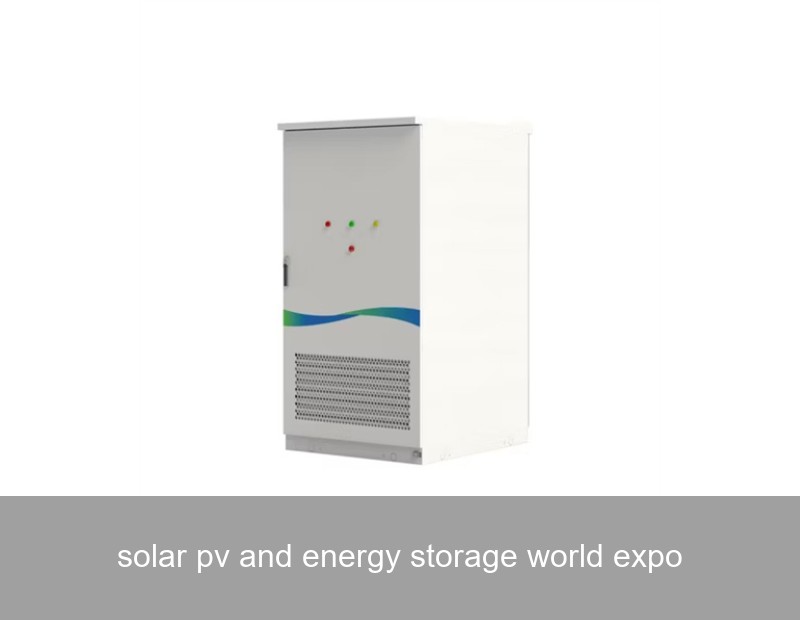
If you're involved in the renewable energy sector, you've likely felt the buzz. The annual Solar PV and Energy Storage World Expo has become more than just a trade show; it's the definitive pulse check for our rapidly evolving industry. It’s where the promise of a clean energy future transforms into tangible products, strategic partnerships, and actionable roadmaps. For professionals across Europe and the U.S., attending is akin to glimpsing the next five years of energy innovation. But what are the underlying trends driving this excitement? Let's break down the key themes that dominated the expo floor and explore what they mean for businesses and communities aiming for energy independence.
The Grid Paradigm Shift: From Backup to Grid-Forming Intelligence
Gone are the days when energy storage was discussed solely in terms of backup power. The dominant conversation at the Solar PV and Energy Storage World Expo centered on a more sophisticated, urgent need: grid stability and resilience. With intermittent renewable sources like solar and wind contributing ever-larger shares of generation, the grid requires new tools to maintain balance.
The key term on everyone's lips was "grid-forming" capability. Unlike traditional "grid-following" inverters that simply sync with the existing grid, grid-forming inverters can create a stable voltage and frequency signal from scratch. Think of it as the difference between an orchestra member following a conductor (grid-following) and being the conductor who can start the symphony (grid-forming). This technology is crucial for microgrids that may need to "island" from the main grid during outages and for bolstering weak grids in remote areas.

Data from the U.S. Department of Energy highlights this shift, noting that advanced inverters with grid-forming functions are essential for achieving high penetration solar scenarios. In Europe, grid codes are rapidly evolving to require these capabilities, making them a non-negotiable feature for new installations.
Beyond Lithium-Ion: The Expo's Search for the Next Frontier
Lithium-ion batteries rightfully own the current market, but the expo floor revealed a vibrant ecosystem of alternative technologies vying for specific applications. The driving forces? The quest for longer duration storage (8+ hours), enhanced safety, and reduced reliance on critical minerals.
Here’s a snapshot of the technologies generating significant interest:
| Technology | Potential Advantage | Ideal Use Case |
|---|---|---|
| Flow Batteries (Vanadium, Zinc-Bromine) | Long cycle life, decoupled power & energy, inherent safety | Industrial long-duration storage, microgrid anchoring |
| Compressed Air Energy Storage (CAES) | Very large scale, long duration (10-100+ hours) | Utility-scale grid balancing, renewable integration |
| Solid-State Batteries | Higher energy density, improved safety profile | Space-constrained commercial & eventual EV integration |
While these technologies mature, the innovation in lithium-ion itself was palpable. Exhibitors showcased improvements in cell chemistry (like Lithium Iron Phosphate or LFP, dominating for its safety and longevity), module design, and thermal management systems—all aimed at driving down Levelized Cost of Storage (LCOS).
Case Study: Transforming a German Industrial Park with Solar and Storage
Let's move from theory to practice. A compelling real-world example that echoes expo themes is the “Energiepark Herzogenrath” project in Germany. This industrial park, home to several manufacturing SMEs, faced volatile energy costs and wanted to secure its power supply while meeting sustainability goals.
The solution implemented was a combined 2.1 MW rooftop solar PV array paired with a 1.5 MWh battery energy storage system (BESS). The system's intelligence lies in its software, which performs:
- Peak Shaving: Automatically discharges the battery during periods of highest grid demand and price, slashing capacity charges.
- Solar Self-Consumption Optimization: Stores excess solar generation from midday for use in the evening, increasing on-site consumption from ~35% to over 70%.
- Frequency Regulation: The BESS participates in the German primary control reserve market, generating revenue by helping stabilize the national grid.
The results, published in a Fraunhofer ISE analysis, are impressive: a projected 27% reduction in total energy costs and a payback period of under 8 years, all while providing a resilient, low-carbon power source. This case perfectly illustrates the multi-value stream approach championed at the expo.
Software: The Invisible Brain of Modern Storage Systems
If the battery hardware is the muscle, software is the brain and nervous system. A major takeaway from the Solar PV and Energy Storage World Expo was the absolute centrality of Energy Management Systems (EMS) and advanced forecasting algorithms. The most sophisticated systems now use AI and machine learning to:
- Predict local solar generation and load patterns with high accuracy.
- Optimize charge/discharge cycles based on real-time electricity prices, weather, and market signals.
- Seamlessly stack multiple revenue streams or cost-saving functions, as seen in the German case study.
This intelligence is what transforms a simple battery into a smart, profit-generating or cost-avoiding grid asset. For businesses, the choice of software platform is as critical as the choice of battery cells.
Highjoule's Expo-Ready Solutions: Engineered for Real-World Demands
Walking the expo halls, it's clear that success hinges on delivering robust, intelligent, and flexible solutions. At Highjoule, with nearly two decades of experience since our founding in 2005, we design our products with these very expo-validated trends in mind.
Our H-Series Commercial & Industrial (C&I) storage systems are built as grid-forming ready platforms. We understand that for our clients in Europe and North America, future-proofing an investment is key. These modular systems feature our proprietary LFP battery packs and are engineered for high cycle life and safe operation.

More importantly, they are governed by the Highjoule Apex EMS™. This intelligent software platform is the culmination of our field experience across thousands of installations. It enables:
- Automated Value Stacking: Configure the system to prioritize self-consumption, peak shaving, or market participation without compromising hardware warranties.
- Remote Monitoring & Fleet Management: For businesses with multiple sites, our cloud dashboard provides a single pane of glass for performance, health, and financial reporting.
- Seamless Integration: The Apex EMS is designed to communicate effortlessly with existing building management systems and a wide range of solar inverters, simplifying the design and installation process for our partners.
For larger-scale needs, our Microgrid Controller takes this further, allowing the orchestration of solar PV, multiple storage units, and backup generators into a resilient, self-sufficient energy ecosystem. Whether it's a hospital ensuring uptime, a factory cutting costs, or a community building resilience, Highjoule's solutions are engineered to translate the promise of the expo into operational reality.
What Does Your Energy Future Look Like?
The Solar PV and Energy Storage World Expo makes one thing abundantly clear: the energy transition is not a distant concept; it's a present-day operational strategy. The technologies showcased are mature, financially viable, and ready to deploy. The question is no longer "if" but "how" and "when."
Is your business or community simply reacting to rising energy bills and grid instability, or are you proactively designing a smarter, more sustainable, and cost-effective energy footprint? What single energy challenge—be it cost volatility, reliability concerns, or sustainability targets—if solved, would have the greatest impact on your operations?
 Inquiry
 Online Chat