


Solar PV Manufacturing Companies in Poland: Powering Europe's Green Industrial Future
Look at a map of Europe's industrial heartlands, and you'll notice a bright spot growing steadily in the east. Solar PV manufacturing companies in Poland are no longer just a niche market; they are rapidly becoming a cornerstone of the continent's clean energy transition. This surge isn't accidental. It's a calculated response to global supply chain shifts, ambitious EU climate goals, and a powerful national drive for energy security. But here's the interesting part: as these factories produce the panels that will decarbonize Europe, they face their own energy challenge. Their advanced manufacturing processes are energy-intensive, and the sun, as we know, doesn't always shine on schedule. This creates a fascinating dual role for these companies—as both producers and consumers of renewable energy. The question then becomes: how do they maximize their own sustainability and profitability? The answer lies not just on the production line, but in what happens to the energy after the panels are made.
Why Poland is Shining: Data Behind the Growth
The numbers tell a compelling story. Poland has transformed from a solar laggard to a European leader in a remarkably short time. According to the International Renewable Energy Agency (IRENA), Poland's total installed solar PV capacity skyrocketed from just over 1.5 GW in 2018 to more than 17 GW by the end of 2024. This explosive growth in deployment has naturally spurred local production. The Polish government, through initiatives like the Polish Energy Policy until 2040 (PEP2040), actively supports domestic supply chain development, reducing reliance on imports and creating skilled jobs.
What's driving this boom for solar PV manufacturing companies in Poland? Three key factors:
- Geopolitical & Economic Shifts: European demand for "friend-shored" and ethically produced solar panels is at an all-time high. Polish manufacturers offer geographic proximity, EU quality standards, and shorter, more resilient supply chains.
- Strong Local Market: A booming domestic rooftop and farm solar market provides a stable initial customer base, allowing manufacturers to scale efficiently.
- Skilled Workforce & Industrial Tradition: Poland's strong engineering heritage and manufacturing expertise seamlessly translate to high-tech PV production.

This perfect storm of conditions has positioned Poland not just as an assembly point, but as a growing hub for the entire value chain, from ingots and wafers to cells and finished modules.
Case Study: From Factory Floor to Energy Independence
Let's make this concrete. Consider the story of a mid-sized solar PV manufacturing company in Poland we partnered with, located in the bustling industrial region of Silesia. Their goal was clear: reduce crippling energy costs and hedge against volatile grid prices, all while meeting corporate sustainability targets. They had ample roof space and installed a 2.1 MWp rooftop solar array—a logical first step.
The Phenomenon: They were generating significant solar power, but a mismatch emerged. Their factory's energy consumption was highest in the early morning and evening, during shift changes and high-intensity processes. Solar production, however, peaked midday. They were exporting excess energy to the grid at low rates, only to buy it back at a premium during non-sunny hours. Their savings were real, but capped.
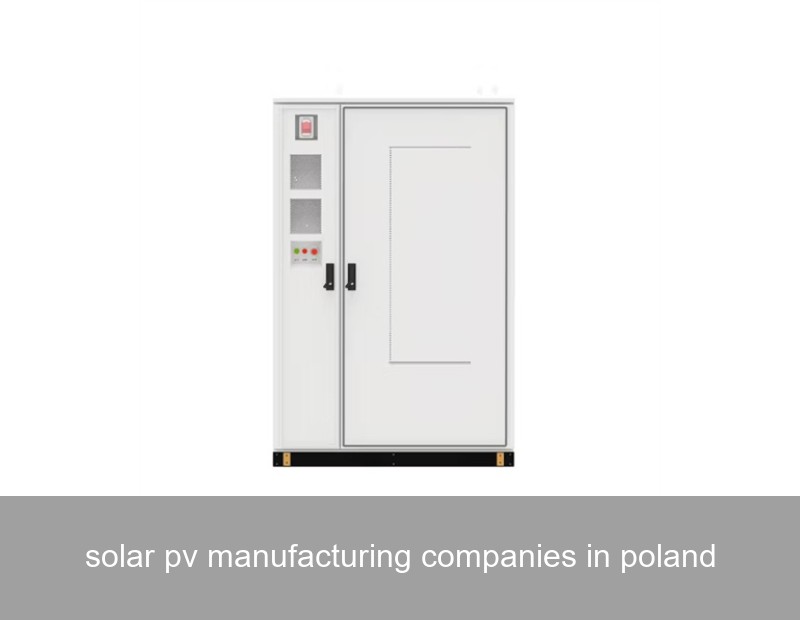
The Data & Solution: An analysis of their load profile revealed they were using only about 35% of their solar generation directly. To unlock the remaining 65%, they needed to time-shift that energy. This is where Highjoule entered the picture. We designed and deployed a containerized, high-cycle life Highjoule GridMaster BESS with a capacity of 1.2 MWh. This battery storage system was integrated with their existing solar inverters and building management system using our Adaptive Energy OS.
| Metric | Before BESS | After BESS Integration |
|---|---|---|
| Solar Self-Consumption | ~35% | >85% |
| Grid Energy Cost Reduction | 28% | 64% |
| Backup Power for Critical Loads | None | Up to 4 hours |
| ROI Period (Estimated) | N/A | Under 5 years |
The Insight: For this manufacturer, adding storage transformed their solar investment from a cost-reduction tool into a strategic energy asset. They now run critical production lines on solar-stored power during peak tariff periods, participate in grid flexibility programs (where available), and have gained invaluable protection against short-term outages. Their journey mirrors the next evolution for forward-thinking solar PV manufacturing companies in Poland: becoming prosumers-plus.
The Storage Imperative: Completing the Energy Cycle
This case highlights a universal truth in renewable energy: generation alone is not enough. The inherent intermittency of solar power is the primary challenge for any energy-intensive business. To truly achieve industrial energy resilience and cost predictability, storage is the missing link. Think of it this way: a solar panel factory without storage is like a state-of-the-art production line that only operates for 6-8 hours a day. You're leaving massive value—and potential revenue—on the table.
Advanced Battery Energy Storage Systems (BESS) act as an energy buffer, smoothing out production and enabling:
- Maximized Self-Consumption: Store midday sun for morning/evening peaks.
- Peak Shaving: Avoid punitive demand charges from the grid operator.
- Enhanced Grid Stability: Provide frequency regulation services, a potential new revenue stream.
- Uninterruptible Power Supply (UPS): Protect sensitive manufacturing equipment from voltage sags and short outages.
Highjoule's Integrated Solutions for Modern Manufacturers
At Highjoule, we understand that solar PV manufacturing companies in Poland and across Europe are operating at the cutting edge of technology. Your energy solution should be no different. We don't just sell hardware; we provide intelligent, integrated energy systems designed for industrial scale and rigor.
Our approach starts with a deep analysis of your facility's energy metabolism. We then tailor a system that might include:
- Highjoule GridMaster BESS: Our flagship commercial & industrial battery system, known for its superior safety (using LFP chemistry), modular scalability, and 10,000+ cycle life, built to withstand demanding industrial environments.
- Highjoule Adaptive Energy OS: The brain of the system. This AI-driven software platform doesn't just monitor—it forecasts, learns, and optimizes. It decides in real-time whether to store solar energy, discharge it to avoid peak tariffs, or hold capacity for backup, maximizing your financial return automatically.
- Seamless PV Integration: We design storage solutions that work harmoniously with both new and existing solar installations, regardless of the inverter brand, turning a simple PV system into a dispatchable power plant.

For a solar panel manufacturer, this means your factory becomes a living showcase of the full, efficient energy cycle you enable for your customers. It's the ultimate proof of concept.
The Future of Manufacturing: Self-Sufficient Industrial Parks
The trajectory is clear. The leaders among solar PV manufacturing companies in Poland are looking beyond single-factory solutions. The vision is evolving towards fully integrated, self-sufficient industrial parks powered by hybrid renewable microgrids. Imagine a manufacturing campus where rooftop solar, ground-mounted arrays, wind turbines, and multi-megawatt battery storage are all managed as a single, intelligent entity. This microgrid can operate connected to the national grid, trading energy strategically, or island itself during broader grid disturbances, ensuring continuous production.
This isn't science fiction. It's the next logical step for industries that cannot afford downtime and are committed to net-zero operations. Highjoule is at the forefront of this transition, providing the control systems and storage backbone that make such complex, multi-asset energy environments not only possible but profitable. A recent report by the International Energy Agency (IEA) underscores that energy security and industrial competitiveness are increasingly tied to this kind of smart, decentralized energy management.
 Inquiry
 Online Chat