


Your Guide to Choosing the Top Portable Power Station for Modern Energy Needs
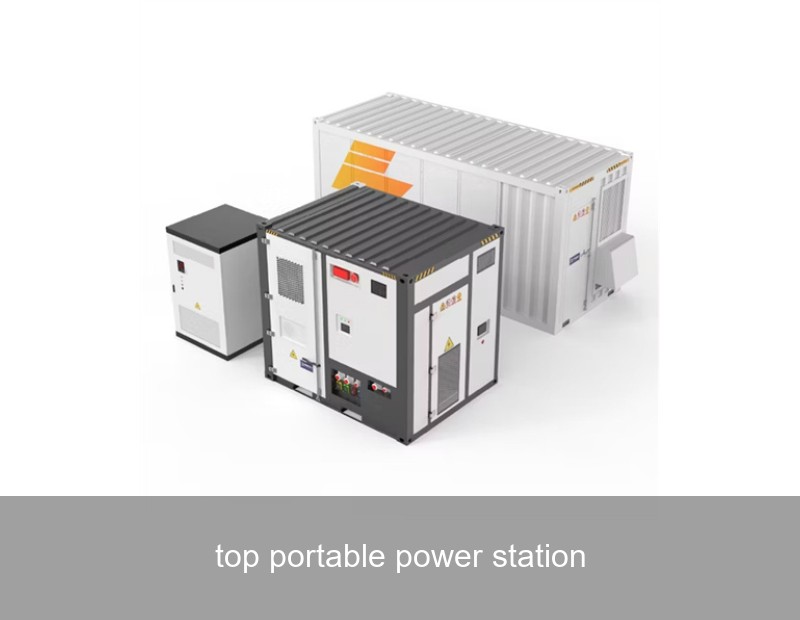
you're in the middle of a crucial work video call from a remote cabin when the grid goes down. Or perhaps a sudden storm knocks out power to your neighborhood, and you need to keep medical devices running. In our increasingly mobile and climate-volatile world, reliable power isn't just a convenience—it's a necessity. This is where top portable power stations come in, transforming from niche camping gear to essential household and professional equipment. But with a crowded market, how do you identify a truly superior system that offers more than just a basic outlet in a box? Let's explore the technology and criteria that separate the best from the rest.
Table of Contents
- What Truly Defines a Top Portable Power Station?
- Beyond Watt-Hours: Key Specifications Decoded
- Safety and Durability: Non-Negotiable Features
- Real-World Application: A Case Study from California
- Highjoule's Professional-Grade Portable Energy Solutions
- The Future of Portable Power: Integration and Intelligence
What Truly Defines a Top Portable Power Station?
At its core, a portable power station is a large-capacity battery pack with integrated inverters, charge controllers, and multiple output ports. However, a top portable power station distinguishes itself through a combination of capacity, power output, efficiency, and build quality. It's not merely about storing energy; it's about delivering it safely, reliably, and intelligently across a wide range of devices and scenarios—from powering a weekend camping trip with the family to serving as a critical backup for a freelance professional's home office during an outage.
The surge in demand is backed by data. According to a report by Grand View Research, the global portable power station market size was valued at USD 3.9 billion in 2022 and is expected to expand at a compound annual growth rate (CAGR) of 6.8% from 2023 to 2030. This growth is fueled by increasing outdoor recreational activities, a rise in remote work, and the growing frequency of power outages due to extreme weather events (Source: Grand View Research).
Beyond Watt-Hours: Key Specifications Decoded
When comparing units, focus on these critical specs:
- Battery Capacity (Wh & Ah): Measured in Watt-hours (Wh), this is your "gas tank." A 500Wh unit can theoretically run a 50W device for 10 hours. But remember, actual usable capacity is affected by discharge rate and inverter efficiency.
- Output Power (W & Surge W): The continuous power (in Watts) dictates what you can run. A 1000W unit can handle a microwave or small power tools. Surge or peak power is crucial for starting motors in devices like refrigerators or pumps, which can require 2-3x their running wattage momentarily.
- Battery Chemistry: Lithium Iron Phosphate (LiFePO4) is becoming the gold standard for top portable power stations. It offers significantly longer cycle life (3,000+ cycles vs. 500-1,000 for standard Li-ion), superior thermal stability (safer), and maintains performance better in extreme temperatures.
- Input and Output Ports: Versatility is key. Look for multiple AC outlets, USB-C PD (Power Delivery) ports for fast-charging modern laptops, standard USB-A, and 12V DC outputs like car sockets. High-wattage input via AC and solar allows for faster recharging.
Safety and Durability: Non-Negotiable Features
A truly reliable unit is built like a tank on the inside and out. Safety features should include:
- Advanced Battery Management Systems (BMS) for protection against overcharge, over-discharge, short circuits, and temperature extremes.
- Pure Sine Wave Inverters, which provide clean, stable power that is safe for sensitive electronics like laptops, cameras, and medical equipment—unmodified sine wave inverters can damage these devices.
- Robust casing with an IP rating for dust and water resistance, especially for outdoor use.
As a leader in advanced energy storage since 2005, Highjoule engineers these principles into every product. Our expertise in large-scale commercial Battery Energy Storage Systems (BESS) directly informs the safety protocols and robust architecture of our portable solutions, ensuring they are not just powerful, but profoundly dependable.
Real-World Application: A Case Study from California
Theoretical specs are one thing; real-world performance is another. Consider the experience of "TechNomads," a group of software developers based in San Francisco who adopted a remote work lifestyle in 2023. Their challenge was maintaining productivity while traveling in RVs and working from off-grid locations across the southwestern U.S.
The Phenomenon: They needed to reliably power two high-performance laptops, monitors, a 4G/Wi-Fi router, and occasional small appliances (like a coffee maker) for 8-10 hour workdays, often in areas with no grid access.
The Data & Solution: After calculating their daily energy needs at approximately 800Wh, they chose a top portable power station with a 1200Wh LiFePO4 battery, a 1500W pure sine wave inverter, and the ability to recharge via 500W of solar panels. Over a 6-month period, the station provided 142 days of uninterrupted power. It was recharged 87 times via solar, demonstrating a real-world cycle life with no noticeable capacity degradation.
The Insight: This case highlights that the right portable power station isn't just for emergencies; it can enable entirely new lifestyles and business models. The key was selecting a unit with a buffer above their calculated needs (1200Wh vs. 800Wh) and a battery chemistry (LiFePO4) designed for daily deep cycling, which is a hallmark of professional-grade systems.

Image Source: Unsplash (Representative image of off-grid power use)
Highjoule's Professional-Grade Portable Energy Solutions
Drawing on nearly two decades of experience powering businesses, industries, and microgrids, Highjoule brings a utility-grade mindset to portable power. Our Voyager Series of portable power stations is engineered for users who see energy reliability as critical, not optional.
What sets the Voyager Series apart?
- Industrial-Grade LiFePO4 Cells: We use automotive-grade LiFePO4 battery cells, ensuring over 3,500 cycles to 80% capacity—meaning years of daily use.
- High-Speed Hybrid Recharging: Our proprietary HyperCharge technology allows simultaneous AC and solar input, recharging a 1500Wh unit from 0 to 80% in under 1.5 hours.
- Smart App Integration: Monitor battery status, input/output power, and control outlets remotely via a smartphone app—a feature that brings intelligent energy management from our large-scale BESS to your personal power station.
- Expandable Capacity: For users with growing needs, our unique stackable battery design allows you to add external battery modules, seamlessly increasing your total energy storage.
This approach means Highjoule doesn't just sell a product; we provide a scalable, intelligent power solution. Whether for a homeowner preparing for storm season, a European van-lifer, or a U.S. contractor needing on-site tool power, our systems are built to integrate seamlessly into your life and work.
| Feature | Budget Unit | High-Performance Unit (e.g., Highjoule Voyager) |
|---|---|---|
| Battery Chemistry | Standard Lithium-ion (NMC) | Lithium Iron Phosphate (LiFePO4) |
| Cycle Life (to 80% capacity) | ~500 cycles | 3,500+ cycles |
| Inverter Type | Modified Sine Wave | Pure Sine Wave |
| Smart Management | Basic LED indicators | App Monitoring & Control, Firmware Updates |
| Recharge Time (0-80%) | 6-8 hours | Under 1.5 hours (with dual input) |
The Future of Portable Power: Integration and Intelligence
The next evolution of the top portable power station is as a node in a broader, smarter energy ecosystem. Imagine a system that:
- Automatically charges from your home solar panels during the day and provides backup at night.
- Can be programmed via voice assistant to power specific circuits during a utility outage.
- Participates in vehicle-to-load (V2L) networks, integrating with your electric vehicle's massive battery.
This is where the industry is headed. Companies like Highjoule are at the forefront, leveraging our deep knowledge of grid-interactive storage to develop portable units that can one day communicate with home energy management systems, creating a resilient and efficient personal energy network. The U.S. Department of Energy notes the importance of such distributed energy resources in enhancing grid resilience (Source: U.S. DOE).

Image Source: Unsplash (Representative image of home solar and energy integration)
So, What's Your Power Priority?
Is it the peace of mind that comes from knowing your family's essential devices will stay on during the next grid interruption? Or is it the freedom to work and explore without boundaries? Defining your core need is the first step. Once you have, the question becomes: are you looking for a simple battery pack, or are you investing in a durable, intelligent, and scalable power solution that grows with your ambitions?
 Inquiry
 Online Chat