


Solar Storage Battery Systems: The Key to Unlocking True Energy Independence
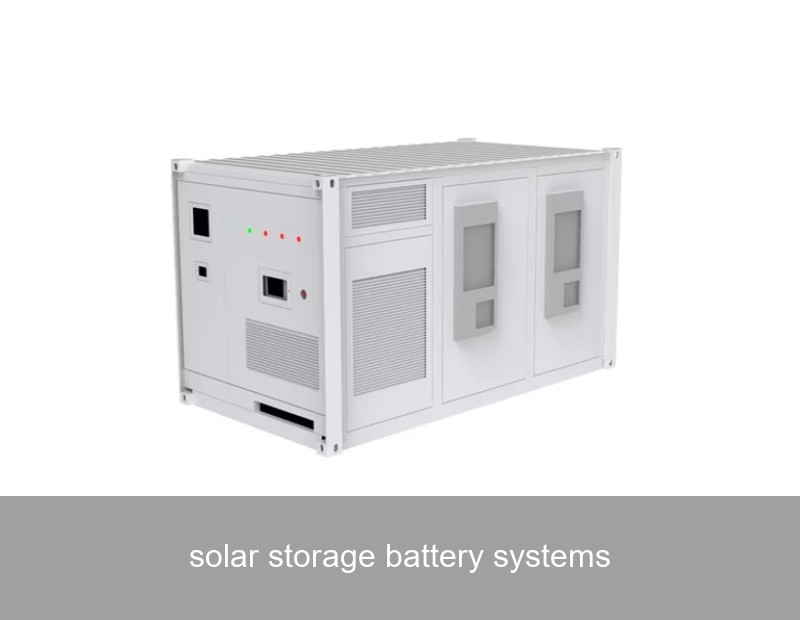
Have you ever watched your solar panels generate a surplus of clean energy on a sunny afternoon, only to draw power from the grid (and pay for it) that same evening? This daily paradox is a common frustration for homeowners and businesses alike. It highlights the critical missing piece in many renewable energy setups: intelligent solar storage battery systems. These systems are not just an add-on; they are the brain and the bank for your solar power, transforming how we produce, consume, and think about electricity. Let's explore how this technology works and why it's becoming indispensable for energy resilience and savings.
Table of Contents
- The Challenge: Solar Power's Intermittency Problem
- The Solution: How Solar Battery Systems Create a Personal Power Plant
- Key Benefits: Beyond Just Backup Power
- A Real-World Case: The California School District Saving Thousands
- Choosing the Right System: What to Look For
- The Highjoule Approach: Smart, Integrated Energy Solutions
- The Future Horizon: Batteries and the Smarter Grid
The Challenge: Solar Power's Intermittency Problem
Solar panels are brilliant at converting sunlight into electricity, but the sun, as we know, is not always shining. This creates a fundamental mismatch: energy generation peaks during midday, while household and business demand often peak in the early morning and evening. Without storage, excess solar energy is fed back to the grid, often for minimal compensation through feed-in tariffs, while you purchase expensive grid power at night.
The data paints a clear picture. According to the U.S. Department of Energy, high levels of solar penetration can challenge grid stability without storage to manage the variability. This isn't just a technical grid issue; it's a financial one for you. The rate structures are shifting towards "time-of-use" (TOU) pricing, where electricity is far more expensive during peak demand hours—precisely when your solar panels are offline.
The Solution: How Solar Battery Systems Create a Personal Power Plant
This is where a solar storage battery system changes everything. Think of it as a high-tech reservoir for your electricity. Here’s the simple, elegant cycle:
- Capture: During the day, your solar panels produce more power than your home consumes. Instead of sending it all to the grid, the excess energy charges your battery bank.
- Store: Advanced lithium-ion batteries, similar to those in EVs but optimized for long-duration cycling, safely store this energy as chemical potential.
- Dispatch: When the sun sets, your panels stop producing, or during a grid outage, the system intelligently switches to draw power from the batteries. Your lights stay on, your fridge stays cold, and you avoid buying peak-rate grid power.
The system is managed by an intelligent inverter and energy management system (EMS) that makes these decisions milliseconds, optimizing for self-consumption, cost savings, or grid support.
Key Benefits: Beyond Just Backup Power
While emergency backup is a major driver, especially in areas prone to outages, the advantages of integrating storage are multifaceted:
| Benefit | Description | Impact |
|---|---|---|
| Maximized Self-Consumption | Use more of the solar energy you produce. | Dramatically reduces electricity bills, often by 70% or more. |
| Peak Shaving | Avoid drawing power from the grid during expensive peak rate periods. | Protects against rising TOU rates and demand charges for businesses. |
| Energy Resilience | Provides seamless backup power during grid failures. | Keeps critical loads running for hours or even days. |
| Grid Support & Sustainability | Stored energy can help balance local grid demand. | Contributes to a more stable, renewable-powered grid. |
A Real-World Case: The California School District Saving Thousands
Let's look at a concrete example from the U.S. market. A public school district in Southern California faced steep "demand charges"—fees based on their highest 15-minute power draw each month—which made up nearly 40% of their electricity bill. Their existing solar panels helped, but not during the early morning peak when schools opened, and HVAC systems surged.
The district installed a centralized 500 kWh solar storage battery system. The system's intelligence was key: it was programmed to discharge battery power precisely during those morning and late afternoon peak windows, "shaving" the peak demand from the grid.
The Result? In the first year, the district reduced its peak demand from the grid by an average of 25%, leading to annual savings of over $48,000 on demand charges alone. The batteries also provided critical backup for emergency lighting and communication systems, enhancing campus safety. This case, documented by the National Renewable Energy Laboratory (NREL), showcases the dual financial and operational value of storage for institutional entities.

Image Source: Unsplash (Representative image of commercial-scale battery storage)
Choosing the Right System: What to Look For
Not all battery systems are created equal. When evaluating options, consider these core technical and service aspects:
- Capacity & Power: Capacity (kWh) is your "energy tank size," while power (kW) is how much energy can be delivered at once. Ensure both match your consumption and backup needs.
- Depth of Discharge (DoD): A higher DoD means you can safely use more of the battery's stated capacity without damaging it.
- Round-Trip Efficiency: This percentage tells you how much energy put in is available for use. Look for efficiencies above 90%.
- Integration & Intelligence: The system should seamlessly integrate with existing or new solar and feature smart software for control and monitoring.
- Warranty & Lifespan: A strong warranty (often 10+ years) on both capacity retention and cycles is a sign of a reliable, long-term investment.
The Highjoule Approach: Smart, Integrated Energy Solutions
At Highjoule, with nearly two decades of experience since 2005, we understand that a solar storage battery system is more than hardware—it's an integrated energy asset. Our solutions are designed to meet the precise needs of residential, commercial, and microgrid applications across Europe and North America.
Our flagship product, the Highjoule HiveStack, is a modular lithium iron phosphate (LFP) battery system known for its exceptional safety, longevity, and performance. Paired with our Smart Energy Hub inverter and EMS, it creates a fully synchronized ecosystem. The system learns your energy patterns, responds automatically to grid signals or rate changes, and gives you complete visibility and control via a user-friendly app.
For commercial and industrial clients, our team provides full lifecycle support—from custom feasibility studies and financial modeling to installation, grid interconnection support, and ongoing performance optimization. We focus on delivering a measurable return on investment through energy arbitrage, demand charge reduction, and enhanced sustainability profiles.

Image Source: Unsplash (Representative image of a modern home solar and storage setup)
The Future Horizon: Batteries and the Smarter Grid
The evolution of solar storage battery systems is accelerating. We're moving towards "virtual power plants" (VPPs), where thousands of distributed home and business systems are aggregated to act as a single, flexible resource for grid operators. This not only provides revenue opportunities for system owners but is crucial for integrating higher levels of renewable energy globally, as noted by the International Energy Agency (IEA).
Technology advancements continue to improve energy density, reduce costs, and extend cycle life. The conversation is shifting from "if" to add storage to "how" to optimize it for your specific goals.
What's Your Energy Independence Goal?
Is your primary driver to achieve immunity from power outages, to lock in long-term protection against volatile electricity prices, or to maximize the return from your solar investment? Defining this will shape the ideal system for your home or business. How much of your daily energy use would you like to guarantee is clean, self-produced, and independent from the grid?
 Inquiry
 Online Chat