


Solar Energy Battery Storage: Your Key to Energy Independence and a Greener Grid
Have you ever watched your electricity meter spin backwards on a sunny day, only to pay a premium to buy that power back in the evening? This frustrating reality for many solar panel owners highlights a critical gap in our clean energy transition. Solar energy battery storage is the game-changing technology that bridges this gap, transforming how we generate, consume, and think about power. It's not just about keeping the lights on during an outage; it's about maximizing self-consumption, stabilizing the grid, and taking a definitive step towards true energy independence. For over 18 years, Highjoule has been at the forefront of this revolution, designing intelligent battery storage systems that empower homeowners and businesses to harness the full potential of their solar investment.
Table of Contents
- The Duck Curve Phenomenon: Why Solar Alone Isn't Enough
- How Solar Battery Storage Works: More Than Just a Backup
- The Financial and Environmental Sense: Crunching the Numbers
- A Real-World Case Study: The German Bakery Model
- Choosing the Right System: Key Considerations
- Highjoule's Integrated Solutions: Intelligence Meets Reliability
- The Future is a Two-Way Street: Your Role in the Smart Grid
The Duck Curve Phenomenon: Why Solar Alone Isn't Enough
Let's talk about a peculiar challenge called the "Duck Curve." Coined by grid operators in California, this term describes the dramatic dip and sharp peak in net electricity demand on days with high solar production. Here's the phenomenon: solar panels flood the grid with cheap, clean power in the middle of the day (causing the "belly" of the duck). As the sun sets and people return home, solar generation plummets while demand for electricity soars for cooking, heating, and lighting (creating the steep "neck" and "head" of the duck). This rapid ramp-up forces utilities to rely on often inefficient and carbon-intensive "peaker" plants.
The data is striking. The California Independent System Operator (CAISO) has documented how this curve deepens yearly, creating grid management headaches and curtailing (wasting) excess solar energy. This isn't just a California problem; it's a blueprint for what happens in sun-rich regions worldwide as solar adoption grows. It clearly shows that without a means to store midday solar abundance, we're not optimizing our renewable resources.

Image Source: U.S. Department of Energy, illustrating the "Duck Curve" net load challenge.
How Solar Battery Storage Works: More Than Just a Backup
A solar energy battery storage system is the intelligent partner to your solar panels. Think of it as a high-tech energy savings account. Here's the simple logic:
- Step 1: Generation & Consumption: Your solar panels generate DC (direct current) electricity.
- Step 2: Direct Use: This power is converted to AC (alternating current) by an inverter for immediate use in your home or business.
- Step 3: Storage: Any excess energy not immediately used is directed to charge your battery system instead of being sent to the grid.
- Step 4: Discharge: When your solar panels stop producing (at night, or on cloudy days), your system automatically draws stored energy from the battery to power your property.
- Step 5: Grid Interaction (Optional): Only if your battery is depleted do you pull minimal power from the utility grid. Advanced systems can also participate in grid services.
The core components are the battery cells (typically lithium-ion for their density and longevity), a battery management system (BMS) for safety and health, and a hybrid inverter or a separate inverter that manages the flow between solar, battery, home, and grid.
The Financial and Environmental Sense: Crunching the Numbers
Investing in battery storage is a strategic financial decision with compounding returns. The logic ladder is compelling:
| Benefit | How It Works | Direct Impact |
|---|---|---|
| Increased Self-Consumption | Store your cheap solar power instead of exporting it at low rates. | Reduces electricity bought from the grid, often at higher peak rates. |
| Peak Shaving | Use battery power during expensive peak tariff periods (e.g., 4-9 pm). | Dramatically lowers demand charges for businesses and high-tier rates for homes. |
| Backup Power | Provides seamless power during grid outages. | Prevents data loss, business interruption, and home discomfort; adds property value. |
| Grid Services & Incentives | Some regions allow batteries to provide grid stability services for revenue. | Potential for additional income streams (e.g., in the UK or parts of the USA). |
Environmentally, the impact is profound. By maximizing the use of your onsite solar and reducing reliance on fossil-fuel peaker plants, you are directly decreasing your carbon footprint. The Solar Energy Industries Association (SEIA) notes that pairing storage with solar is critical for achieving deep decarbonization goals. It turns a variable resource into a firm, dispatchable one.
A Real-World Case Study: The German Bakery Model
Let's look at a concrete example from Bavaria, Germany. A medium-sized artisan bakery with a 50 kW rooftop solar system faced a common problem: high energy consumption in the early mornings (for ovens) and evenings, but peak solar production midday when demand was lower. They were exporting energy at a low feed-in tariff and buying it back at a high price.
The Solution: In 2022, they installed a 40 kWh Highjoule commercial battery storage system integrated with their existing solar.
The Data-Driven Results (after 12 months):
- Self-Consumption Rate Increased: From 35% to over 80%.
- Grid Electricity Purchased: Reduced by 65%.
- Peak Load from Grid: Reduced from 45 kW to 15 kW, slashing demand charges.
- ROI Timeline: Projected payback period of under 7 years, enhanced by German KfW incentive programs.
- Resilience: Critical refrigeration is now protected during grid outages, preventing spoilage.
This bakery didn't just save money; it future-proofed its operations against volatile energy prices and became a community model for sustainable business practices. It exemplifies the perfect synergy between solar generation and intelligent storage.
Choosing the Right System: Key Considerations
Not all battery storage is created equal. When evaluating systems, consider these factors:
- Capacity & Power: Capacity (kWh) is your "energy tank" size. Power (kW) is how much energy can be delivered at once (critical for running multiple appliances).
- Depth of Discharge (DoD): The usable percentage of the battery's capacity. A 10 kWh battery with 90% DoD gives you 9 kWh of usable energy.
- Round-Trip Efficiency: How much energy you get out versus what you put in. Look for efficiencies above 90%.
- Warranty & Lifespan: Typically measured in years and/or cycles. A 10-year, 10,000-cycle warranty is a strong indicator of quality.
- Integration & Software: The brain of the system. Can it learn your usage patterns? Does it offer user-friendly monitoring and control via an app? Can it adapt to changing tariffs?
Highjoule's Integrated Solutions: Intelligence Meets Reliability
This is where Highjoule's nearly two decades of engineering excellence come into play. We understand that a solar energy battery storage system is a long-term investment, and our products are built accordingly. Our flagship residential product, the Highjoule HomePower+, and our scalable commercial IndustrialStack series are designed with the principles of safety, intelligence, and durability at their core.
What sets Highjoule apart is our integrated Adaptive Energy Operating System (AEOS). This isn't just a monitoring app; it's an AI-driven platform that:
- Continuously analyzes your energy production, consumption patterns, and local weather forecasts.
- Automatically optimizes charge/discharge cycles to maximize self-consumption and savings based on real-time or time-of-use electricity rates.
- Provides a seamless backup power experience, switching to battery power in milliseconds during a grid failure.
- Offers fleet management capabilities for businesses with multiple sites, providing a holistic view of energy assets.
Our systems use premium lithium iron phosphate (LFP) battery chemistry, renowned for its exceptional safety profile, long cycle life, and stability. Coupled with our modular design, this allows homeowners to start with what they need and expand later, and enables businesses to scale their storage in line with growth.

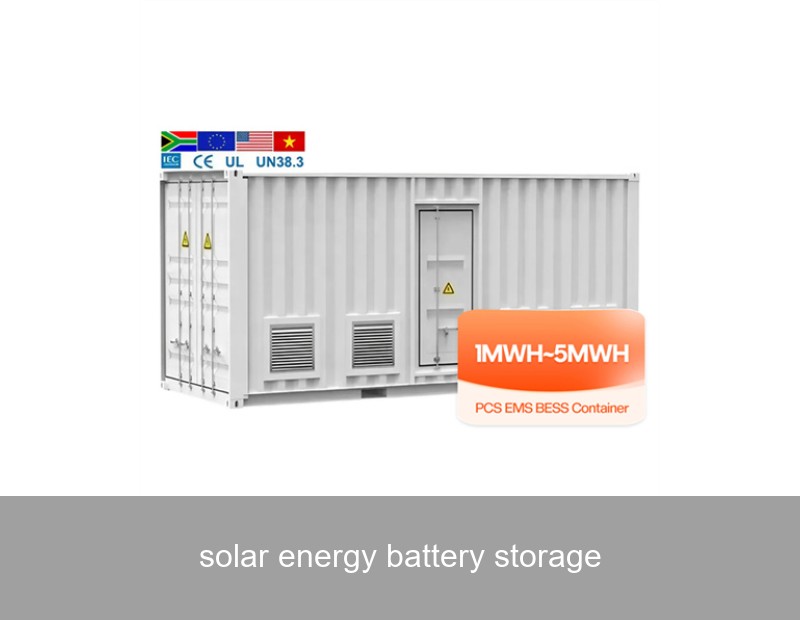
Image Source: Highjoule, showing a commercial battery storage installation.
The Future is a Two-Way Street: Your Role in the Smart Grid
The ultimate vision is the creation of a decentralized, resilient smart grid. Millions of homes and businesses with solar energy battery storage can act as a virtual power plant (VPP), collectively stabilizing the grid by feeding power back during critical peak times. This concept is already being piloted successfully in places like Vermont by Green Mountain Power, where customers are compensated for sharing their battery power.
This transforms you from a passive consumer into an active "prosumer"—both producing and intelligently managing energy. It's a powerful shift that democratizes energy and accelerates the transition away from fossil fuels.
So, the question isn't just whether you can afford a battery storage system. In a world of increasing climate volatility and energy price uncertainty, can you afford not to explore how intelligent storage could secure your energy future? What would you power first to create a more resilient and sustainable home or business?
 Inquiry
 Online Chat