


Your Home's Power Hub: The Essential Guide to Solar System Energy Storage Cabinets
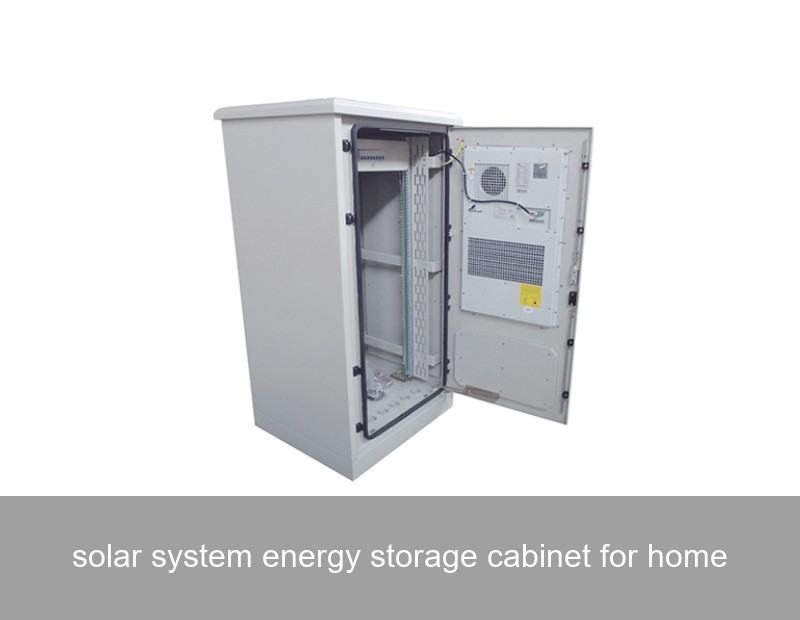
Imagine a stormy evening. The grid goes down, but your home remains a beacon of light and warmth, powered silently from within. This isn't magic; it's the modern reality made possible by a solar system energy storage cabinet for home. As electricity prices soar and climate concerns grow, homeowners across Europe and the US are looking beyond solar panels alone. They are turning to intelligent, all-in-one storage solutions to truly unlock energy independence. This guide will demystify the home energy storage cabinet, explaining why it's the brain and brawn of a resilient, efficient household.
Table of Contents
- The Phenomenon: From Simple Solar to Smart Home Energy
- Key Components Inside Your Energy Storage Cabinet
- Real-World Data: Why Storage is a Game-Changer
- Case Study: A German Household's Journey to 80% Self-Sufficiency
- Choosing the Right Cabinet: Safety, Intelligence, and Integration
- The Highjoule Solution: Engineered for Peace of Mind
- Your Home's Energy Future: What's the Next Step?
The Phenomenon: From Simple Solar to Smart Home Energy
For years, home solar was straightforward: panels on the roof, an inverter on the wall, and any excess power fed back to the grid. But a shift is happening. With global renewable capacity set to grow by 2,400 GW by 2028, the intermittency of solar and wind is pushing innovation downstream—right into your garage or utility room. The modern solar system energy storage cabinet for home is the answer. It's a sleek, integrated unit that doesn't just store energy; it manages it intelligently, deciding when to charge from your panels, when to power your home, and when to interact with the grid based on your habits and electricity rates.

Think of it as moving from a basic savings account (solar export) to a sophisticated financial portfolio (intelligent storage). You're maximizing the value of every kilowatt-hour you produce.
What's Inside? Key Components of Your Energy Storage Cabinet
Not all cabinets are created equal. A high-quality home energy storage cabinet integrates several critical components into one safe, user-friendly package:
- Battery Modules: The heart of the system, typically using Lithium Iron Phosphate (LFP) chemistry for its renowned safety, long life, and stability.
- Hybrid Inverter/Charger: The brain. This device converts DC power from your panels and batteries to AC for your home, and vice-versa for charging. It seamlessly switches between power sources.
- Battery Management System (BMS): The guardian. It continuously monitors cell voltage, temperature, and health, ensuring optimal performance and preventing dangerous conditions.
- Thermal Management System: A climate control system for your battery, using passive or active cooling to maintain the ideal operating temperature year-round.
- Safety Enclosure & Disconnect: A robust, often UL or IEC-certified metal cabinet that houses everything, providing physical protection, fire resistance, and easy service disconnects.
This integrated design is crucial. It's not a collection of disparate parts; it's a single, engineered system where all components are designed to communicate and work in perfect harmony.
Real-World Data: Why Storage is a Game-Changer
The numbers tell a compelling story. Let's break down the tangible benefits a solar system energy storage cabinet for home delivers:
| Metric | Without Storage | With Intelligent Storage |
|---|---|---|
| Self-Consumption | Typically 30-50% of solar generation used directly. | Can exceed 70-80%, drastically reducing grid purchases. |
| Bill Savings | Moderate savings; dependent on net metering policies. | Maximized savings by avoiding peak-rate grid electricity. |
| Backup Power | None when the grid fails (most systems shut down). | Seamless, automatic backup for essential or whole-home loads. |
| ROI Timeline | Often longer, vulnerable to policy changes. | More robust and predictable, protected from shifting tariffs. |
According to the U.S. Department of Energy, pairing storage with solar can enhance grid reliability and resilience at the local level—a benefit that now extends directly to you, the homeowner.
Case Study: The Müller Family in Bavaria, Germany
Let's look at a real example. The Müller family in a suburban home near Munich installed a 10 kWp solar array in 2020. While they saw savings, they were still buying 65% of their power from the grid, especially in the evenings. In early 2023, they integrated a Highjoule ResiCore 15 energy storage cabinet with a usable capacity of 15 kWh.
- Goal: Increase self-sufficiency and prepare for potential grid instability.
- Installation: The all-in-one cabinet was installed in their basement in one day, connecting seamlessly to their existing solar.
- Results (12-month period):
- Grid Independence: Increased from 35% to 82%.
- Monthly Electricity Bill: Reduced from an average of €180 to €32.
- Backup Events: The system provided uninterrupted power during three grid outages, totaling 11 hours.
"The Highjoule ResiCore isn't just a battery," says Mr. Müller. "The app shows us exactly how our home's energy flows. We've changed habits slightly, like running the dishwasher on a timer to use midday solar surplus, but the system does most of the thinking for us. It's peace of mind, quantified."

Choosing the Right Cabinet: Safety, Intelligence, and Integration
Selecting a solar system energy storage cabinet for home is a significant decision. Here are the non-negotiable factors to consider:
1. Safety First: Chemistry and Certification
Insist on Lithium Iron Phosphate (LFP) batteries. They are inherently more stable and less prone to thermal runaway than other lithium-ion types. Ensure the entire cabinet system carries relevant regional safety certifications (like UL 9540 in the US or IEC 62619 in Europe).
2. Intelligence: The Software is Key
The hardware stores energy, but the software creates value. Look for systems with smart energy management that can learn your consumption patterns, integrate with time-of-use utility rates, and even participate in virtual power plant (VPP) programs for additional revenue.
3. Scalability and Service
Your needs may grow. Can the system's capacity be expanded easily with additional battery modules? Also, consider the manufacturer's warranty, local service network, and the clarity of performance monitoring tools.
The Highjoule Solution: Engineered for Peace of Mind
At Highjoule, with nearly two decades of expertise in advanced energy storage, we've engineered our residential line around these core principles. Our ResiCore Series of home energy storage cabinets is designed for the discerning homeowner who values safety, simplicity, and sophistication.
The Highjoule ResiCore is more than a container for batteries. It's a unified power management platform:
- Ultra-Safe LFP Architecture: Built with tier-one LFP cells and a multi-layer BMS that monitors over 120 parameters in real-time.
- All-in-One Design: Pre-integrated inverter, charger, BMS, and cooling system in one compact, quiet, and aesthetically designed cabinet.
- Adaptive AI Energy Manager: Our software doesn't just react; it predicts. By analyzing weather forecasts, your usage history, and utility rate schedules, it optimizes your home's energy flow for maximum economy and comfort.
- Seamless Integration: Whether you're retrofitting to an existing solar array or building a new system from scratch, the ResiCore is designed for straightforward installation by our network of certified partners.
We provide solutions for commercial and microgrid applications, but our passion for innovation is equally applied to empowering individual homes. The same rigorous engineering that goes into our utility-scale projects defines every ResiCore cabinet.

Your Home's Energy Future: What's the Next Step?
The journey to a resilient, efficient, and sustainable home energy system is clearer than ever. The solar system energy storage cabinet for home has evolved from a niche product to the central component of a modern energy-independent household. It turns your solar investment from a partial solution into a comprehensive personal power grid.
What would energy security look like for your family? How would your daily life change if you were no longer anxious about rising utility rates or the next storm-induced power outage?
We invite you to explore what's possible. What is the one appliance or room in your home that you would prioritize to always have power, and how would that shape your choice of an energy storage system?
 Inquiry
 Online Chat