


Finding the Right Solar Uganda Supplier: Your Guide to Sustainable Power in East Africa
Imagine a clinic in rural Uganda that can now refrigerate life-saving vaccines 24/7, or a school where children can study after sunset thanks to a reliable, clean power source. This isn't just a hopeful vision; it's a reality being powered by a critical partner: the solar Uganda supplier. For businesses, communities, and organizations across the Pearl of Africa, choosing the right supplier is the cornerstone of a successful transition to solar energy. It's the difference between a system that powers progress for decades and one that becomes an expensive, underperforming liability. This article will guide you through the key considerations, backed by data and real-world examples, to help you make an informed decision and unlock the full potential of solar power in Uganda.
Table of Contents
- The Ugandan Solar Landscape: A Market Primed for Growth
- Beyond the Panel: 5 Critical Criteria for Your Solar Uganda Supplier
- Case Study: Powering Productivity - A Tea Factory's Transformation
- The Heart of Reliability: Why Your Battery Choice Matters Most
- Highjoule's Role: Advanced Storage for Demanding Ugandan Applications
The Ugandan Solar Landscape: A Market Primed for Growth
Uganda's energy challenge is well-documented. While grid access is expanding, over 40% of the population still lacks a reliable connection, and even those on the grid face frequent outages. This instability stifles economic growth, impacts healthcare and education, and burdens businesses with high operational costs from diesel generators. The solution? Uganda's abundant sunshine, offering an average of 5.1 kWh/m²/day of solar irradiance—one of the highest potentials in the world.
The market has responded with a surge of solar companies. However, not all solar Uganda supplier options are created equal. The initial focus is often on the solar panels themselves, but the true backbone of a system that provides power after dark or during grid failures is the battery storage system (BSS). This is where expertise and technology differentiate a basic provider from a strategic energy partner.
Beyond the Panel: 5 Critical Criteria for Your Solar Uganda Supplier
Choosing a supplier is about more than just price per watt. It's about long-term partnership and performance. Here are the key factors to evaluate:
- Technical Expertise & System Design: Can they design a system tailored to your specific load profile and site conditions, not just offer a generic package?
- Quality of Components: Do they use tier-1 solar panels and, crucially, reputable battery technology with proven cycle life in tropical climates?
- Battery Storage Specialization: Do they understand the nuances of depth of discharge, temperature management, and cycle life for batteries?
- After-Sales Service & Warranty: What is their local service network like? A 10-year warranty is useless without local technicians to honor it.
- Financial & Project Viability: Can they provide clear ROI calculations and support with financing options or Power Purchase Agreements (PPAs)?
Think of it this way: you're not just buying hardware; you're investing in decades of predictable energy costs and operational reliability.
Case Study: Powering Productivity - A Tea Factory's Transformation
Let's look at a real example. A medium-sized tea processing factory in Fort Portal was spending over $15,000 monthly on diesel for generators to power withering fans, dryers, and sorting machines during frequent grid outages. This was costly, noisy, and polluted their local environment.
They partnered with a competent solar Uganda supplier who conducted a detailed energy audit. The solution was a 500 kWp solar PV system coupled with a 1 MWh battery energy storage system (BESS). The BESS was programmed for intelligent load management, providing seamless backup during outages and allowing the factory to "time-shift" solar energy to cover high-demand periods in the evening.
| Metric | Before Solar+BESS | After Solar+BESS |
|---|---|---|
| Monthly Energy Cost | > $15,000 | $3,200 (grid + maintenance) |
| Diesel Consumption | 45,000 liters/year | 0 liters/year |
| CO2 Emissions Reduced | N/A | ~120 tonnes/year |
| Payback Period | N/A | 4.2 years |
The project not only slashed costs and emissions but also increased processing capacity by ensuring uninterrupted operation during peak harvest, directly boosting revenue.
The Heart of Reliability: Why Your Battery Choice Matters Most
In the context of Uganda, with its heat and demand for robust cycling, the battery is the most critical component. Many systems fail because of undersized or poor-quality batteries. Leading suppliers are now moving beyond basic lead-acid to Lithium Iron Phosphate (LiFePO4) technology, which offers longer lifespan, deeper safe discharge, better performance in heat, and lower lifetime cost.
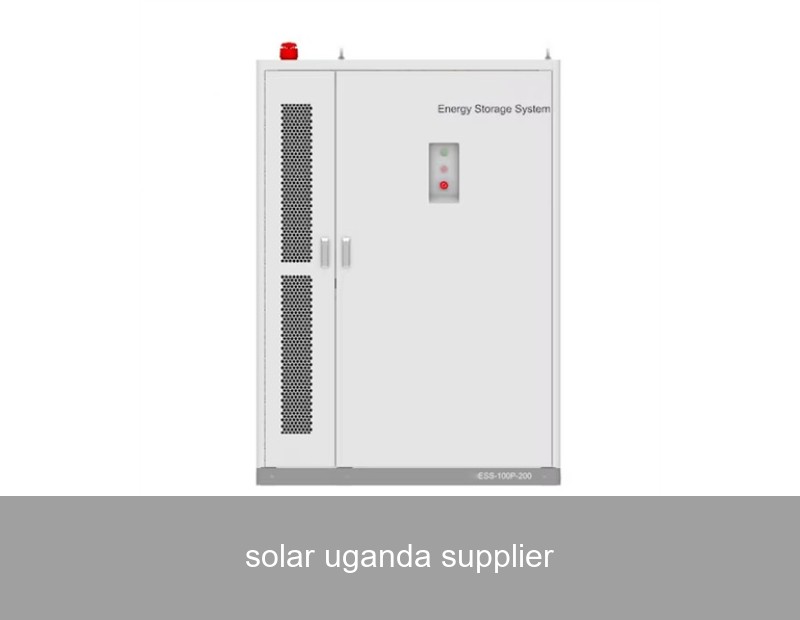
This is where a global technology partner like Highjoule adds immense value. As a leader in advanced BESS solutions since 2005, Highjoule doesn't just sell batteries; we provide intelligent, integrated storage systems. Our HPS Series commercial & industrial storage systems are engineered for demanding environments like Uganda's. They feature advanced thermal management to handle high ambient temperatures, modular design for easy serviceability, and sophisticated energy management software (EMS) that can optimize for self-consumption, backup, or grid services.
Image: Professional installation of a robust battery storage system is crucial for long-term performance. Source: Unsplash

For a solar Uganda supplier, partnering with a technology provider like Highjoule means they can offer clients a superior product with predictable performance, a 10+ year lifespan, and remote monitoring capabilities—all of which are decisive competitive advantages.
Highjoule's Role: Advanced Storage for Demanding Ugandan Applications
So, how does Highjoule specifically fit into the Ugandan solar ecosystem? We are the enabling technology partner for forward-thinking solar Uganda supplier companies and large end-users. Our products are designed to solve the very challenges faced in markets like Uganda:
- For Commercial & Industrial (C&I) Clients: Our containerized or modular BESS solutions allow factories, hotels, and agri-businesses to achieve true energy independence, reduce diesel dependence to zero, and stabilize operational costs.
- For Microgrids and Utilities: Highjoule's grid-forming inverters and scalable storage can help stabilize mini-grids, integrate higher shares of renewables, and provide reliable community power.
- For Residential & SME Complexes: Our integrated home and business energy systems provide seamless backup and solar self-consumption, turning a property into a resilient power hub.
By providing the core storage intelligence and hardware, we empower local suppliers to build stronger, more reliable, and more profitable solar solutions for their customers. It’s a partnership that elevates the entire market.
Image: Solar power is transforming critical infrastructure, like health clinics, across Uganda. Source: Unsplash

Looking Forward: The Future of Solar in Uganda
The trajectory is clear. With falling technology costs, rising diesel prices, and increasing climate awareness, solar-plus-storage is becoming the default choice for new power capacity in Uganda. The next evolution will involve smarter, interconnected systems that can provide grid-support services and create virtual power plants. The solar Uganda supplier of the future will be a digital energy service provider, managing portfolios of distributed assets.
Is your business or community ready to move beyond talk and evaluate a concrete solar-plus-storage plan that addresses your specific energy cost, reliability, and sustainability goals? What would 24/7 clean power do for your operations?
 Inquiry
 Online Chat