


Unlocking Resilience and Savings: Your Guide to Modern Solar Energy Solutions
Have you ever looked at your rising electricity bill and wondered if there's a better way? Or felt a pang of anxiety during a storm warning, knowing the power could flicker out at any moment? You're not alone. Across homes and businesses in Europe and the US, a quiet revolution is powering up. It's not just about putting panels on the roof anymore; it's about intelligent, integrated solar energy solutions that harvest the sun, store its bounty, and give you complete control over your energy destiny. This isn't a distant future—it's the present, and it's transforming how we think about power, independence, and our planet.
Table of Contents
The Problem: Sunlight Doesn't Shine on Demand
Traditional solar panel systems have a fundamental, yet simple, challenge: they generate most of their power in the middle of the day, precisely when many families are at work and school, and businesses are in full swing. Meanwhile, energy demand peaks in the early morning and evening. This creates a mismatch. Without a way to capture the surplus, it gets sent back to the grid, often for minimal compensation, leaving you to buy expensive power from the utility when the sun goes down. It's like filling a bathtub with the drain wide open—you're constantly losing the resource you worked to collect.
This intermittency is the final hurdle for solar energy solutions to achieve true energy independence. The answer, as you might have guessed, lies not just in generation, but in storage and smart management.
The Data: Why Storage is the Game-Changer
The numbers speak volumes. According to the U.S. Department of Energy, pairing solar with storage can increase the value of solar energy by allowing it to be dispatched when it's most needed and most valuable. Let's break down the impact:
| Metric | Solar Panels Only | Solar + Storage Solution |
|---|---|---|
| Self-Consumption | Typically 30-50% | Can exceed 80-90% |
| Grid Independence During Outage | None (systems shut off for safety) | Hours to Days, depending on system size |
| Bill Savings Potential | Reduces daytime import | Reduces day & night import, avoids peak charges |
As feed-in tariffs decline and time-of-use rates become more common—where electricity is more expensive during peak hours—the economic case for adding a battery becomes undeniable. It turns your solar array from a cost-reducer into a personal power plant.

A complete residential solar and storage installation. The battery unit (on the wall) is as crucial as the panels on the roof. Credit: Unsplash
A Real-World Case: The Berlin Bakery
Let's move from theory to a warm, buttery reality. "Brot & Mehr," a mid-sized artisan bakery in Berlin, faced a classic commercial energy dilemma. Their ovens, refrigeration, and lighting created a significant load, with high costs during early morning operational peaks. Their existing solar panels covered only about 40% of their total consumption, and they had no protection from grid outages, which risked spoiling inventory.
In 2023, they opted for a comprehensive upgrade, integrating a 50 kWh Highjoule commercial battery storage system with their existing PV array. The results after one year were compelling:
- Energy Self-Sufficiency Increased to 85%: They now use almost all the solar energy they produce.
- Peak Demand Charges Reduced by 70%: The battery intelligently discharges during the most expensive 30-minute periods of grid demand.
- Backup Power for Critical Loads: Their cold storage and essential lighting can now run for over 8 hours during a blackout, securing their valuable inventory.
- ROI Projection: The system is on track to pay for itself in under 7 years, thanks to combined savings and Germany's support for decentralized energy.
For Brot & Mehr, their solar energy solution became a strategic asset for resilience and cost control, not just an environmental statement.
Key Components of a Complete Solar Energy Solution
So, what makes up these modern systems? It's a symphony of components working in harmony:
1. Solar Photovoltaic (PV) Panels
The primary energy harvesters. Modern high-efficiency panels convert more sunlight into electricity in limited roof space.
2. The Battery Energy Storage System (BESS)
The heart of independence. This is where the magic of storage happens. Not all batteries are created equal. Key considerations include:
- Chemistry: Lithium Iron Phosphate (LFP) is now the leading choice for safety, longevity, and performance.
- Usable Capacity & Power: How much energy can it store (kWh) and how much can it deliver at once (kW)?
- Depth of Discharge & Cycle Life: A quality battery can be deeply discharged daily for thousands of cycles with minimal degradation.
3. The Hybrid Inverter or System Controller
The brain. This device manages the flow of energy between solar panels, the battery, your home, and the grid. It makes millisecond decisions to optimize self-consumption, provide backup, and ensure system safety.
4. Energy Management Software
The nervous system. Accessible via a smartphone app, this software gives you visibility and control. You can monitor production, consumption, and storage levels, set preferences, and sometimes even participate in grid services programs.
Highjoule's Role in Advanced Solar Energy Solutions
This is where Highjoule's nearly two decades of expertise comes into sharp focus. Since 2005, we've moved beyond just supplying components to designing integrated, intelligent systems. Our philosophy is that a true solar energy solution must be smart, efficient, and sustainable from the inside out.
For residential customers, our EverHome Series is a prime example. It's a modular LFP battery system designed for safety and scalability. Starting at 10 kWh, you can expand your storage as your needs grow—perhaps after buying an electric vehicle. Its integrated Highjoule Energy Hub inverter manages everything seamlessly, and our intuitive app allows homeowners to track their energy flows and savings in real-time.
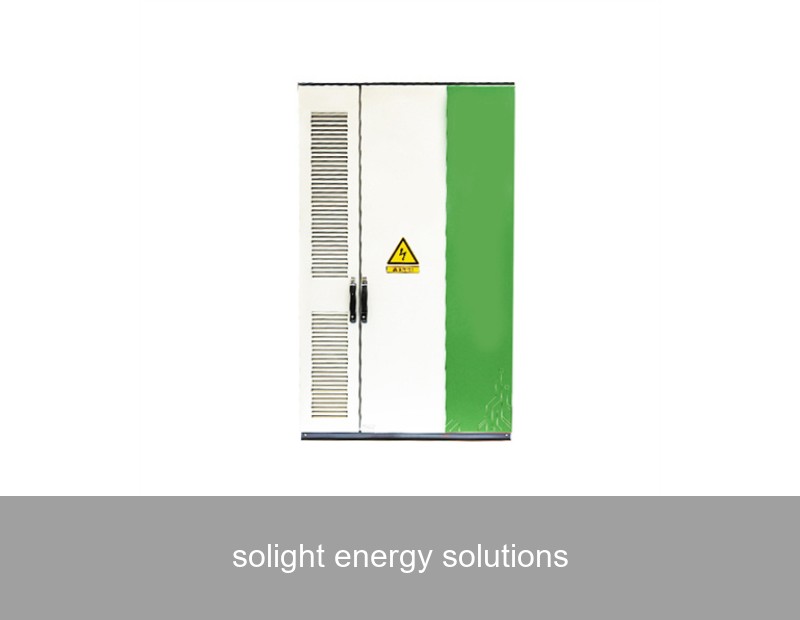
For commercial and industrial clients, like our Berlin bakery, our PowerStack C&I Series offers robust, containerized or rack-mounted solutions. These systems are engineered for high-power throughput and advanced energy arbitrage, helping businesses navigate complex utility rate structures. Furthermore, our expertise extends to microgrid solutions, where we can integrate solar, storage, and often existing generators into a self-sufficient community or campus grid.
Our role is to be your partner in this transition, providing not just hardware, but the design support, software intelligence, and service to ensure your investment delivers for decades.

Industrial-scale battery storage systems enable businesses to take control of their energy costs. Credit: Unsplash
The Future is Intelligent and Integrated
The next frontier for solar energy solutions is virtual power plants (VPPs) and AI-driven optimization. Imagine thousands of distributed Highjoule systems across a region, their aggregated capacity being used to support the main grid during times of extreme demand, with the owners being financially compensated. This turns individual systems into community assets, enhancing overall grid stability and accelerating the renewable transition. Research from institutions like the National Renewable Energy Laboratory (NREL) highlights the massive potential of this approach.
So, the question is no longer *if* you should consider a solar and storage solution, but *how* to design the right one for your specific energy profile, goals, and location. What would energy independence look like for your home or business—is it never worrying about a blackout again, locking in your electricity costs for the next 25 years, or simply knowing your power is clean and self-generated?
 Inquiry
 Online Chat