


Soluciones Solares Fotovoltaicas: Powering a Sustainable Future Beyond the Panels
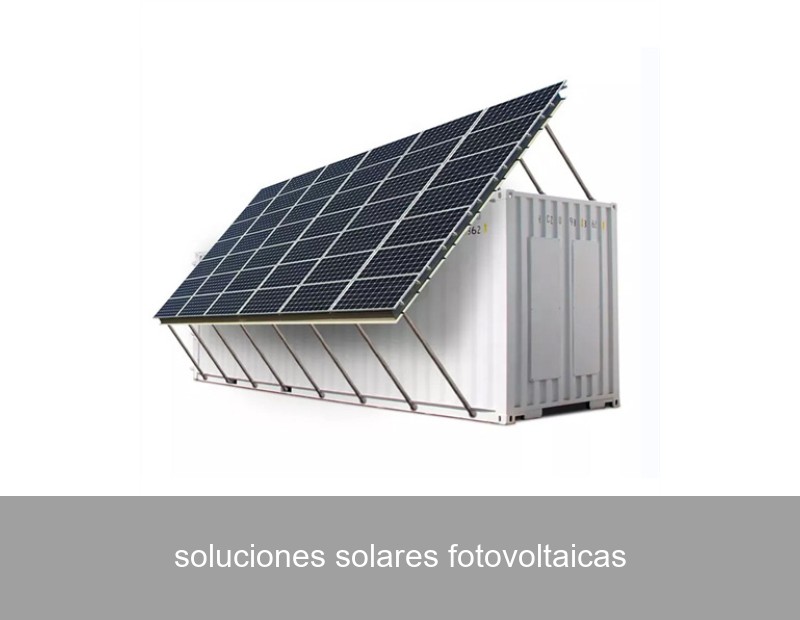
You've seen them on rooftops and in fields: gleaming panels harnessing the sun's power. Soluciones solares fotovoltaicas (photovoltaic solar solutions) are now a common sight. But what happens when the sun sets or clouds roll in? The true revolution in solar energy isn't just about generation; it's about intelligent, reliable consumption. This is where modern energy storage and management systems become the critical, often unsung, hero of a truly resilient and efficient solar installation.
Table of Contents
- The Invisible Challenge: Intermittency in Solar Power
- The Evolution of Solar Solutions: From Generation to Intelligent Management
- Key Components of a Modern Solar Photovoltaic Solution
- A Real-World Case: Solar Resilience in Spanish Commerce
- Highjoule's Role in Advanced Solar Solutions
- What's Your Solar Energy Profile?

Credit: Unsplash - A modern commercial solar array. The true potential is unlocked when paired with smart storage.
The Invisible Challenge: Intermittency in Solar Power
The phenomenon is clear: solar panels produce abundant energy during peak daylight hours, often generating more than a home or business can immediately use. Conversely, energy demand typically spikes in the early morning and evening—precisely when solar production drops. This creates a mismatch.
Let's look at the data. According to the International Renewable Energy Agency (IRENA), solar PV is the fastest-growing renewable technology, but grid integration challenges remain a key focus area. In markets like California and parts of Southern Europe, "duck curves"—which chart the steep drop in net grid demand during sunny afternoons—highlight the strain that unsynchronized solar production can place on traditional electricity grids. This isn't just a utility problem; it's an economic one for the solar owner. Without a way to capture surplus energy, it's fed back to the grid at often low rates, missing the opportunity for maximum self-consumption and savings.
The Evolution of Solar Solutions: From Generation to Intelligent Management
The initial phase of solar adoption was purely about generation. The next phase, where we are now, is about optimization and resilience. A complete solución solar fotovoltaica today is an integrated ecosystem:
- Generation: High-efficiency PV panels.
- Conversion: Advanced inverters (solar, hybrid, or micro).
- Storage: The heart of modern systems—battery energy storage systems (BESS).
- Management: Intelligent software for monitoring, control, and energy dispatch.
This integrated approach transforms a solar installation from a passive generator into an active, grid-supportive asset. It allows you to time-shift energy, use solar power 24/7, provide backup during outages, and even participate in grid services in some regions.
Key Components of a Modern Solar Photovoltaic Solution
Understanding the parts helps you appreciate the whole. Here’s a breakdown:
| Component | Primary Function | Impact on System Performance |
|---|---|---|
| PV Modules | Convert sunlight into direct current (DC) electricity. | Determines the total potential energy harvest. |
| Inverter | Converts DC electricity to usable alternating current (AC). | Efficiency and reliability are crucial for system uptime. |
| Battery Storage (BESS) | Stores excess solar energy for later use. | Enables energy independence, backup power, and maximizes self-consumption. |
| Energy Management System (EMS) | The "brain" that controls energy flow based on settings, tariffs, and consumption. | Optimizes economics and system performance automatically. |
A Real-World Case: Solar Resilience in Spanish Commerce
Consider a mid-sized supermarket in Valencia, Spain. They installed a 100 kWp solar array in 2020. Initially, they faced the classic problem: 40% of their daytime solar production was being exported to the grid at a low feed-in tariff, while they still bought expensive grid power at night for refrigeration and lighting. Their self-consumption rate was only about 60%.
In 2023, they upgraded their solución solar fotovoltaica by integrating a 120 kWh battery storage system and an advanced energy management platform. The results, monitored over one year, were significant:
- Self-Consumption Rate: Increased from 60% to over 92%.
- Energy Bill Savings: Total savings rose by 65%, as they drastically reduced peak-time grid purchases.
- Backup Power: The system now provides critical backup for refrigeration units, preventing spoilage during short grid outages—a valuable form of insurance.
This case, mirrored by many commercial entities across Europe and the U.S., shows that the value of solar is dramatically multiplied by storage and smart control. You can read more about the importance of storage for grid stability from the U.S. Department of Energy.

Credit: Unsplash - The interior of a modern Battery Energy Storage System (BESS), the core of energy independence.
Highjoule's Role in Advanced Solar Photovoltaic Solutions
This is where Highjoule's expertise becomes pivotal. Since 2005, we've moved beyond just components to deliver integrated, intelligent power solutions. For a robust solución solar fotovoltaica, the battery storage system is the cornerstone. Highjoule's H-Series Commercial & Industrial (C&I) BESS is engineered for this exact purpose.
Our systems feature:
- Ultra-Safe LFP Chemistry: Non-toxic, long-life battery cells known for exceptional thermal stability.
- Scalable Architecture: Modular design allows systems to scale from 30 kWh to multi-MWh, growing with your needs.
- Intelligent Integration: Our JouleMind™ EMS seamlessly communicates with major solar inverter brands, making decisions in milliseconds to optimize for self-consumption, cost savings, or backup readiness.
- Grid Services Ready: For larger installations, our systems can be configured to provide frequency regulation or peak shaving, potentially creating new revenue streams.
Whether for a large industrial facility in Germany seeking to cap demand charges, a hospital in California requiring uninterrupted power, or a residential community microgrid, Highjoule provides the storage intelligence that makes solar work harder, longer, and smarter.
Future Trends in Solar Photovoltaic Technology
The future of soluciones solares fotovoltaicas is even more integrated and intelligent. We're looking at:
- AI-Driven Optimization: Systems that learn consumption patterns and weather forecasts to pre-charge batteries optimally.
- Vehicle-to-Grid (V2G): Electric vehicles acting as mobile storage units for homes and grids.
- Community & Virtual Power Plants (VPPs): Aggregating thousands of distributed solar+storage systems to act as a single, large-scale power plant, enhancing grid stability. The growth of VPPs is tracked by analysts like Wood Mackenzie.
These advancements point towards a decentralized, resilient, and consumer-empowered energy landscape.

Credit: Unsplash - Intelligent energy management puts control in the user's hands.
What's Your Solar Energy Profile?
Every home, business, and community has a unique energy fingerprint—its consumption patterns, physical constraints, and sustainability goals. Designing the right solución solar fotovoltaica requires understanding this profile deeply. Are you primarily looking to achieve energy independence, secure backup power, or achieve specific financial returns? Perhaps it's a combination of all three.
What specific challenge in your current energy usage would a smart, stored solar solution solve most effectively for you?
 Inquiry
 Online Chat