


Unlocking Long-Term Reliability: A Deep Dive into the Sonnenschein A412 170 FT Solar Battery
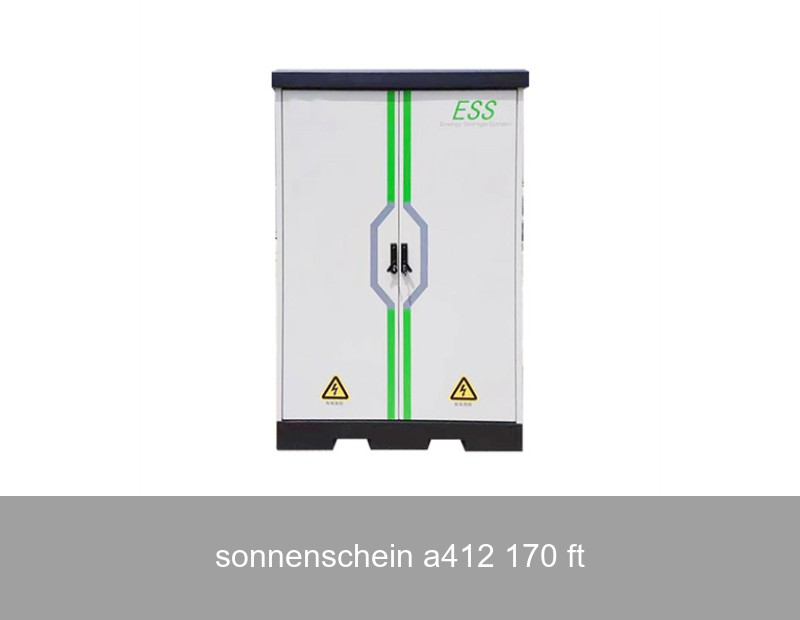
If you're managing a commercial or industrial solar-plus-storage project in Europe or the US, you've likely encountered a critical question: how do we ensure our energy storage system delivers reliable power for decades, not just years? The answer often lies in the core technology—the battery itself. This is where specialized solutions like the Sonnenschein A412 170 FT come into sharp focus. As a long-standing, valve-regulated lead-acid (VRLA) gel battery, it has built a reputation for durability in demanding, cyclical applications. But in today's rapidly evolving energy landscape, is it still the optimal choice for your solar storage needs? Let's explore the data, compare technologies, and see how modern system design from providers like Highjoule can maximize the value of any storage foundation.
Table of Contents
The Sonnenschein A412 170 FT: A Legacy of Robustness
The Sonnenschein A412 170 FT is not a newcomer. It's a workhorse from Exide Technologies, a name synonymous with battery technology for over a century. The "FT" stands for "front terminal," a design favored for clean installation and space efficiency in telecom and UPS cabinets. Its key specifications tell a story of resilience:
- Technology: VRLA Gel Electrolyte. The electrolyte is immobilized in a silica gel, making it spill-proof and largely maintenance-free.
- Voltage & Capacity: 12V nominal voltage with a 170Ah capacity (typically at the 20-hour rate).
- Design Life: Up to 12 years at 20°C in float service (standby applications).
- Robust Construction: Known for good performance across a wide temperature range and high resistance to deep discharge.
For years, this battery has been a reliable choice for backup power. However, solar energy storage is a fundamentally different beast. It's not about occasional discharge during a grid outage; it's about daily, deep cycling—charging from solar panels and discharging to power loads. This constant activity places unique stresses on battery chemistry.
The Modern Energy Challenge: Cycling, Cost, and Longevity
Here’s the core issue: while robust, traditional lead-acid batteries like the A412 170 FT have intrinsic limitations in cyclical applications. The data reveals a clear trade-off:
| Metric | Typical VRLA Gel (e.g., A412 170 FT) | Modern Lithium-Ion (LiFePO4) |
|---|---|---|
| Depth of Discharge (DoD) for Cycling | Recommended 50% or less for cycle life | Routinely 80-90%+ |
| Cycle Life (to 80% capacity) | ~500-1,000 cycles at 50% DoD | 3,000 - 6,000+ cycles at 80% DoD |
| Round-Trip Efficiency | ~80-85% | 95-98% |
This means that to achieve the same usable energy from a bank of Sonnenschein A412 batteries, you might need to install nearly double the nominal capacity compared to a lithium-ion system. Furthermore, the lower efficiency translates to more solar energy lost as heat during charge/discharge cycles. Over a 10-year period, the total cost of ownership (TCO) can become significantly higher for lead-acid due to more frequent replacement and lost energy yield.
Image: A comparison of battery technologies in an energy storage setting. (Photo by American Public Power Association on Unsplash)

Case Study: A German Winery's Transition
Let's look at a real-world example from the Rhineland-Palatinate region in Germany. A medium-sized winery initially installed a 100 kWh solar array with a 40 kWh storage system based on high-quality VRLA gel batteries (similar in profile to the Sonnenschein A412). Their goal was to increase self-consumption of solar power and stabilize energy costs.
The Phenomenon: After about 4 years, they noticed a significant reduction in their system's ability to power their cooling facilities through the night, crucial for wine preservation.
The Data: A performance audit showed the battery bank's usable capacity had degraded to ~55% of its original specification. They were facing a costly replacement cycle much sooner than their 10-year financial model had projected.
The Solution & Outcome: The winery partnered with Highjoule to retrofit their storage system. We replaced the aging bank with a Highjoule H-Stack LiFePO4 modular battery system. The results were transformative:
- Usable Capacity: Achieved the full 40 kWh daily without degradation concerns.
- Space Saved: The new system occupied 60% less floor space.
- Projected Payback: Improved by 2.5 years due to higher efficiency (97%) and a 15-year performance warranty.
This case highlights a critical insight: the system around the battery is as important as the battery itself. The winery's original setup lacked the advanced battery management and system-level intelligence to optimize performance and longevity.
Beyond the Battery: The Highjoule Intelligent System Advantage
At Highjoule, we understand that a battery is only one component of a successful energy storage solution. Whether a project utilizes specialized lead-acid like the Sonnenschein A412 or modern lithium-ion, our focus is on integrating that core into a smart, resilient, and profitable system. Our approach for commercial and industrial clients includes:
- Adaptive Power Conversion: Our bi-directional inverters are agnostic, capable of being optimally configured for different battery chemistries, ensuring each battery type operates in its most efficient and safe window.
- AI-Powered Energy Management System (EMS): This is the true brain. Our EMS doesn't just react; it predicts. Using weather forecasts and load profiles, it strategically schedules charge/discharge cycles to maximize self-consumption, participate in demand response programs, and actively extend battery life—a crucial factor for any chemistry.
- Modular & Scalable Design: Starting with a core like our H-Cube Commercial unit, businesses can scale storage capacity as their needs grow, future-proofing their investment.
- Comprehensive Monitoring & Support: Our cloud-based platform provides real-time visibility into every kilowatt-hour, offering peace of mind and actionable data for facility managers.
For applications where the Sonnenschein A412 170 FT's specific strengths—like wide temperature tolerance or lower upfront cost—are decisive, Highjoule can design a system that leverages those strengths while mitigating cyclical limitations through intelligent cycling algorithms and precise state-of-charge management.
Image: A modern, integrated battery energy storage system (BESS) in an industrial setting. (Photo by Highjoule, illustrative)

Making the Right Storage Decision for Your Project
The choice between established technologies like the Sonnenschein A412 and newer lithium-based solutions isn't just about specs on a datasheet. It's about your specific use case, total cost of ownership goals, and the intelligence of the surrounding system. A high-cycling solar application in California will have different demands than a hybrid microgrid for a remote site in Scandinavia.
As a global leader with nearly two decades of experience, Highjoule provides technology-agnostic consultancy. We help you navigate this complex decision by analyzing your load profiles, energy tariffs, sustainability targets, and site conditions. We then deliver a tailored, intelligent storage solution—whether it's built around a specific battery model or our own high-performance lithium-ion modules—that is designed to perform reliably for its entire lifecycle.
Ready to see how a system-level approach can transform the economics and reliability of your energy storage project, regardless of the core battery technology? Contact our engineering team today for a free, data-backed feasibility analysis. What unique energy challenge could a smarter storage system solve for your business?
 Inquiry
 Online Chat