


Unlocking Grid Resilience: The Essential Guide to LC Energy Storage Cabinets
As our world pivots decisively towards wind and solar power, a quiet but critical challenge emerges: how do we keep the lights on when the sun sets or the wind stills? The answer increasingly lies in a sophisticated piece of technology often housed in an unassuming container—the LC energy storage cabinet. These systems are the linchpin of a modern, resilient energy infrastructure, acting as a giant battery for the grid, a factory, or even a neighborhood. For businesses and communities across Europe and the US, understanding this technology is key to achieving energy independence, cost savings, and true sustainability. At Highjoule, with nearly two decades of expertise, we've seen how intelligent storage solutions transform energy from a volatile commodity into a reliable, strategic asset.
What Exactly is an LC Energy Storage Cabinet?
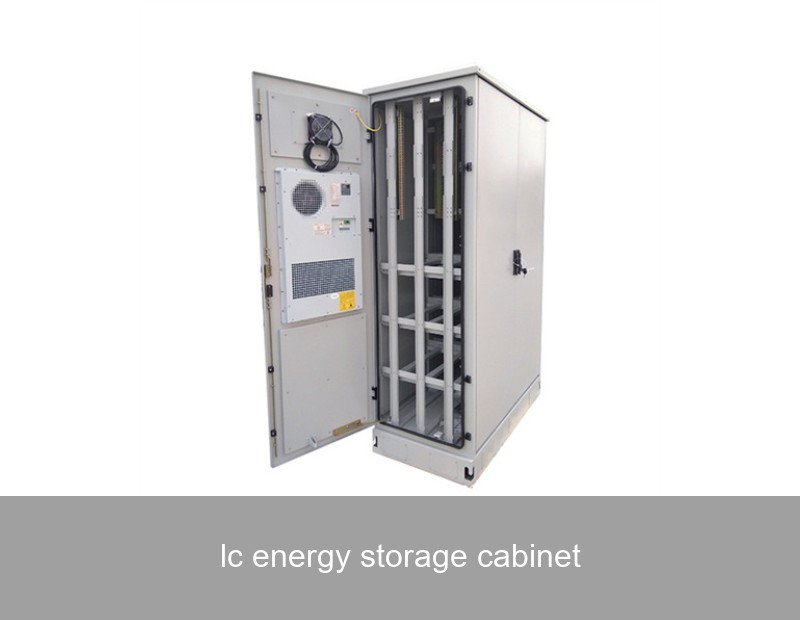
Let's demystify the term. An LC (Lithium-ion Containerized) energy storage cabinet is a pre-engineered, modular, and scalable battery energy storage system (BESS). Think of it as a "power bank" on an industrial scale. Unlike scattered battery racks, these systems integrate all critical components—lithium-ion battery modules, battery management systems (BMS), thermal management, power conversion systems (PCS), and safety controls—into a single, robust, containerized unit.

Image Source: Unsplash - Representative image of modern energy storage systems.
The "cabinet" or container format is a game-changer. It allows for rapid deployment, simplified installation, and easy scalability. Need more capacity? Simply add another cabinet. This plug-and-play philosophy is at the heart of what makes solutions like Highjoule's IntelliCube ESS so effective for commercial and industrial applications.
The Grid Strain Phenomenon: More Renewables, More Complexity
Here's the core issue we're facing. Solar panels flood the grid with power at midday, often creating a surplus that can destabilize voltage and frequency. Then, as evening demand peaks, solar generation plummets, creating a steep "duck curve" that grid operators must fill, typically with fast-responding (and often carbon-intensive) gas peaker plants. This intermittency is the fundamental barrier to a 100% renewable grid.
For a factory manager or a hospital administrator, this translates to volatile energy costs, potential demand charges, and concerns about backup power during grid outages or extreme weather events, which are becoming more frequent. The traditional grid wasn't built for this bidirectional, variable flow of energy.
The Data Reality: Why Grids Need a Buffer
The numbers paint a clear picture. According to the International Energy Agency (IEA), to stay on track for net zero by 2050, the world needs to add 680 GW of grid-scale battery storage capacity by 2030—a massive leap from today's levels. In the US, the Federal Energy Regulatory Commission (FERC) Order 841 is breaking down market barriers, allowing storage to compete in wholesale markets, recognizing its critical role in grid services like frequency regulation.
On the economic front, a study by the National Renewable Energy Laboratory (NREL) highlights how pairing solar with storage can reduce a commercial site's energy bill by managing peak demand charges, which can constitute up to 50% of a commercial electricity bill in some regions. The LC energy storage cabinet is the physical asset that makes this financial and operational optimization possible.
Case Study: A German Manufacturing Plant's Solution
Let's look at a real-world example from Bavaria, Germany. A mid-sized automotive parts manufacturer faced a triple challenge: rising electricity costs, a corporate mandate to reduce carbon footprint, and the need for uninterrupted power for precision machinery.
The Solution: They deployed a 1.2 MWh Highjoule IntelliCube LC energy storage cabinet, integrated with their existing rooftop solar PV array.
The Results (12-month period):
| Metric | Before Installation | After Installation |
|---|---|---|
| Solar Self-Consumption | 35% | 89% |
| Peak Demand from Grid | 850 kW | 520 kW |
| Annual Energy Cost Savings | Baseline | €114,000 |
| CO2 Emissions Reduction | Baseline | ~420 tonnes |
The Highjoule system's intelligent energy management software (EMS) automatically decided when to store solar excess, when to discharge to shave peak loads, and when to participate in the German primary control reserve market, creating an additional revenue stream. The containerized solution was installed and commissioned in under three weeks, minimizing disruption.
Key Components of a Modern LC Energy Storage Cabinet
Not all cabinets are created equal. A high-performance system relies on the synergy of its internal components:
- Lithium-Ion Battery Modules: Typically using LiFePO4 (LFP) chemistry for superior safety, long cycle life, and thermal stability. Highjoule sources cells from tier-1 suppliers with full traceability.
- Advanced Battery Management System (BMS): The "brain" of the battery, ensuring each cell operates within safe voltage, temperature, and current ranges, maximizing lifespan and safety.
- Power Conversion System (PCS): The "muscle" that converts DC battery power to AC grid power and vice versa. High-efficiency, bidirectional inverters are crucial for overall system round-trip efficiency.
- Thermal Management System: A dedicated HVAC system maintaining the optimal temperature range (usually 20-25°C) for battery performance and longevity, regardless of external weather.
- Integrated Energy Management System (EMS): The "strategic commander." This software platform uses algorithms and sometimes AI to optimize dispatch based on electricity prices, weather forecasts, and load patterns.
- Safety Enclosures & Fire Suppression: Robust, weatherproof casing, continuous gas monitoring, and automatic fire suppression systems (e.g., aerosol-based) are non-negotiable for industrial installations.
The Highjoule Approach: Intelligence Beyond the Box
At Highjoule, we believe the hardware is only half the story. Our IntelliCube LC energy storage cabinets are built on a foundation of three principles:
- Modular Design: From 100 kWh to multi-MWh installations, our standardized modules allow for cost-effective scaling and easy maintenance.
- Grid-Interactive Intelligence: Our proprietary EMS, Highjoule Neuron, doesn't just react—it forecasts. By integrating weather and market price data, it proactively schedules charge/discharge cycles for maximum economic return.
- Full-Service Partnership: We provide end-to-end support, from initial site assessment and financial modeling to installation, grid connection assistance, and 24/7 remote monitoring. Our systems are designed for seamless integration with both new and existing solar PV installations.
Image Source: Unsplash - Representative image of energy system monitoring.
Future Trends: The Evolving Role of Storage
The future of the LC energy storage cabinet is dynamic. We're moving beyond simple load shifting towards providing critical "grid-forming" services. In a blackout, advanced inverters in systems like ours can "island" a facility or even help restart the local grid—a capability known as black start. Furthermore, the rise of electric vehicle fleets presents a new frontier: using storage to manage high-power charging demands without costly grid upgrades.
The technology is also becoming more sustainable itself. Companies are pioneering recycling programs for lithium-ion batteries, and research into next-generation chemistries like solid-state batteries promises even greater density and safety. Staying abreast of these trends is part of Highjoule's commitment to delivering future-proof solutions.
Given the accelerating pace of the energy transition, the question for any business or community leader is no longer if they should consider energy storage, but how to implement it strategically. What specific energy challenge—be it cost volatility, reliability concerns, or a sustainability target—could an intelligent LC energy storage cabinet solve for you in the next 18 months?
 Inquiry
 Online Chat