


The Ultimate Guide to Choosing a Starter Solar Power System for Your Home
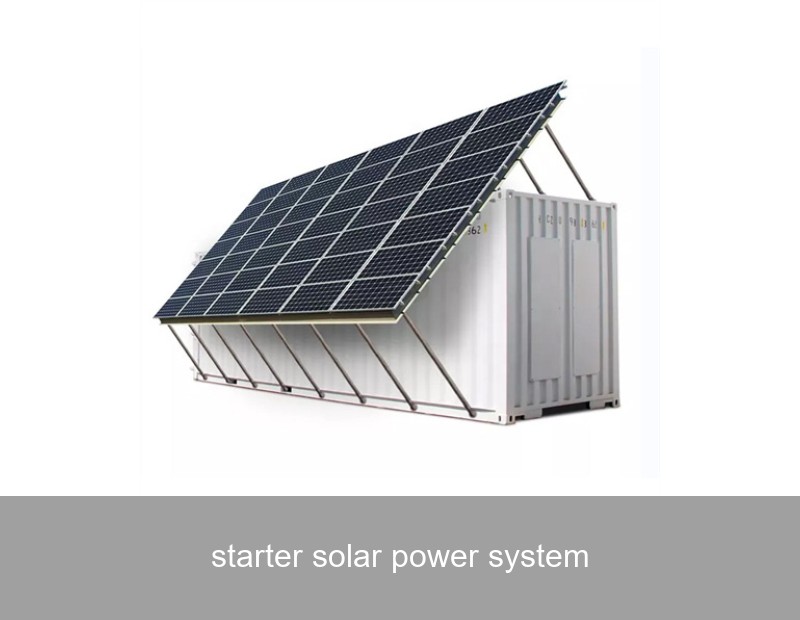
Table of Contents
- Why a Starter Solar Power System is a Smart Move Now
- Breaking Down the Components: What's in a Starter Kit?
- Sizing Your System: How Much Power Do You Really Need?
- Real-World Savings: A Case Study from California
- Beyond Basic Kits: The Role of Intelligent Energy Storage
- Highjoule's Integrated Approach to Starter Solar Systems
- Key Considerations for Installation and Incentives
You've seen the rising electricity bills, heard neighbors talk about their energy independence, and maybe felt the urge to contribute to a cleaner planet. The thought of getting started with solar can be exciting, but also overwhelming. Where do you begin? The answer often lies in a well-designed starter solar power system. This isn't about powering your entire home overnight, but about making a smart, scalable entry into renewable energy. Let's demystify the process and explore how a starter solar power system can be the first step toward taking control of your energy future.
Why a Starter Solar Power System is a Smart Move Now
The energy landscape is shifting rapidly. Grid instability and volatile fossil fuel prices are no longer abstract concepts; they're reflected in your monthly utility statement. Meanwhile, the cost of solar panels has plummeted by over 80% in the last decade(source: NREL). A starter solar power system allows homeowners to immediately start offsetting their highest-cost electricity, typically during sunny afternoon peak hours. It's a modular approach—you can install a system that covers a portion of your needs today and add to it later. This reduces the initial financial hurdle while delivering tangible savings from day one.
Image Source: Unsplash - A typical home setup for a starter solar system.
Breaking Down the Components: What's in a Starter Kit?
A basic grid-tied starter solar power system consists of a few key components working in harmony:
- Solar Panels (Photovoltaic Modules): These are the workhorses, converting sunlight into direct current (DC) electricity. For starters, high-efficiency monocrystalline panels are often recommended for their better performance in limited roof space.
- Inverter(s): This is the brain of the operation. The inverter converts the DC electricity from your panels into the alternating current (AC) used by your home's appliances. Micro-inverters (one per panel) are popular for starter systems as they optimize each panel's output independently.
- Racking and Mounting System: The secure, weatherproof framework that attaches the panels to your roof.
- Monitoring System: A crucial yet often overlooked component. This allows you to track your system's energy production in real-time via a smartphone app, ensuring it's performing as expected.
Sizing Your System: How Much Power Do You Really Need?
Sizing isn't about guessing; it's about data. Start by looking at your past year's electricity bills to find your average monthly kilowatt-hour (kWh) consumption. A common strategy for a starter solar power system is to target 50-70% of your annual usage. This covers a significant chunk of your bill while keeping the system size (and cost) manageable. Consider your roof's size, orientation, and shading. A south-facing roof in Arizona will produce more energy per panel than a north-facing one in Seattle.
| Home's Monthly Usage | Starter System Target (60%) | Estimated System Size (kW) | Estimated Panels (400W each) |
|---|---|---|---|
| 900 kWh | 540 kWh | 4.0 kW | 10 |
| 1,200 kWh | 720 kWh | 5.3 kW | 13-14 |
Real-World Savings: A Case Study from California
Let's move from theory to practice. The Miller family in Sacramento, California, installed a 5.2 kW starter solar power system in early 2022. Their goal was to reduce their peak-time energy costs, which were soaring due to the state's tiered pricing. The system, consisting of 13 panels, was designed to cover about 65% of their annual consumption.
- Pre-Installation: Average monthly bill: $220
- Post-Installation (first 12 months): Average monthly bill: $85
- Annual Savings: $1,620
- System Cost (after federal ITC): ~$13,500
- Simple Payback Period: ~8.3 years
Beyond the numbers, the family gained peace of mind during a series of summer heatwaves and grid warnings. Their system consistently offset the most expensive air conditioning load, proving the immediate value of their investment.
Beyond Basic Kits: The Role of Intelligent Energy Storage
Here's a limitation of a basic grid-tied system: when the grid goes down, your solar panels typically shut off for safety. This is where adding a battery storage system transforms your starter solar power system into a resilient home energy solution. Storage allows you to capture excess solar energy produced during the day and use it in the evening when the sun sets and grid prices are high, a concept known as "peak shaving." More importantly, it provides backup power during outages. Think of it as the logical next step to maximize the utility and security of your initial solar investment.

Image Source: Unsplash - A home battery storage unit integrated with a solar system.
Highjoule's Integrated Approach to Starter Solar Systems
This is where Highjoule's expertise becomes pivotal. We understand that a starter solar power system shouldn't be a dead-end product. Our philosophy is built on intelligent scalability. For homeowners beginning their journey, we offer the Highjoule HES (Home Energy Stack)—a modular battery storage solution that can be paired seamlessly with any new or existing solar array.
Starting with just one HES unit (typically 5-10 kWh of storage), you can immediately begin storing your solar surplus for later use. Our proprietary energy management system (EMS) intelligently decides when to charge from solar, when to discharge to power your home, and when to draw from the grid, always optimizing for cost and resilience. As your needs grow—perhaps you buy an electric vehicle or want full home backup—you can simply add more HES units to your stack. This future-proofs your initial investment, ensuring your starter solar power system is the core of a truly smart and sustainable home ecosystem.
Key Considerations for Installation and Incentives
Navigating permits, installers, and incentives is a key part of the process. In the US, the federal Investment Tax Credit (ITC) allows you to deduct 30% of your system cost from your federal taxes(source: DOE). Many states and utilities offer additional rebates. In Europe, schemes vary by country but often include favorable feed-in tariffs or VAT reductions. Always work with a certified, reputable installer who can handle the paperwork and ensure your system meets all local codes and utility interconnection requirements. A quality installation is as important as the quality of the components.
So, as you contemplate your energy future, ask yourself this: What would it mean for you to turn your highest electricity bill into a thing of the past, starting with just a portion of your roof? What's the first appliance or room you'd want to power with your own clean energy?
 Inquiry
 Online Chat