


Steel Solar Supplier: The Unsung Hero of Industrial Energy Resilience
When you think of a steel solar supplier, what comes to mind? Perhaps a company that simply bolts panels onto a factory roof? In today's energy-intensive world, the role is far more critical. It's about becoming a strategic partner in energy resilience, cost control, and sustainability for one of the most power-hungry industries on the planet. For steel plants and metal fabricators across Europe and the U.S., the right solar solution isn't just an add-on; it's a foundational component for competitive and sustainable operations. This article explores how modern steel solar suppliers are integrating advanced energy storage to create truly resilient and intelligent power systems for heavy industry.
Table of Contents
- The Challenge: Steel's Insatiable and Costly Energy Appetite
- The Data: Why Solar Alone Isn't Enough for Heavy Industry
- The Solution: Intelligent Storage - The Brain of the Modern Steel Solar System
- Highjoule's Role: Delivering Grid-Independent Confidence for Industry
- Case Study: A German Steel Processor's Path to 24/7 Renewable Power
- The Future: What Does True Energy Independence Look Like for Your Plant?
The Challenge: Steel's Insatiable and Costly Energy Appetite
The steel industry operates on a relentless schedule. Arc furnaces, rolling mills, and finishing lines can't afford downtime. Energy is not just a utility; it's the lifeblood of production. Yet, this dependence comes with immense vulnerability: volatile electricity prices, grid instability, and stringent carbon regulations. Relying solely on the grid exposes facilities to financial risk and operational disruption. This is where the traditional model of a steel solar supplier falls short. Installing panels to offset some daytime grid use is a good first step, but it doesn't address the core need for continuous, stable, and cost-controlled power, especially during evening operations, peak tariff periods, or grid outages.

Image source: Unsplash (Photographer: Zongnan Bao). Steel manufacturing is a 24/7 operation demanding unwavering power reliability.
The Data: Why Solar Alone Isn't Enough for Heavy Industry
Let's look at the numbers. A typical mid-sized steel processing plant in the U.S. Midwest might have a demand peak of 5 MW. A large rooftop and ground-mounted solar array could generate 3 MW at noon. However, production runs 24 hours a day. The U.S. Energy Information Administration notes that industrial electricity prices can fluctuate by over 300% during peak demand events. Furthermore, critical processes often require instantaneous power far beyond what solar can provide at any given moment. Without storage, you're forced to sell excess solar back to the grid at low rates and buy it back at night at high rates—a losing financial proposition. The sun's intermittency creates a "generation gap" that leaves the core problem unsolved.
The Energy Profile Problem
This mismatch between solar generation and industrial consumption creates a distinct profile:
- Daytime Over-Generation: Excess solar energy exported to the grid at minimal compensation.
- Evening & Morning Ramp: High energy demand as shifts change and furnaces pre-heat, coinciding with low solar generation and high grid prices.
- Nighttime Baseline Load: Continuous power needed for essential operations, fully reliant on the grid.
This profile screams for a buffer—a reservoir of power to balance supply and demand in real-time.
The Solution: Intelligent Storage - The Brain of the Modern Steel Solar System
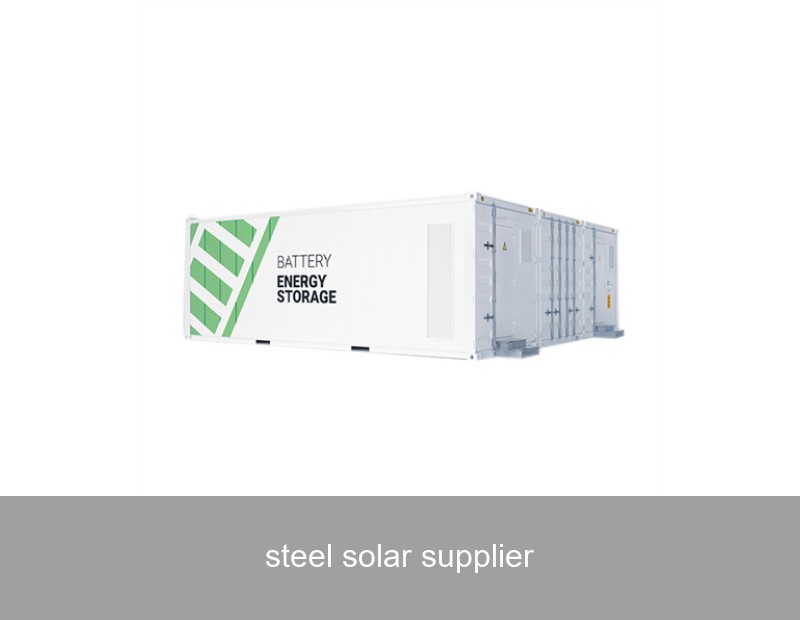
The evolution from a simple steel solar supplier to an Integrated Energy Resilience Provider hinges on Battery Energy Storage Systems (BESS). Think of BESS as the central nervous system of your plant's energy infrastructure. It doesn't just store excess solar; it intelligently manages when and how your facility consumes, stores, and dispatches every kilowatt-hour.
Key Functions of an Industrial-Scale BESS:
| Function | Benefit for Steel Plants |
|---|---|
| Peak Shaving | Caps maximum grid demand during expensive peak periods, slashing demand charges. |
| Solar Time-Shift | Stores midday solar energy for use during high-price evening/night hours, maximizing self-consumption. |
| Backup Power & Grid Support | Provides seamless, instantaneous power during grid outages to keep critical loads and safety systems online. |
| Frequency Regulation | Can provide grid services for additional revenue streams (in some markets). |
Highjoule's Role: Delivering Grid-Independent Confidence for Industry
This is where Highjoule's expertise transforms the proposition. Since 2005, we have moved beyond being just a steel solar supplier. We engineer comprehensive, smart energy systems that fuse high-efficiency solar generation with our proprietary, industrial-grade battery storage technology. Our solutions are designed for the harsh, demanding environments of steel plants.
Highjoule's IntelliBESS platform features advanced lithium-iron-phosphate (LFP) battery chemistry for superior safety and longevity, coupled with an AI-driven energy management system (EMS). This EMS is the true brain. It continuously learns your plant's load patterns, weather forecasts, and utility rate schedules to autonomously optimize every energy decision for maximum savings and reliability. For a steel manufacturer, this means our system can predict the energy draw of an upcoming furnace cycle and ensure stored solar power is ready to supplement it, avoiding a costly peak demand spike from the grid.

Image source: Unsplash (Photographer: American Public Power Association). Modern industrial BESS control rooms enable precise energy management.
Case Study: A German Steel Processor's Path to 24/7 Renewable Power
Let's examine a real-world application. A leading steel processing and coating company in North Rhine-Westphalia, Germany, faced soaring energy costs and carbon taxes. Their goal was ambitious: power their continuous galvanizing line as much as possible with clean, self-generated energy to reduce costs and meet corporate sustainability targets.
Project Overview:
- Challenge: High baseload power requirement, exposure to peak grid prices (€/kW), and need for backup during grid instability.
- Highjoule Solution: A 2.8 MWp rooftop solar PV system integrated with a 4.8 MWh IntelliBESS storage unit and smart EMS.
- Implementation: The system was designed to prioritize self-consumption. Solar energy powers the plant directly during the day, with excess charging the BESS.
Results (12 Months Post-Installation):
- Grid Independence: Achieved 82% average daily self-consumption of renewable energy, peaking at 95% on high-production summer days.
- Cost Savings: Reduced peak demand charges by 40% and overall grid electricity costs by 68%.
- Resilience: The BESS provides 2 hours of full backup power for critical safety and process control systems, eliminating downtime from short grid disturbances.
- Sustainability: Reduced the site's operational carbon footprint by approximately 1,200 tonnes of CO2 annually.
This case demonstrates that with the right integrated technology, a steel plant can become a bastion of energy resilience, turning a cost center into a strategic advantage.
The Future: What Does True Energy Independence Look Like for Your Plant?
The journey for the modern steel manufacturer is no longer just about finding a steel solar supplier. It's about partnering with an energy architect who understands the brutal demands of heavy industry. The future is in microgrids—self-contained, intelligent energy networks that can island from the main grid and run independently on solar, storage, and potentially other generators.
Highjoule is at the forefront of this transition. Our systems are built with this modular, scalable future in mind. Whether you're looking to start with a solar-plus-storage system to tackle demand charges today or planning a full microgrid for complete long-term independence, our technology and expertise provide a clear pathway.
So, we leave you with this question: As energy volatility and decarbonization pressures continue to rise, can your operation afford to view solar as just a rooftop accessory, rather than the core of a smarter, self-reliant energy strategy?
 Inquiry
 Online Chat